Asia: Markets track Wall Street losses after mixed tech earnings
 Add BT as a preferred source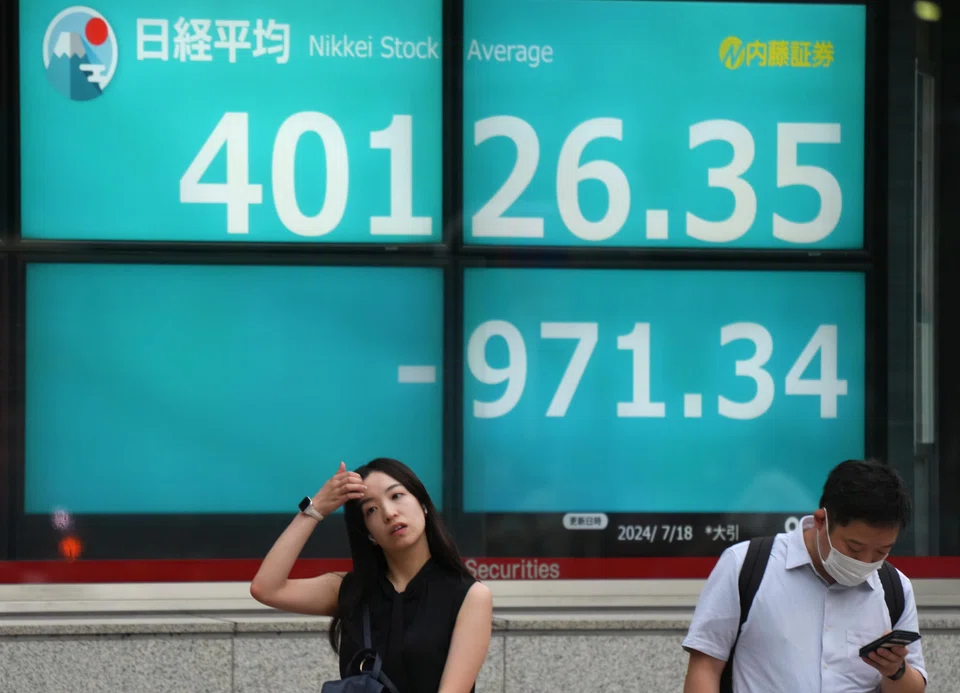
ASIAN markets fell on Wednesday following a mixed batch of US earnings that did little to boost enthusiasm as investors look for the tech sector to continue filing blockbuster profits after pumping billions into artificial intelligence.
Traders are also shifting cautiously as they weigh the outlook for US policy post-election, with Democrat chances boosted by the expected nomination of Kamala Harris to replace Joe Biden to battle Donald Trump in November.
Equities have largely been boosted this year by growing expectations that the Federal Reserve will cut interest rates thanks to slowing inflation and a softening of the labour market, officials have indicated lately they are open to a move soon.
The prospect of a more welcoming borrowing environment has heavily benefited tech firms, particularly as they have invested massively in AI, seeing it as the next big money-spinner.
And profits have not disappointed in most cases, helping push their valuations ever higher, with chip titan Nvidia piling on around 150 per cent for the year to date.
However, hopes for this earnings cycle were dented slightly on Tuesday by news that profits at electric car giant Tesla fell 45 per cent in the second quarter owing to price cuts and aggressive AI investment.
And payments behemoth Visa’s reported revenue for its fiscal third quarter came in below estimates, though a forecast-beating report from Google-parent Alphabet did provide some support.
Alphabet and Tesla are part of the so-called “Magnificent Seven” tech kings who have been key to driving gains in markets that have pushed Wall Street to multiple record highs in 2024.
The others - Apple, Amazon, Facebook-parent Meta, Microsoft and Nvidia - are due to report over the next few weeks.

“The kickoff of earnings season for the ‘Magnificent Seven’ didn’t exactly call for a ticker-tape parade on Wall Street, leaving mega-cap sentiment teetering on a shaky high bar,” said Stephen Innes in his Dark Side Of The Boom commentary.
All three main indexes on Wall Street ended slightly lower, and Asia mostly followed suit.
Tokyo, Shanghai, Hong Kong, Sydney, Singapore and Jakarta all slipped, though Seoul and Wellington edged up.
Manila and Taipei were closed because of a typhoon.
Investors are also awaiting the release of key US economic growth data Thursday and the latest reading on personal consumption expenditure - the Fed’s favoured gauge of inflation - which could play a role in decision-makers’ thinking ahead of their next meeting.
But Innes warned: “Markets are wagering that these indicators will give the Fed the green light to take it easy in September. However, any hiccup in the cooling inflation trend could add a plot twist to this Fed soap opera.”
Still, PGIM Fixed Income analysts said in a note: “We expect at least one 25-basis-point cut in 2024 with mid-December appearing as the most likely meeting for that decision.
“That said, the Fed could implement another cut in the second half of 2024 if given the opportunity. If the Fed is hindered from cutting rates this year, it could shift those cuts into 2025, and we see a total of 150 basis points in Fed rate cuts through next year.” AFP
Decoding Asia newsletter: your guide to navigating Asia in a new global order. Sign up here to get Decoding Asia newsletter. Delivered to your inbox. Free.
Share with us your feedback on BT's products and services