

Asia: Markets tumble on fears over inflation, Federal Reserve and default
 Add BT as a preferred source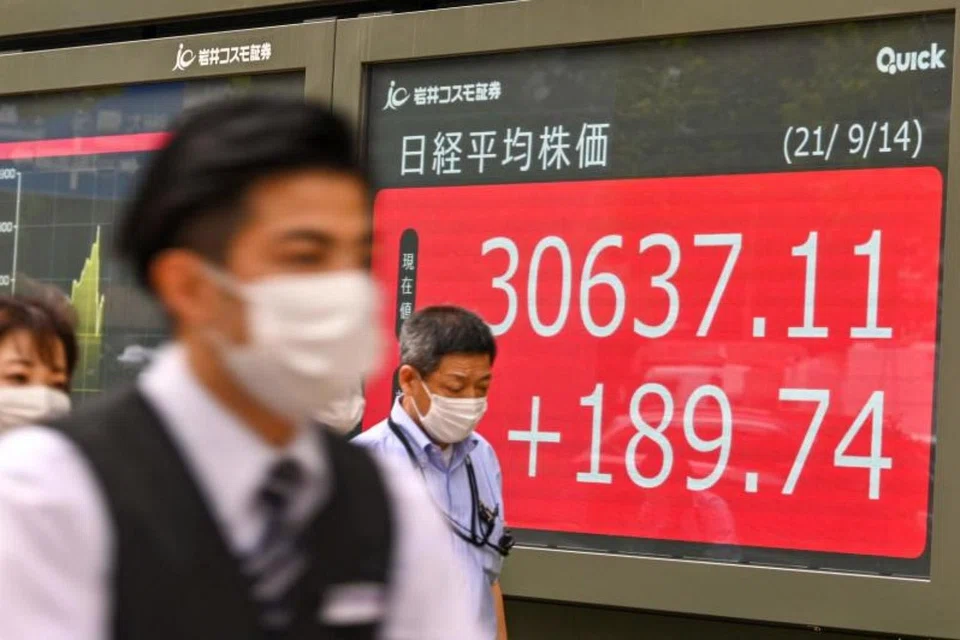
[HONG KONG] Asian markets plunged into the red on Wednesday following a rout on Wall Street as investors fret over surging inflation, the end of the Federal Reserve's financial support and a standoff on Wall Street that could end with a catastrophic US debt default.
Ongoing worries about the potential collapse of Chinese property giant Evergrande, an energy crunch in China and the ever-present spectre of the Delta Covid variant were also dragging the mood down on trading floors.
After a year and a half of ultra-loose monetary policy from the Fed and other central banks - helping fire a global economic recovery and send equities to record or multi-year highs - officials have signalled they are ready to take away the punch bowl.
While broadly expected, the decision comes as inflation continues to surge owing to supply chain problems as well as a spike in energy costs - Brent crude broke US$80 for the first time in three years on Tuesday.
The Fed last week indicated it would start winding down its massive bond-buying programme by the end of the year, while a gauge of future interest rates suggested a hike could come before 2023.
The news was initially taken in stride, but a surge in Treasury yields this week has sparked panic that the Fed could tighten much earlier and quicker than initially thought as inflation takes off. The dollar largely held on to recent gains as higher yields make the currency more attractive to investors.
This has led to talk of a possible period of damaging "stagflation", where inflation surges but economic growth remains subdued.
The Nasdaq led a sharp sell-off in New York as tech firms are more susceptible to higher rates as they borrow cash to fuel growth.
"What we got here is a stock market that finally looks vulnerable as Treasury yields surge, oil prices look like they could easily hit US$90 a barrel, and as supply chain issues show no signs of easing," said Oanda's Edward Moya.
"The Fed was willing to tolerate a little inflation overshoot, but the current energy crunch could force a major pivot before the end of the year."
In early Asian trade, Tokyo tanked more than two per cent, having enjoyed a strong run in recent weeks on hopes for more stimulus from a new prime minister, while Seoul was off two per cent. Shanghai, Sydney, Taipei and Manila lost more than one per cent.
Hong Kong, Singapore and Wellington fared slightly better, though Jakarta edged up.
Investors are also keeping an increasingly worried eye on Washington where lawmakers are bickering over raising the US debt ceiling.
Republicans have refused to agree to the move, despite top officials including Treasury Secretary Janet Yellen and Fed boss Jerome Powell warning of an economic thunderbolt if the country fails to meet its bond repayment obligations.
Ms Yellen said a deal needs to be done before the cash runs out around October 18.
Separately, the government could shut down later this week unless Congress approves a temporary budget measure by Thursday.
That comes as Democrats struggle to pass Joe Biden's multi-trillion-dollar infrastructure and social spending bills, with party infighting fuelling concerns that the president's agenda could collapse.
AFP
Decoding Asia newsletter: your guide to navigating Asia in a new global order. Sign up here to get Decoding Asia newsletter. Delivered to your inbox. Free.
Share with us your feedback on BT's products and services
TRENDING NOW

Record Cat A COE: expiring EV perk, longer bidding interval behind ‘re-run of 2025 mania’
Early payout from Philippines’ Maharlika Investment Fund raises eyebrows over its true nature
Stocks to watch: SGX, Aims Apac Reit

E-commerce job cuts signal S-E Asia’s shift from scaling to deeper user engagement

