

Asia: Shares steady, set for weekly gain in volatile trading
 Add BT as a preferred source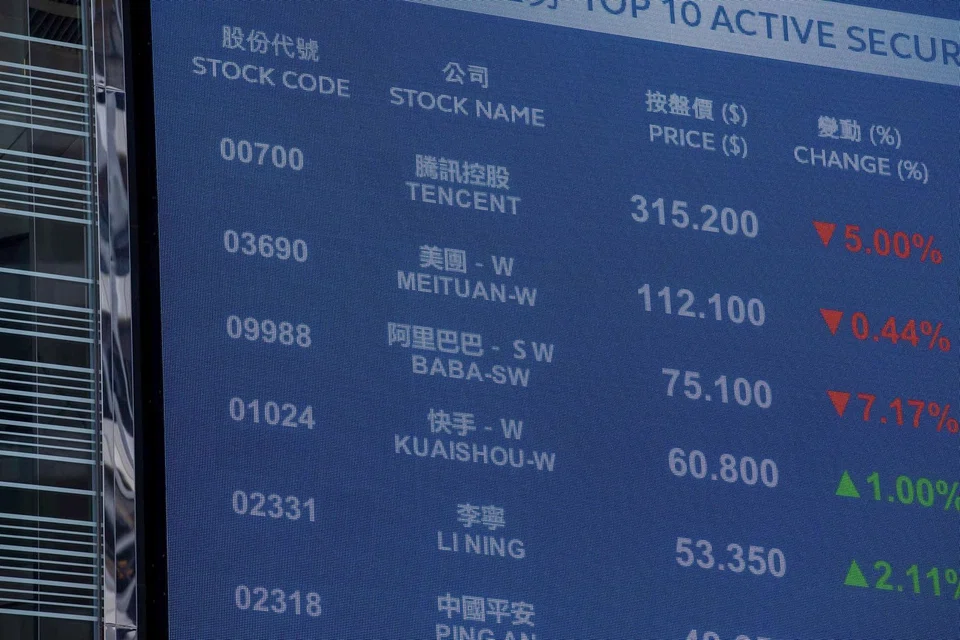
DeeperDive is a beta AI feature. Refer to full articles for the facts.
[HONG KONG] Asian shares were headed for a second successive week of gains on Friday (Mar 25), though trading was choppy amid hawkish US monetary policy, shifts in Chinese economic policy, and ongoing ructions in commodity markets due to the war in Ukraine.
MSCI's broadest index of Asia-Pacific shares outside Japan traded flat, but it's up 1 per cent on the week.
Japan's Nikkei was also little changed having closed the previous day at a nine week high.
Hong Kong shares were a drag on the regional benchmark, falling 0.5 per cent, weighed down by tech stocks, as US and Hong Kong dual listed names took a hit from renewed fears that a row over audit records will force them to delist in the United States.
Australian stocks rose 0.4 per cent helped by miners, while Chinese blue chips lost 0.4 per cent.
"In terms of Asia we have seen asset prices stabilise a little bit this week following last week's statement from the Chinese vice-premier. This may not be sustainable unless we see additional easing and have better visibility on the regulatory front, but it did seem to have the desired effect in terms f limiting downside risks," said Carlos Casanova, senior Asia economist at UBP.
Navigate Asia in
a new global order
Get the insights delivered to your inbox.
"Though what we are starting to see is a little more caution from global investors when it comes to the US economy, and what that means for Asia," he added.
Last week, Chinese vice-premier Liu He said Beijing would roll out support for the Chinese economy, sending Chinese and Hong Kong stocks higher initially.
Investors were also watching to see whether the Bank of Japan would intervene to buy Japanese government bonds (JGB) as its yield target came under pressure.
The yield on 10 year JGBs rose to 0.235% on Friday morning, exceeding the level at which the BOJ offered to buy an unlimited amount of JGBs at 0.25 per cent on Feb 10, part of a policy to maintain interest rates at their current ultra-low levels.
Japanese bond yields are being pulled higher by US Treasury yields, which have risen along with expectations for a more aggressive pace of rate hikes by the US Federal Reserve.
US 10 year notes last yielded 2.3681 per cent just off Tuesday's 22-month high of 2.417 per cent.
Chicago Fed President Charles Evans was the latest US policymaker to sound more hawkish, saying on Thursday the Fed needs to raise interest rates "in a timely fashion" this year and in 2023 to curb high inflation before it is embedded in US psychology and becomes even harder to get rid of.
The divergence between US and Japanese monetary policy has weighed on the yen. On Friday, the dollar climbed a further 0.41 per cent to 121.84 yen, a new multi year high. Higher commodity prices driven by the war in Ukraine is also hurting the Japanese currency, as Japan imports the bulk of its energy.
The dollar's gains against other currencies have been less dramatic, however, with the US currency's index measure against 6 peers down a little at 98.536.
Overnight the 3 main US stock indexes each rallied more than 1 per cent, as investors snapped up beaten-down shares of chipmakers and big growth names and supported by a fall in oil prices.
S&P 500 futures inched up 0.1 per cent in early Asia trade.
Oil continued to slide a little, as the United States and allies considered releasing more oil from storage to cool markets. Brent crude falling 0.22 per cent to US$118.77 per barrel and US crude down 0.5 per cent to US$111.74 a barrel, but prices were still very high by historic standards.
Spot gold remained elevated at US$1961.9 an ounce, up 0.22 per cent. REUTERS
Decoding Asia newsletter: your guide to navigating Asia in a new global order. Sign up here to get Decoding Asia newsletter. Delivered to your inbox. Free.
Share with us your feedback on BT's products and services
TRENDING NOW

From 1MDB to ‘corporate mafia’: Is Malaysia facing a new governance test?

Higher costs, lower returns: Why are Singaporeans still betting on real estate?

South-east Asian markets account for 8.8% of global capital inflows from 2021 to 2024: report

Richard Eu on how core values, customers keep Singapore’s TCM chain Eu Yan Sang relevant

