

Asia: Stocks drop, yen jumps on new Trump tariff threat
 Add BT as a preferred source
DeeperDive is a beta AI feature. Refer to full articles for the facts.
[TOKYO] Asian stocks extended a global downturn on Tuesday, while the safe-haven yen rose as US President Donald Trump threatened new tariffs on Chinese goods in an escalating tit-for-tat trade war between the world's two biggest economies that has rattled financial markets.
Mr Trump warned on Monday that Washington would impose a 10 per cent tariff on US$200 billion of Chinese goods after Beijing's decision to raise tariffs on US$50 billion in US goods. He said if China increases its tariffs again in response to the latest US move, "we will meet that action by pursuing additional tariffs on another UD$200 billion of goods."
The retaliatory moves come after Mr Trump said last week he was pushing ahead with tariffs on US$50 billion of Chinese imports.
The trade frictions have kept financial markets on edge, with investors increasingly worried that a full-blown trade conflict could derail global growth.
S&P 500 futures were off 0.6 per cent, pointing to a another down day for Wall Street shares which slipped on Monday.
MSCI's broadest index of Asia-Pacific shares outside Japan dipped 0.1 per cent.
Navigate Asia in
a new global order
Get the insights delivered to your inbox.
Japan's Nikkei lost 0.45 per cent, South Korea's KOSPI edged down 0.1 per cent while Australian stocks added 0.3 per cent.
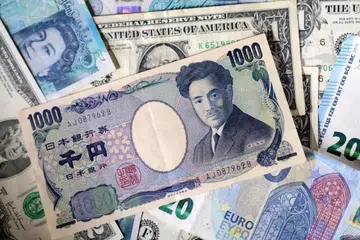
The US dollar fell 0.45 per cent to 110.06 yen following Trump's tariff comments. The yen is often sought in times of market turmoil and political tensions.
"The financial markets are trying to gain a breather after last week, when there were many news events, but US-China trade remains a lingering theme, at least until the US tariffs take effect early in July," said Masahiro Ichikawa, senior strategist at Sumitomo Mitsui Asset Management in Tokyo.
"While trade tensions are not a positive theme, the market has become accustomed to President Trump's comments, which appear to be negotiating tactics."
The euro was 0.05 per cent higher at US$1.1631. The Australian dollar, often seen as a proxy to China-related trades, shed 0.25 per cent to US$0.7404.
In commodities, crude oil markets remained volatile ahead of Friday's Opec meeting at a time when Russia and Saudi Arabia are pushing for higher output.
Brent crude futures fell 0.3 per cent to US$75.11 a barrel after rallying 2.5 per cent overnight.
REUTERS
Share with us your feedback on BT's products and services
TRENDING NOW

StarHub hands Ensign InfoSecurity control back to Temasek in S$115 million deal, books S$200 million gain
Singaporeans can now buy record amount of yen per Singdollar

Air India asks Tata, Singapore Airlines for funds after US$2.4 billion loss

Keppel DC Reit posts 13.2% higher Q1 DPU of S$0.02833 on strong portfolio performance

