Stocks fall as tensions flare up with new US attacks on Iran
Latest US strikes have injected more volatility into global markets and threaten to further crimp oil supplies
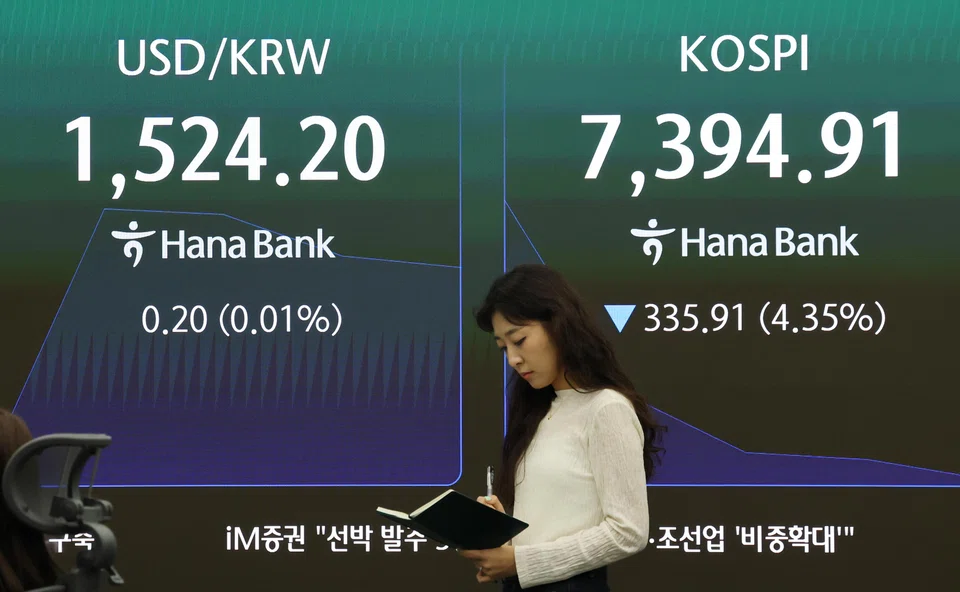
STOCKS dropped as Middle East tensions flared up with new US attacks on Iran, weighing on markets already grappling with a sell-off in richly valued tech stocks. Oil climbed.
MSCI’s Asian equities gauge fell 0.7% after American forces launched strikes on multiple targets in Iran for a second straight day. The gauge briefly edged up as US military said it completed the strikes.
The weak sentiment at the start of the Asian day stabilised with futures contracts for the Nasdaq 100 Index reversing earlier losses to rise as much as 0.6 per cent.
Brent crude rose 1.4 per cent to around US$95 a barrel after climbing above US$95 at the start of Thursday’s (Jun 11) trading. Gold climbed almost 1 per cent to US$4,110 an ounce. Treasuries were little changed after dropping Wednesday on bets the US Federal Reserve will need to raise interest rates to counter inflation.
The latest US strikes have injected more volatility into global financial markets and threaten to further crimp oil supplies. Even after Wednesday’s softer-than-expected US inflation report offered a brief reprieve, traders continued to price in higher borrowing costs, while a continued sell-off in semiconductor stocks cast doubt on the sustainability of the record equity rally.
“Investors remain skittish despite being thrown a lifeline by the inflation figures,” said Chris Beauchamp, chief market analyst at IG. “It is now a case of ‘once bitten, twice shy.’ No one wants to go charging in to buy the dip yet, which suggests more of a drift lower for the time being, though leaving the overall trend intact.”
Earlier, the US Central Command said it had begun what it called the “additional self-defense strikes,” which followed action on Tuesday in retaliation for the downing of a US helicopter. The moves underscored US President Donald Trump’s growing impatience that the US and Iran have so far failed to reach an agreement.
The attacks also reinforced the view that an April ceasefire has effectively collapsed, despite the absence of a return to the large-scale bombing campaign seen at the start of the conflict.
“Investors have lived with this conflict for months now, and each fresh headline carries a little less shock value than the last,” said Josh Gilbert, lead analyst for Asia Pacific and the Middle East at Etoro. “It still feels like we’re far away from any real resolution, and although we’re seeing some relief from markets, it comes after a brutal few days.”



In the US, shares of chipmakers including Nvidia and other AI infrastructure companies, 2026’s biggest winners, fell for a second day Wednesday. Oracle shares slipped in extended trading after reporting quarterly capital expenses that were higher than estimates.
Elsewhere, the yen was little changed at 160.49 per US dollar with Bank of Japan Governor Kazuo Ueda hospitalised. He is expected to miss next week’s policy meeting, the central bank said.
Meanwhile, the core consumer price index in the US, which excludes food and energy prices, increased 0.2 per cent from April, under the 0.3 per cent consensus forecast among economists surveyed by Bloomberg.
Even so, bond traders maintained bets that the Fed would raise rates by the end of 2026. While US Treasury yields initially dipped after the data on Wednesday, they resumed climbing with oil prices later in the session. Interest-rate swaps showed traders are still fully pricing in a rate hike by December.
“It’s clear that rate cuts are off the table, and while there is chatter about a potential rate hike, we believe it’s unlikely that we’ll see a rate hike before the midterm elections,” Skyler Weinand, chief investment officer at Regan Capital, wrote in a note. BLOOMBERG
Decoding Asia newsletter: your guide to navigating Asia in a new global order. Sign up here to get Decoding Asia newsletter. Delivered to your inbox. Free.
Share with us your feedback on BT's products and services