

Nikkei, Kospi rally as strong US jobs data brighten global growth outlook
Rising bond yields remain a drag for equity valuation
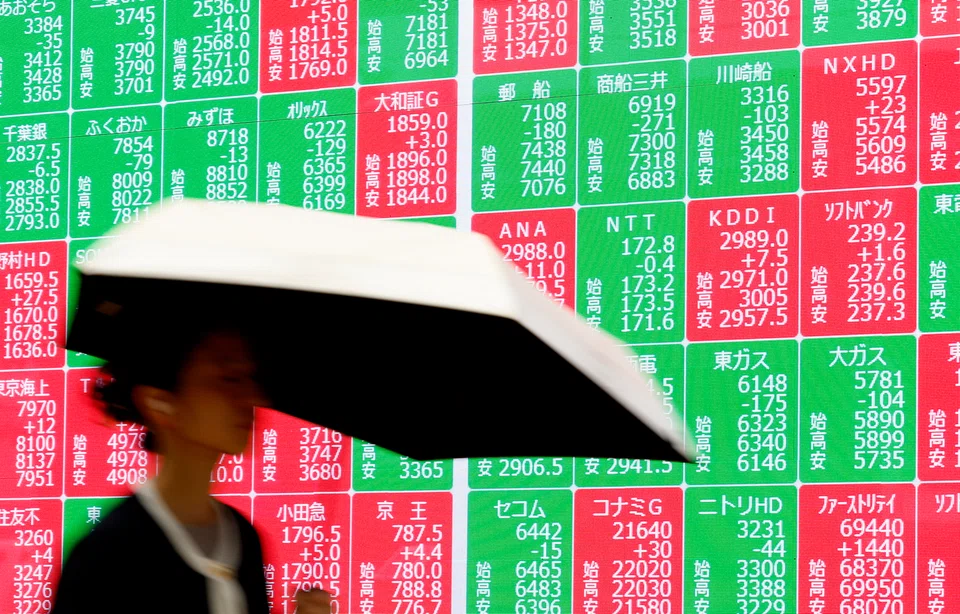
[SYDNEY] Asian shares rallied on Monday (Sep 7) as the robust US jobs report was seen as positive for global growth even as it narrowed the odds on a rise in interest rates, while oil edged higher after the US and Iran attacked ships in the Gulf.
Teheran said it will announce a restricted zone outside the Strait of Hormuz in coming days, after US forces hit three Iranian tankers and Iran’s Islamic Revolutionary Guard Corps launched ballistic missiles at two US Navy ships.
As a result, Brent added 0.2 per cent to reach US$96.45 a barrel , having climbed almost 10 per cent in the week ended Sep 6, while US crude rose 0.4 per cent to US$91.85 a barrel.
That inflationary impulse raises the stakes for a key reading of US consumer prices due on Friday, and is a major reason the European Central Bank is seen as certain to lift rates to 2.75 per cent on Thursday. Futures also imply a 75 per cent chance of another hike to 3 per cent by December.
The risk of hawkish guidance from the ECB after the rate hike kept European stocks on edge on Monday. Eurostoxx 50 futures and Dax futures eased 0.1 per cent, while FTSE futures were flat.
On Wall Street, a US holiday kept turnover light with both S&P 500 futures and Nasdaq futures a fraction lower.
A key focus this week is the US August CPI report on Friday where median forecasts are for a rise of 0.2 per cent in the core, with a risk of 0.3 per cent.
In Asia, Japan’s Nikkei rebounded 2 per cent, after losing a similar amount in the week ended Sep 6, while South Korea rallied 3 per cent. MSCI’s broadest index of Asia-Pacific shares outside Japan added 0.9 per cent.
Rising bond yields remain a drag for equity valuations, with Treasury 10-year yields near their highest since late 2023 at 4.784 per cent. A high CPI reading would likely see yields edge closer to the psychological 5 per cent barrier.
SEE ALSO





For the US Federal Reserve, Sep 2’s upbeat payrolls report has left markets pricing a 58 per cent chance of a hike when it meets on Sep 16, and 70 per cent for a move in October.
Central banks ‘on the move’
Bruce Kasman, global head of economics at JPMorgan, is looking for core CPI to rise 0.21 per cent which he thinks would be low enough to keep the US Fed on hold, if only for now.
Likewise, markets are pricing a 75 per cent chance the Bank of Japan will raise rates a quarter point at its meeting on Sep 18, with a 60 per cent probability of another move by December.
“Central bank patience through the energy shock has been supportive of asset prices and the credit cycle,” said Kasman. “However, central banks are now on the move.”
“We forecast two more hikes from the ECB and BOJ before year-end,” he added. “There is also a strong case for the Fed to move earlier and more aggressively than our baseline forecast for a December hike.”
In currency markets, the US dollar index got only a mild lift from the jobs report as worries about ever-growing US debt and policy uncertainties erode the purchasing power of the currency, driving investors to scarce assets including gold.
The US dollar index stood at 99.135, not far from recent lows at 98.558. The euro held at US$1.1614, within sight of the August top at US$1.1711.
The US dollar was a tick easier at 156.07 yen, and still threatening major support at 155 after losing 2.4 per cent in the week ended Sep 6 as the yen rallied on speculation about a more aggressive BOJ tightening.
In commodities, gold was steady at US$4,426 an ounce, after finding support at US$4,282 in the week ended Sep 6. REUTERS
Decoding Asia newsletter: your guide to navigating Asia in a new global order. Sign up here to get Decoding Asia newsletter. Delivered to your inbox. Free.
Share with us your feedback on BT's products and services






