

Asian stocks track US rally on Iran peace push
Market sentiment has improved
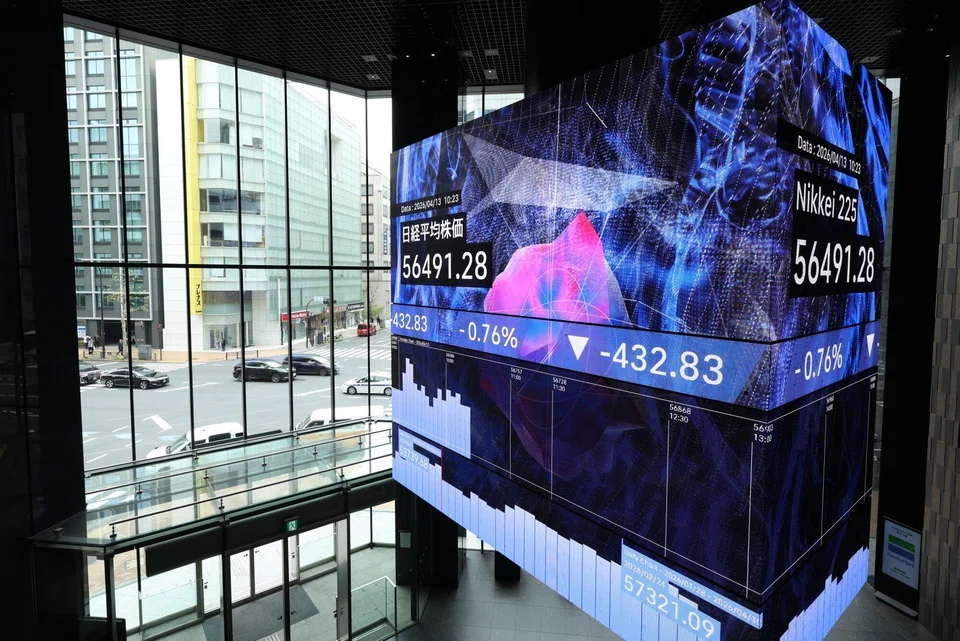
ASIAN stocks opened higher, tracking Wall Street gains, as optimism over further US-Iran talks lifted sentiment and pushed down oil prices.
Equities opened higher in Japan, South Korea and Australia, sending the broader MSCI Asia Pacific Index up 0.9 per cent. That came after the S&P 500 Index finished 1.2 per cent higher to extend a rebound that’s brought it to the brink of its late-January peak.
The tech-heavy Nasdaq 100 rose 1.8 per cent, a 10th straight day of gains — the longest winning streak since 2021.
Brent crude fell 0.4 per cent to US$94.50 a barrel on Wednesday as President Donald Trump told Fox News that he views the war as very close to being over.
Market sentiment has improved on expectations that an easing in Middle East tensions after more than a month of hostilities will help moderate oil prices and inflation, while supporting a recovery in economic growth.
The US and Iran are seeking a second round of talks in the coming days, as tensions in the Strait of Hormuz deepen the global energy crisis ahead of next week’s expiry of a ceasefire.
“It’s not about whether there is progress in the peace talks, it’s about whether we can reasonably hope that there might be progress in the peace talks,” said Steve Sosnick, chief strategist at Interactive Brokers LLC. “Vibes are more powerful than reality.”
Trump said talks could resume “over the next two days” in Pakistan, the New York Post reported. That would build on a marathon yet inconclusive session in Islamabad on Saturday night.
In the meantime, the US is pressing ahead with a naval blockade of Hormuz to curb the Islamic Republic’s oil exports, as the battle for control of the strategic waterway intensifies.
Asian markets, among the hardest hit by the Iran war, are also starting to recoup war-related losses, signalling investors are growing more confident that tensions in the Middle East will ease.
Taiwan and Singapore equities have erased their declines while other markets are closing in on their pre-war levels. The yuan has also gained for eight straight days ending on Tuesday.
Elsewhere, gold steadied around US$4,840 an ounce while the dollar was weaker for an eighth consecutive session. Treasuries strengthened during the New York session.
Crude oil also dropped as the International Energy Agency estimated that the war will wipe out global oil demand growth for the first time since the 2020 pandemic.
The International Monetary Fund also downgraded its global growth projection for the year because of the war in the Middle East and included the possibility of a downturn if the conflict drags on and energy infrastructure is severely damaged.
Traders are also focused on first-quarter earnings at a time when the war in the Middle East is weighing on the outlook for the economy. JPMorgan Chase & Co. shares slipped despite a record quarterly trading revenue haul. Citigroup rose after reporting its highest quarterly return in five years on tangible common equity.
BlackRock took in a net US$130 billion of client cash in the first quarter, with investor money continuing to pour in despite volatility in the public and private markets and protracted uncertainty over the war in Iran. Shares rose 3 per cent.
“Profits drive the cycle and the global profit expectations have not been dented,” said Tom Fahey, co-director of macro strategies at Loomis Sayles, during a panel on Tuesday.
Meanwhile, US wholesale prices rose by less than expected in March, despite a surge in energy costs tied to the Iran war, data from the Bureau of Labor Statistics showed. The producer price index rose 0.5 per cent, with an underlying gauge that excludes food and energy up just 0.1 per cent.
Economists projected a 1.1 per cent increase for the PPI from a month earlier.
The data follow figures last week that showed US consumer prices surged in March because of skyrocketing gasoline prices, even as underlying inflation came in below estimates.
“Companies continue to show remarkable resilience in the face of supply chain, tariff, and now energy challenges,” said Scott Helfstein, head of investment strategy at Global X ETFs. “This should be reassuring for investors.” REUTERS
Decoding Asia newsletter: your guide to navigating Asia in a new global order. Sign up here to get Decoding Asia newsletter. Delivered to your inbox. Free.
Share with us your feedback on BT's products and services






