

Asia's post-FOMC relief rally fizzles out on inflation, China's growth concerns

Anita Gabriel
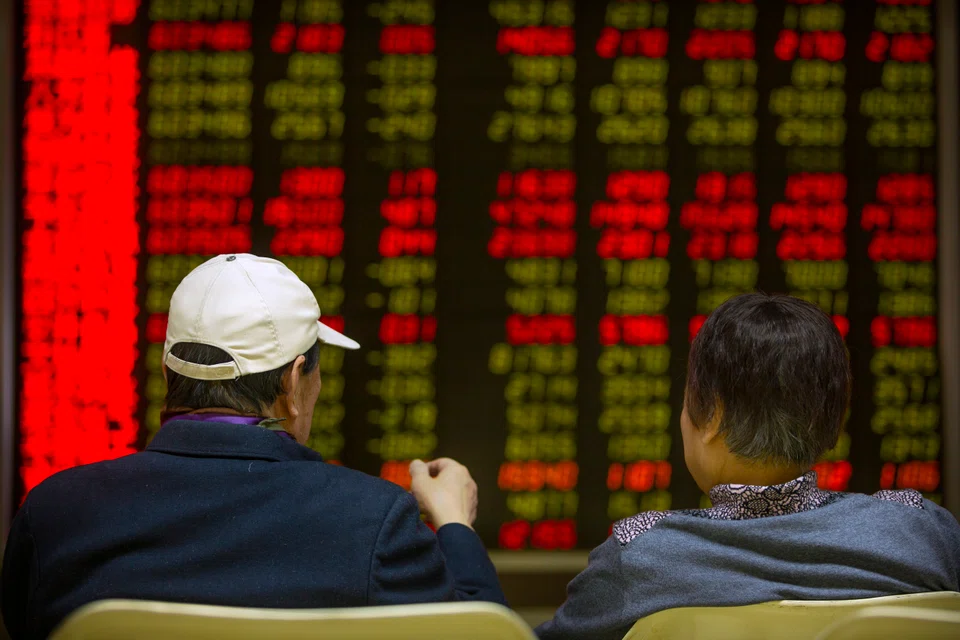
THE rally across Asian markets at the start of Thursday's (May 5) trading session turned mixed as caution seeped back in after initial gains were sparked by the policy statement of the US Federal Open Market Committee (FOMC) last night that ruled out a jumbo 75 basis point rate hike in upcoming meetings.
The strong gains in US stocks overnight provided wind beneath their wings for key Asian gauges in China, which returned online after a 3-day break, Australia and Taiwan. The rest including Hong Kong, Singapore and Malaysia began on an upbeat note but soon ran out of steam as concerns over China's slowing growth and inflationary pressures took centrestage following the latest release of some key data.
The MSCI's broadest index of Asia-Pacific shares outside Japan was also down 0.4 per cent after an early rise. Markets in Japan, South Korea and Indonesia are closed for holidays today.
A private gauge measuring activity in China’s services sector tumbled to its lowest level since the initial onset of the pandemic in February 2020 as stringent lockdowns hurt customer demand.
The inflation climate in Asean against a backdrop of rising commodity prices weighed on sentiments. Latest data revealed that consumer prices in the Philippines continued its uptick in April - the sharpest in over 3 years - while Thailand's headline inflation moderated slightly. On the flip side, Singapore published retail sales, which surprised on the upside with an increase of 8.7 per cent year on year in March, reversing the previous month's fall.
Stephen Innes of SPI Asset Management said: "The weaker China PMI (purchasing managers' index) weighs on oil and broader risk sentiment, as do higher inflation - suggesting the risk of another hawkish Fed pivot remains live. It could seriously diminish the attractiveness of equities down the road."
As widely expected, the FOMC unanimously hiked rates by 50 basis points for the first time since 2000 and said it will start reducing its balance sheet as soon as June. The overall tone was hawkish as Fed chair Jerome Powell opined that there is a “broad sense on the committee that additional 50 basis points increases should be on the table for the next couple of meetings”. Markets were quick to post a relief rally as they chose to focus on the "dovish surprise" following Powell's remarks that a 75 basis point hike is “not something that the committee is actively considering”.
"This was a reflection of relief, as investors came into the meeting fearful that the committee would be overly aggressive in tightening monetary policy," said Clara Cheong, Singapore-based global market strategist at JPMorgan Asset Management.
Cheong added: "Our constructive view on Asia ex-Japan equities has not changed. On the margin, the removal of some of the uncertainty following the Fed meeting has helped sentiment and that is consistent with the positive price action that we are seeing in Asia equity markets this morning. Furthermore, the Fed is hiking into the strength of the US economy, where consumers and businesses are in good shape and should be able to weather the rate increases. Demand for foreign goods and services have continued on an uptrend, with the trade gap (~4.8 per cent of GDP) now at its highest level since 2008."
She added that should US inflation start to moderate lower through the rest of the year, the Fed will have some ammunition to tone down on its hawkish stance, leading to implications for the dollar as well, which has been strong on the back of relatively robust US economic recovery versus the rest of the world.
"A weaker dollar trajectory going forward can also help enhance international equity returns, specifically the Asia ex-Japan region. We prefer cyclical sectors like financials, industrials, consumer discretionary where valuations are attractive and they stand to benefit from the cyclical and domestic demand recovery that we have yet to see come through for the region as a whole," she elaborated.
Caution continues to reign. DBS Group Research chief economist Taimur Baig remarked: "In Asia, the sharp fall in shorter-term UST yields could provide temporary relief. However, we are not convinced that Asia will be able to stay accommodative for much longer. Inflationary pressures are shifting from the developed markets (DM) into the emerging markets (EM)/Asia space".
"Within Asia, there are only a few central banks that are clearly hawkish. These include the BOK (Bank of Korea) and the MAS (the Monetary Authority of Singapore). The RBI (Reserve Bank of India) was the latest to move, hiking the repo rate and the CRR (cash reserve ratio) in an off-cycle move yesterday. For the rest of Asia, we suspect that further hawkish pivots are upcoming," he added.
Clifford Bennett, chief economist at ACY Securities opined that the post-FOMC momentum rally in Wall Street could have "at best another 24 hours to run" and has maintained a "bearish caution outlook".
"What Wall Street is missing on the day is that the Fed course now represents 1-3 years of real pain for mortgage holders, the property market in general and therefore flow through credit effects across the whole economy," Mr Bennett continued.
"Asia is an incredibly strong anchor economically. Though it will broadly suffer as China enters a ’touch-and-go’ recession," he said, adding that the key point is that the region will emerge quickly from the China recession while the US and Europe will experience more prolonged and entrenched slowdowns.
He added: "This will be a 'triple recession' in Europe, the US and China momentarily. Not a global recession. The gross global GDP data will suffer a significant setback, given the world’s 3 largest economies could all be in recession at the same time, but such global perspectives are no longer as relevant as they once were."
Major concerns linger from global supply chain disruptions, inflationary pressures and the impact of the Russia-Ukraine conflict, which continue to weigh on investors’ minds. "With so many variables up in the air on the economic and earnings front, the price discovery process may be more volatile than what many investors may be used to," said Greg Baker, chief executive of TD Ameritrade Singapore.
TRENDING NOW

ComfortDelGro appoints two new independent directors

Once staunchly pro-China, Malaysian Chinese businesses are now distancing themselves from Beijing

NoonTalk needs continued financial support from CEO Dasmond Koh, auditors warn

DP Architects sets the benchmark for sustainability disclosure and design

