

Asia's turn to drive the bulls
Money that flowed into Europe is seeking a new home in Asia, which could be poised for a renaissance.
FOR a long time, developed market equities led the equity market bull run. The US market led the way first, driven by the clear recovery in its economy, with strong job creation, the benefits of increasing energy independence and the perception that the US dollar should be strong. Then European equity markets had their turn in the driver's seat, as markets reflected signs of recovery in Europe's previously fragile economies, and fears of the worst-case scenario, a break-up of the European Union, dissipated.
It is now Asia's turn to drive the bull market forward.
There are several reasons, which I will lay out here.
The first is valuation. In absolute terms, equity markets are no longer cheap globally, but they are not expensive either, in many cases trading close to long-term averages. But on a relative basis, after a strong period of performance in Western-developed markets, Asian market valuations have started to look attractive.
At the same time, while the US recovery still looks reasonably solid, the European picture has started to look less attractive.
Many of the European economies are now teetering on the brink of recession and deflation. This has caused some of the money that had flowed into Europe to seek a new home in Asia.
Additionally, it has caused the European Central Bank (ECB) to further ease monetary conditions, through a combination of increasingly negative interest rates alongside new programmes of asset purchases.
Such moves may have a limited impact on European economies, but they are certainly conducive to further asset price inflation globally.
And the more liquidity there is, the more likely it is that risky assets (such as emerging market equities) will outperform their less risky brethren. This rotation back into Asian equities is clearly visible in the fund flow data.
Most Asian stock markets publish information about the level of foreign buying.
This data shows that foreigners have been net buyers of all Asian markets pretty consistently over the last five months. This picture is supported by the mutual fund flow data, which shows that investors have been strong buyers of Asian mutual funds over the last few months.
North Asian funds have been particularly in favour - China, Korea and Taiwan. These inflows have started to drive outperformance of Asian markets.
Over the last three months, most Asian markets have done much better than their developed Western counterparts. Over that time, perhaps a little surprisingly, Thailand has been the best performer, up almost 15 per cent in US dollar terms.
Both domestic and foreign investors in Thailand have welcomed the relative stability brought about by the military junta now ruling the country. The military takeover puts an end to squabbles and street protests between the two main political groups that have been economically destructive.
CHINA REVIVAL
But performing almost as well as Thailand have been China and Taiwan, up around 12 per cent and 9 per cent, respectively over the same time period in US dollar terms.
In comparison, the US and Japan are up less than 5 per cent, and the UK and Germany have fallen.
An improvement in foreign investors' views of China has been an instrumental part of the Asian market revival. This improvement relates to two main things.
The first relates to the generally loose, stimulative conditions the government has put in place, designed to help the economy reach its annual gross domestic product (GDP) growth targets.
Goldman Sachs runs an indicator called the Financial Conditions Index (FCI), which aims to measure a group of monetary indicators such as interest rates and exchange rates.
The FCI has loosened by over 300 basis points so far this year, the largest easing since the four-trillion yuan stimulus immediately following the global financial crisis.
Additionally, liquidity is being injected into the system via a one-trillion yuan People's Bank of China (PBOC) loan to China Development Bank for "Pledged Supplementary Lending" - another form of targeted stimulus that will boost base money.
Meanwhile, some cities have relaxed home-purchase restrictions, and banks have eased mortgage requirements. The second main driver of recent China market strength has been the bottom-line impact of state-owned enterprise (SOE) reform.
SOE reform has arguably been the area where the most progress has been made since the reform programme was announced in detail following the Third Plenum.
In the long run, the reform programme should shift economic power away from the SOEs and towards the private sector.
However, in the short term, the SOE reforms have resulted in improved share price performance from some SOE stocks.
Examples include China Mobile, one of the best stock market performers at the time of writing, where the bottom line should be helped by reduced handset subsidies; Petrochina, where increased capital expenditure discipline could improve cash flow; and China National Building Materials, where increased private sector equity ownership could improve a weak balance sheet.
Elsewhere in Asia, the recent elections in India and Indonesia have caused an uptick in sentiment towards those two markets.
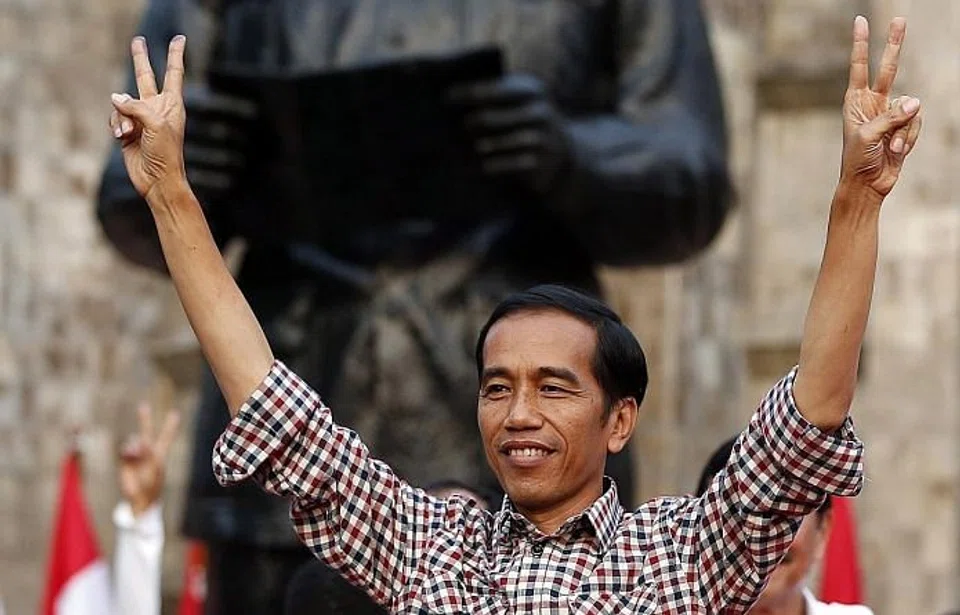
Both countries have elected new leaders - Narendra Modi in India and Joko Widodo or "Jokowi" in Indonesia - who could be a breath of political fresh air. Neither leader is from the established political elite families that have ruled those countries for decades.
Future dynamos
Both leaders are, at first glance at least, likely to try to reduce corruption, cut through red tape, build infrastructure, and get things done. For many years now the world has relied on China to be the engine of economic growth.
Naturally, as the size of China's economy has risen, its growth rate has slowed. India and Indonesia are the world's second and fourth biggest countries by population.
They are at a relatively early stage of development, where you could argue it is easier to make big steps forward. If either or both of those countries does indeed start to power ahead under new leadership, it would be immensely positive, not just for that country and for Asia, but for the world as a whole.
In conclusion, then, a number of things are supporting the Asian market renaissance: relative valuations; a slowdown in Europe; ongoing easy global monetary conditions; the benefits of stimulus and reform in China; a calmer political scene in Thailand; and high hopes for India and Indonesia's new leaders.
While this swing in sentiment has been under way for some months now, it looks set to continue for some time yet.
zThe writer is senior investment director, Fidelity Worldwide Investment
In the short term, the SOE reforms have resulted in improved share price performance from some SOE stocks. Examples include China Mobile, one of the best stock market performers at the time of writing, Petrochina, and China National Building Materials.
TRENDING NOW

He built the Vingroup empire. Now South-east Asia’s richest man is handing some key roles to his sons

32 companies, 6 individuals bag accolades at Singapore Corporate Awards 2026
Can a first-time homebuyer couple earning S$18,000 a month afford a new EC unit?

Floods compound Philippine growth woes from public-works scandal

