Australia: Miners drag shares to their worst day in over a week
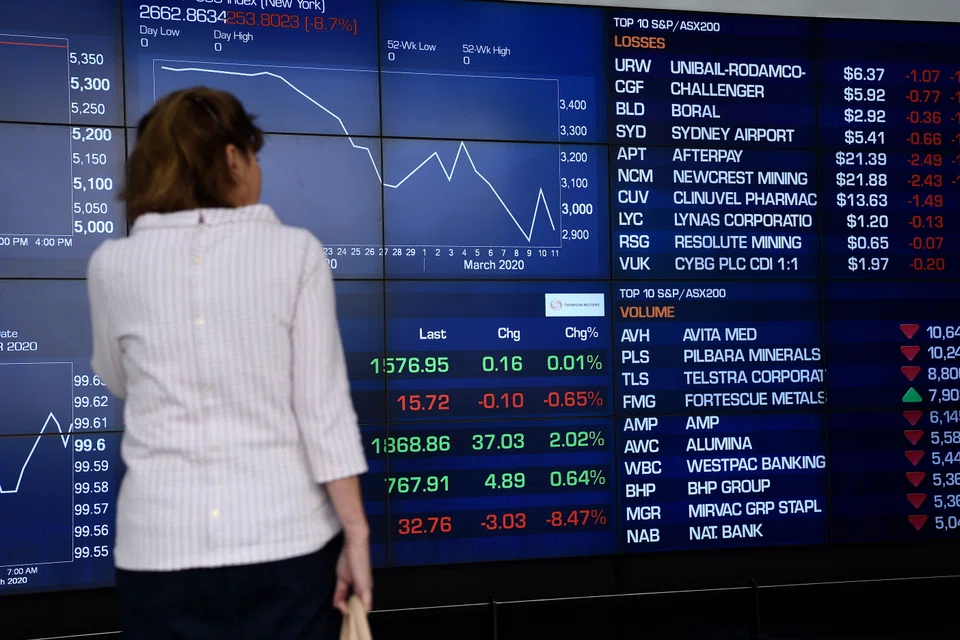
AUSTRALIAN shares marked their worst session in over a week on Monday (Jul 11), after miners were hit by weak commodity prices, and as investors awaited US inflation data to gauge how aggressive the Federal Reserve will be in hiking interest rates.
The S&P/ASX 200 index closed 1.1 per cent lower at 6,602.20 points, snapping a 2-day winning streak. The benchmark recorded its worst session since Jun 30.
“Investors are likely to witness continued volatility this week ... it seems as if investors are turning cautious on the eve of a data-heavy week on the global financial markets,” said Kunal Sawhney, chief executive officer of Kalkine Group.
World markets are focused on the June US consumer price index data expected on Wednesday and the domestic jobs report due on Thursday that could force another super-sized hike in interest rates.
At this point, investors expect the Fed to approve another 75-basis-point rate increase at the upcoming Jul 26-27 meeting.
Miners led declines on the benchmark, dropping 3 per cent as iron ore prices fell on fears of weakening demand in top steel producer China, where multiple cities are enforcing fresh Covid-19 curbs.
Heavyweights Rio Tinto, BHP and Fortescue Metals Group fell between 2.1 per cent and 3 per cent.
Financials shed 0.5 per cent, with National Australia Bank, Australia and New Zealand Banking Group and Westpac Banking Corp down between 0.1 per cent and 1.2 per cent.
Weakness in bullion prices overnight dragged gold stocks 2.7 per cent. Newcrest Mining and Northern Star Resources declined 2.5 per cent and 3.1 per cent, respectively.

New Zealand’s benchmark S&P/NZX 50 closed 0.6 per cent lower at 11,106.14 points, marking its worst day since Jul 1.
The Reserve Bank of New Zealand (RBNZ) is expected to deliver a third successive half-point interest rate hike on Wednesday, a Reuters poll found.
However, slumping confidence and floundering economic data are seeing the market question whether RBNZ will do more harm than good in its combative quest to contain soaring inflation. REUTERS
(Reporting by Upasana Singh in Bengaluru; Editing by Amy Caren Daniel)
Decoding Asia newsletter: your guide to navigating Asia in a new global order. Sign up here to get Decoding Asia newsletter. Delivered to your inbox. Free.
Share with us your feedback on BT's products and services