

China: Blue chips close higher as property, auto stocks gain
 Add BT as a preferred source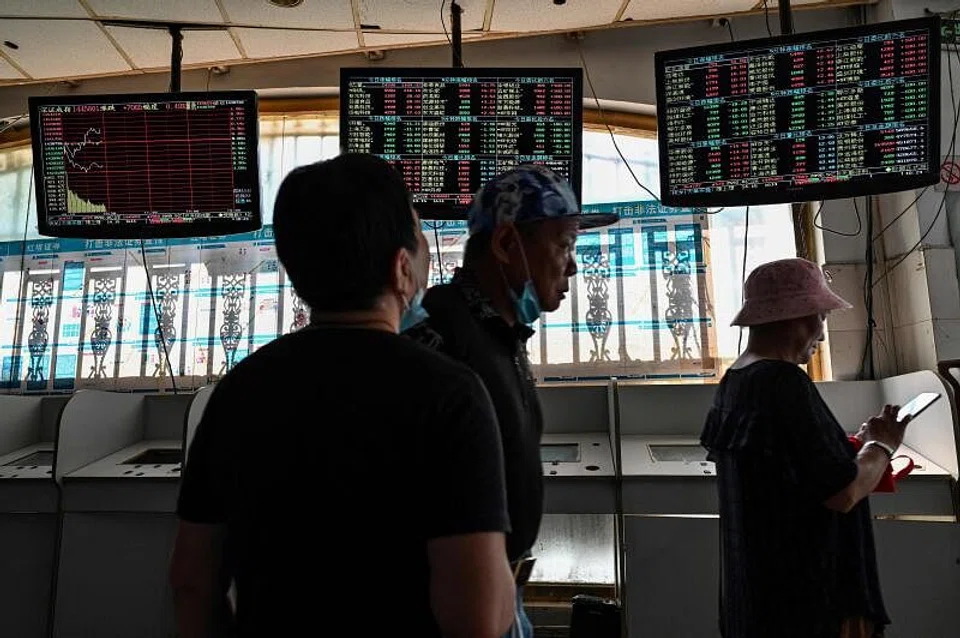
DeeperDive is a beta AI feature. Refer to full articles for the facts.
[SHANGHAI] China's blue chips closed higher on Thursday (Dec 2), led by real estate developers after 3 firms unveiled plans to issue domestic bonds, while analysts said Beijing would continue its deleveraging campaign in the sector despite policy tweaks.
The blue-chip CSI300 index rose 0.3 per cent to 4,856.16, while the Shanghai Composite Index lost 0.1 per cent to 3,573.84.
Real estate developers gained 2 per cent. Three Chinese developers plan to sell bonds in China to raise a combined 18 billion yuan (S$3.9 billion).
Analysts said this shows Beijing is marginally easing liquidity strains on the cash-strapped sector.
But China's property sector downturn is expected to continue into the first half of 2022, with home prices and sales falling as tight credit policies and a looming property tax dampen demand, a Reuters poll showed.
"We expect the government to take further steps to stabilise the sector," Fitch Ratings said in a note.
Navigate Asia in
a new global order
Get the insights delivered to your inbox.
"However, any further policy loosening will be measured, given the government's clear intent to see deleveraging in the sector and curb speculative demand."
Car stocks finished up 1.7 per cent, while construction engineering shares jumped 2.1 per cent.
The media sub-index and the photovoltaic industry sub-index lost 2.1 per cent and 1.5 per cent, respectively.
REUTERS
Decoding Asia newsletter: your guide to navigating Asia in a new global order. Sign up here to get Decoding Asia newsletter. Delivered to your inbox. Free.
Share with us your feedback on BT's products and services
TRENDING NOW

Autobahn Rent A Car directors declared bankrupt over S$50 million each owed to DBS

Higher costs, lower returns: Why are Singaporeans still betting on real estate?

Richard Eu on how core values, customers keep Singapore’s TCM chain Eu Yan Sang relevant
Loyang Valley sold for S$880 million to SingHaiyi-led consortium

