China bonds emerge as surprise haven as Iran war reshapes portfolios
Near-zero correlation with Western markets draws foreign buyers
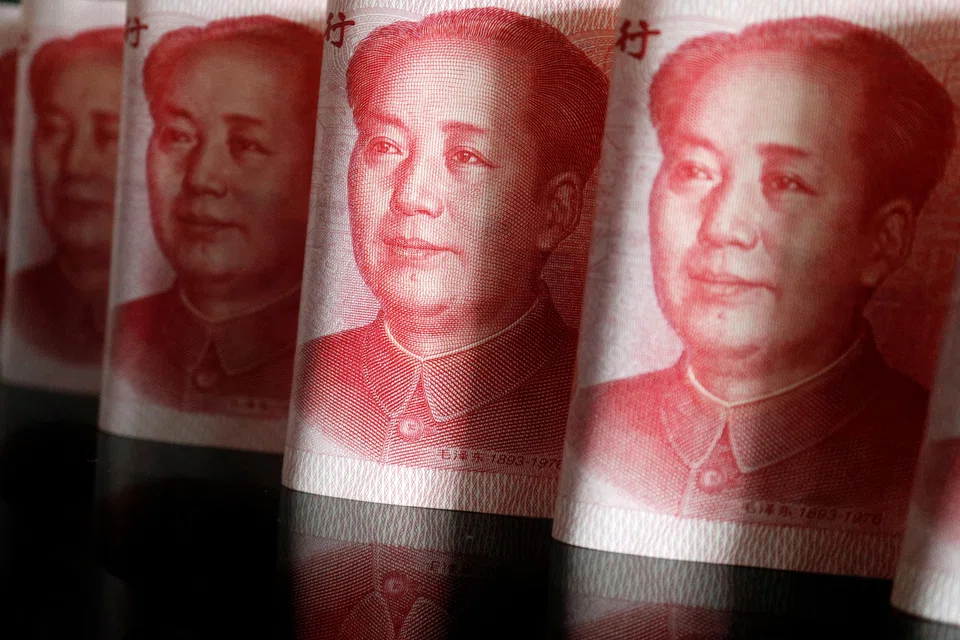
[SHANGHAI/HONG KONG] Global asset managers have been adding Chinese government bonds (CGBs) to their portfolios since the Iran war broke out, drawn not by yield but by their near-zero correlation with Western markets.
Amid a global rout in sovereign debt since March that has sent benchmark yields soaring between 35 and 60 basis points (bps) in the US, Britain, Europe and Japan, yields on equivalent CGBs have declined eight bps.
The striking outperformance has caught the attention of real money investors – from sovereign funds and central banks to insurers – prompting a re-assessment of portfolio construction even as it pushed Chinese yields to the lowest outside Switzerland.
Chinese debt is attracting investors with a “preservation mandate”, offering regional portfolios a low-volatility counterbalance to riskier, higher-yielding assets, said Wei Li, head of multi-asset investments at BNP Paribas Securities.
“Attractiveness is judged on a risk-adjusted footing. China delivers exceptional price stability.”
The market has stood out all the more as other, more traditional havens have faltered. Bullion, for example, is down some 25 per cent from its January highs.
The Guotai 10-Year China Treasury ETF has returned 1.26 per cent so far this year, against a 2.57 per cent fall for the US-focused iShares seven-10 Year Treasury Bond ETF and a 1.23 per cent decline for Invesco’s equivalent Euro bond ETF.
“If you look at correlations between CGBs and European rates, it’s close to zero. That has its attractiveness,” said Matthias Dettwiler, head of active fixed income at UBS Asset Management.
For investors whose goal is capital preservation or portfolio diversification, “I would even go as far as to say the absolute yield doesn’t matter so much”, he said.




Low correlation compensates for low yields
Insulating China’s debt market from the turbulence wrought by the Middle East oil shock are the country’s ample energy reserves, a relatively dovish central bank and structurally low price pressures from persistently sluggish consumption.
A glut of household savings that banks are channelling into the bond market is also acting to pin down yields.
“Liquidity plays a big part in driving the CGB markets, and liquidity conditions have remained extremely abundant,” said Jerome Tay, senior investment manager of fixed income at Aberdeen in Singapore.
Chinese 10-year yields at 1.75 per cent are now about a percentage point below Japan’s, flipping a dynamic in place until late 2025, where Japan was the rock bottom of the rates market.
However, unlike in Japan, where yield destruction from a decade of massive central bank stimulus and two decades of deflation before that sent capital pouring overseas, China’s tight capital controls are keeping money within its borders.
And in contrast to Japan, Europe and the US, China’s central bank is leaning dovish, with inflationary pressures firmly in check.
“This divergence in macro conditions and policy stance helps explain why China’s bond market has remained relatively stable within a more volatile global rates environment,” said Stephen Chang, Pimco portfolio manager for Asia.
“We continue to maintain overall exposure to China bonds, focusing on relative value opportunities.” REUTERS
Decoding Asia newsletter: your guide to navigating Asia in a new global order. Sign up here to get Decoding Asia newsletter. Delivered to your inbox. Free.
Share with us your feedback on BT's products and services