

China traders bet promised stimulus will outweigh Covid outbreak
 Add BT as a preferred source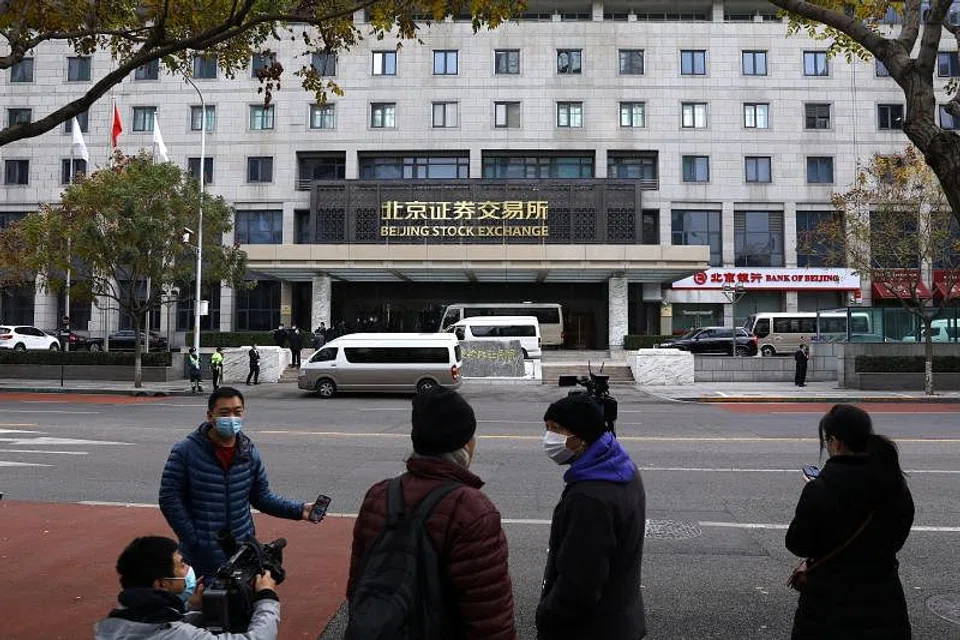
DeeperDive is a beta AI feature. Refer to full articles for the facts.
[BEIJING] China's soaring Covid infections are provoking little panic in the stock market, with local investors betting that the authorities will unleash stimulus to prop up growth.
The benchmark CSI 300 has advanced more than 2 per cent since the financial hub of Shanghai introduced a 2-stage lockdown early last week. An index of Shanghai-listed developers and a Bloomberg gauge of Chinese real estate firms have both climbed about 10 per cent during that period, buoyed by a mid-March pledge by authorities to support the sector and stimulate the economy.
Bets are mounting that China's policy makers will deploy more stimulus to shore up growth as President Xi Jinping looks to secure a third term this year. A weak services sector report on Wednesday (Apr 6) highlighted the risks for the world's second-largest economy, with holiday spending figures pointing to more damage ahead amid widespread Covid curbs.
"We've seen and quelled such outbreaks so many times before and have plenty of experience, it's only a matter of time once the nation sets its mind on it," said Chen Shi, a fund manager at Shanghai Jade Stone Investment Management. "Looking in retrospect to 2020, the largest returns in stocks came in tandem with the period of the greatest uncertainties over the virus in the first 2 quarters."
Chen, who has been confined to his compound for more than 20 days, expects policy loosening to translate into better valuations even if earnings are impacted. The wider range of treatment options, more extensive testing and a lower fatality rate indicate that the outbreak can be contained, he said.
Foreigners sell
Navigate Asia in
a new global order
Get the insights delivered to your inbox.
The domestic optimism contrasts with growing concerns elsewhere over China's worsening outbreak. Analysts at Morgan Stanley slashed their target for the CSI 300 Index by 16 per cent last week, citing risk factors such as property defaults and city-wide lockdowns, according to a research note.
The brokerage also lowered its estimate for China's 2022 economic expansion to 4.6 per cent from 5.1 per cent due to the nation's "strict adherence" to its Covid policy. Citigroup's economists said gross domestic product growth could take a hit of as much as 0.9 percentage points in the second quarter.
Overseas investors sold a net 5.3 billion yuan (S$1.1 billion) of Chinese shares on Wednesday, the most since Mar 21, and were sellers in Thursday's session too, according to data compiled by Bloomberg.
The CSI 300 Index slipped as much as 0.8 per cent Thursday after the Federal Reserve laid out a plan to shrink its balance sheet by more than US$1 trillion a year while raising interest rates. The Shanghai Stock Exchange Property Index slid as much as 2.7 per cent.
Stimulus boost
In terms of stimulus, the Chinese authorities have a variety of tools at their disposal, including cutting rates and taking steps to boost the property sector. Officials will use monetary policy tools at an "appropriate time" and consider other measures to boost consumption, according to the readout from a meeting of the State Council chaired by Premier Li Keqiang on Wednesday.
Last month, the authorities had pledged to ease a regulatory crackdown, support property and technology companies and stimulate the economy. The CSI 300 gauge has gained almost 7 per cent since then, while the Hang Seng Tech Index rallied over 30 per cent.
Beijing loosened home-buying rules in more than 60 municipalities in the first quarter, abandoning restrictions on the number of residences households can own to stimulate demand.
Hopeful investors may be waiting for a repeat of the dramatic rebound in 2020, when the CSI 300 Index gained nearly 40 per cent in the 4 months between a low in March - when Wuhan was still in lockdown - and July, when daily cases had dwindled to the single digits.
"There has to be loosening at this rate, and hopes are mostly around more relaxation for the property sector, as it's the most important part of the economy," said He Qi, fund manager at Huatai Pinebridge Fund Management. "There are long-term goals for property, then there are imminent emergencies, and the task now is first to make it through this." BLOOMBERG
Decoding Asia newsletter: your guide to navigating Asia in a new global order. Sign up here to get Decoding Asia newsletter. Delivered to your inbox. Free.
Share with us your feedback on BT's products and services
TRENDING NOW

From 1MDB to ‘corporate mafia’: Is Malaysia facing a new governance test?

Higher costs, lower returns: Why are Singaporeans still betting on real estate?
South-east Asian markets account for 8.8% of global capital inflows from 2021 to 2024: report

Richard Eu on how core values, customers keep Singapore’s TCM chain Eu Yan Sang relevant

