

China's commitment to Covid-Zero undermines support for market
 Add BT as a preferred source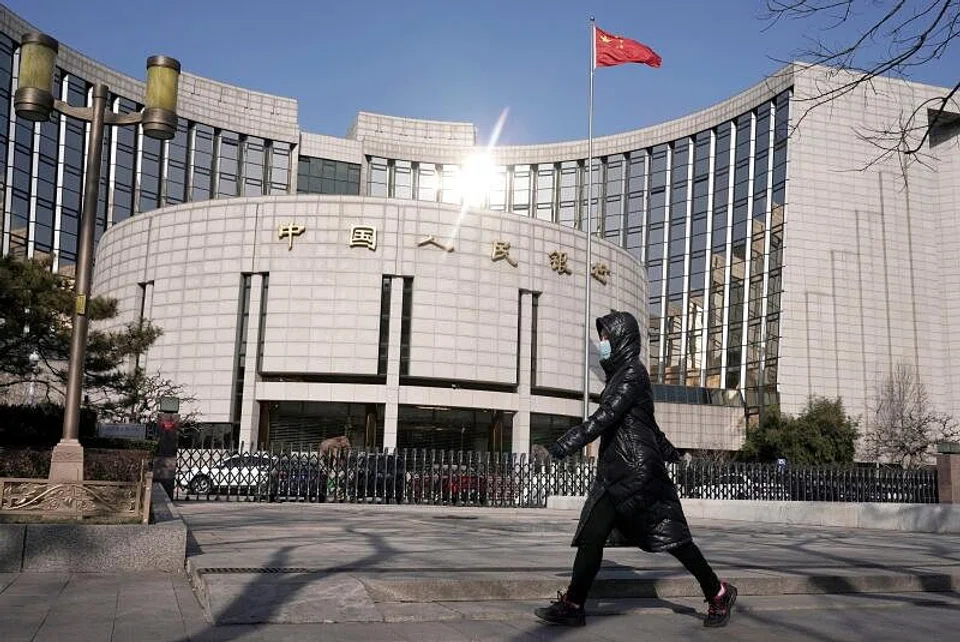
DeeperDive is a beta AI feature. Refer to full articles for the facts.
[BEIJING] Patience is wearing thin among China's beleaguered stock investors as worries about the impact of the latest Covid upsurge eclipse promises of official market support.
Authorities have somewhat delivered on last month's pledges by extending a lifeline to the property sector, committing to ease monetary policy, shelving plans for a real-estate tax, restarting some gaming approvals and removing a key hurdle that threatened to pull ADRs (American depositary receipt) listed in New York. But the market reaction has been a damp squib as all eyes turn to the effects of Covid-Zero.
The stunning reversal in the CSI 300 Index mid-March has petered out as lockdowns to contain the nation's worst Covid outbreak since early 2020 strain the economy. The benchmark remains mired in a bear market and is little changed since Mar 16, when stocks roared back from a historic rout after the State Council first vowed to keep the market stable.
"The market desperately wants economic activity to return to normal," said Wang Zhuo, fund manager at Shanghai Zhuozhu Investment Management Co. "Though unleashing more liquidity at this stage would help, that would not be as potent as easing of virus curbs."
China's central bank gave lenders a modest cash boost on Friday (Apr 15) and refrained from cutting interest rates, taking a cautious approach with monetary easing even as the Covid outbreak takes a toll on the economy.
The Covid-Zero policy has pressured everything from manufacturing and trade to inflation and food prices. President Xi Jinping has said his government will stick to the approach even as a lockdown in the main financial hub Shanghai has generated escalating anger, spawning some of the most anti-government criticism in years on social media.
Navigate Asia in
a new global order
Get the insights delivered to your inbox.
Trader focus on Covid was encapsulated by a 2 per cent surge in the CSI on Tuesday, after social media chatter that some cities had started a pilot programme including shortening of quarantines - a potential gradual exit from current measures. That proved more of a boon to stocks than a State Council meeting voicing support to consumption and pledging additional monetary stimulus.
"What is key is how would they do away with the Covid-Zero strategy," said Kerry Goh, chief investment officer at Kamet Capital Partners. "That's the fundamental difference between China and rest of the world. While the strategy is effective, it is painful to China and other nations."
Measures to shore up the teetering property sector look to be having the strongest market impact. A gauge of real estate shares has soared over 40 per cent from its bottom in March and is now in positive territory for the year.
The property market is at a critical juncture with defaults setting another record pace and the country's fourth-largest builder failing to make a bond payment on time.
Premier Li Keqiang last month announced plans to set up a financial stability fund to "defuse risks and potential dangers" as well as adopt measures to keep home prices stable. But Beijing is yet to loosen debt metrics imposed on developers.
Meanwhile, investors in Chinese internet stocks remain wary. While the Hang Seng Tech Index has rallied almost 25 per cent from its March low, the shine is starting to wear off. A restart of gaming approvals failed to extend its rebound, as traders wager Beijing's regulatory crackdown isn't over yet.
China kicked off a formal campaign this month to rein in potential abuse of algorithms by internet giants to serve up advertisements. A top anti-graft watchdog was said to be involved in a probe into Alibaba's financial arm. And how Beijing will cooperate with Washington to eliminate ADR delisting risk is also unclear.
"Policies have trickled out in drips and drabs, making it difficult for investors to see the end of this regulatory phase," said Louis Lau, fund manager at Brandes Investment Partners. "Liu He said to introduce more predictable regulations, but if you don't say what else is going to be regulated, how can it be predictable?"
But beyond sectors, investors looking for a recovery in the broader market see China getting a grip on the coronavirus as the key catalyst.
"Lifting lockdowns in Shanghai may take some time because the virus has already spread quite a bit but in other cities, we should see clear improvements if they have lockdowns for a week to 10 days," said Naoto Saito, chief researcher at Daiwa Institute of Research in Tokyo. "So while the economic sentiment may be very poor this month, we could see a bottom-out some time in the April-June quarter." BLOOMBERG
Decoding Asia newsletter: your guide to navigating Asia in a new global order. Sign up here to get Decoding Asia newsletter. Delivered to your inbox. Free.
Share with us your feedback on BT's products and services
TRENDING NOW

From 1MDB to ‘corporate mafia’: Is Malaysia facing a new governance test?

Middle East-linked energy supply shocks put Asean Power Grid back in focus

Beijing’s calculated silence on the Iran war
DPM Gan warns of 3 structural shifts to the global system that will bring greater challenges – and opportunities

