A day in the life of an equities analyst
The best ones are analytical thought leaders and good communicators, and comfortable with AI and technology


WHEN people think about analysts covering Singapore stocks, they probably picture rows of finance professionals hunched over their laptops, tinkering with earnings forecasts and valuation models.
The reality is that the “buy”, “hold” or “sell” recommendations that the research teams of brokerage firms churn out daily is the result of frequent communications with the founders and senior executives of companies, and a constant evaluation of current events.
Besides keeping close watch over the markets and operational performance of companies they cover, analysts spend a great deal of their time engaging with their sales teams and investors.
For many, the motivation behind the daily grind of early-morning meetings and nights burned writing reports is simply about making “a good call”, and shaping the prevailing thinking in the market.
UOB Kay Hian (UOBKH) analyst Adrian Loh said: “There is no typical day for analysts because share prices move on a daily basis, and events outside Singapore affect our markets and stocks.”
Many analysts start their day early – usually well before the market opens at 9 am. In the first couple of hours, they scan the news headlines and announcements from companies they are covering.
You Weiren, senior portfolio manager in the research and portfolio management team of FSM Global, said: “Markets move on information, and staying current is non-negotiable.”
It is not enough to be aware of what is happening. Analysts also need to join the dots and see what it all means for companies and the market as a whole.
Thilan Wickramasinghe, head of research at Maybank Securities, who is in his office at 6.45 am and leaves at 9 pm, said: “I do take some time in the morning to reflect on how the overnight moves, and the news for that day, will affect the overall market, and also the sector that I cover.”
SEE ALSO




Getting his thoughts organised quickly is crucial, because of a morning call with his sales teams from around the region that begins at 7.30 am.
Morning calls are a fixture at most brokerage firms. It is often a gruelling test of an analyst’s domain knowledge, analytical prowess and communication skills.
Wickramasinghe said: “When you have an research idea that you need to put in front of your sales force, you do that during that call. It needs to be short, punchy and (focused on) key points.”
The discussions equip sales teams with insights they can share with investors and clients through the day.
After the call, Wickramasinghe sends out an e-mail highlighting his team’s key ideas to clients and his sales teams.
For many analysts, the conclusion of the morning call can be something of a relief. “Then the most important part of the day happens – which is coffee,” he quipped.

“Hunting for opportunities”
The rest of an analyst’s day tends to be varied, driven by what is on their calendar.
Tay Wee Kuang, Singapore head of research at CGS International Securities Singapore, said the day is “usually shaped by immediate priorities”, which can vary significantly from one analyst to another.
For Wickramasinghe, as head of research, one part of his job is to “have a quick catch-up with my team on the different coverage ideas we are working on”.
Maybank’s Singapore research team covers more than 50 stocks, so there is always news, earnings announcements or market developments to discuss.
While individual analysts are ultimately responsible for their recommendations, research is often a collaborative effort.
“We draw on everybody’s experience in the markets, or think about the different possibilities of the news and whatever the companies have announced, and also track how some of our longer-term projects are doing,” said Wickramasinghe.
The team also reviews longer-term projects, including thematic reports, sector deep-dives and initiating coverage on new companies.
During peak earnings season each quarter, schedules become more intensive.
“We review results, update our forecasts, and communicate our views to clients,” said Xavier Lee, equity analyst at Morningstar, where four to five analysts focus on Singapore Exchange-listed companies.
Many analysts actually spend much of their day away from their desks. They regularly present their views on sectors, companies and markets to their investor-clients, and also maintain contact with management teams to stay abreast of business developments.
“There is this view that analysts appear with corporate management only during quarterly results season, but that is not true,” said Wickramasinghe. “We meet corporate management fairly regularly to keep updated on new developments.”
Analysts are also continuously producing research. At any given time, they may be working on several reports simultaneously – from short notes responding to market developments to deeper reports examining sector trends, investment themes and longer-term implications for companies.
Idea generation runs through all of this, said FSM Global’s You.
He said: “Our analysts aren’t simply reacting to the market. They are actively hunting for opportunities worth writing about and making (investment) recommendations.”
“That was a great call”
Despite the intensity of their jobs, analysts say the role is deeply rewarding.
Paul Chew, head of research at Phillip Securities Research, said the most fulfilling aspect is “meeting listed company management or owners who are not accessible to many investors”.
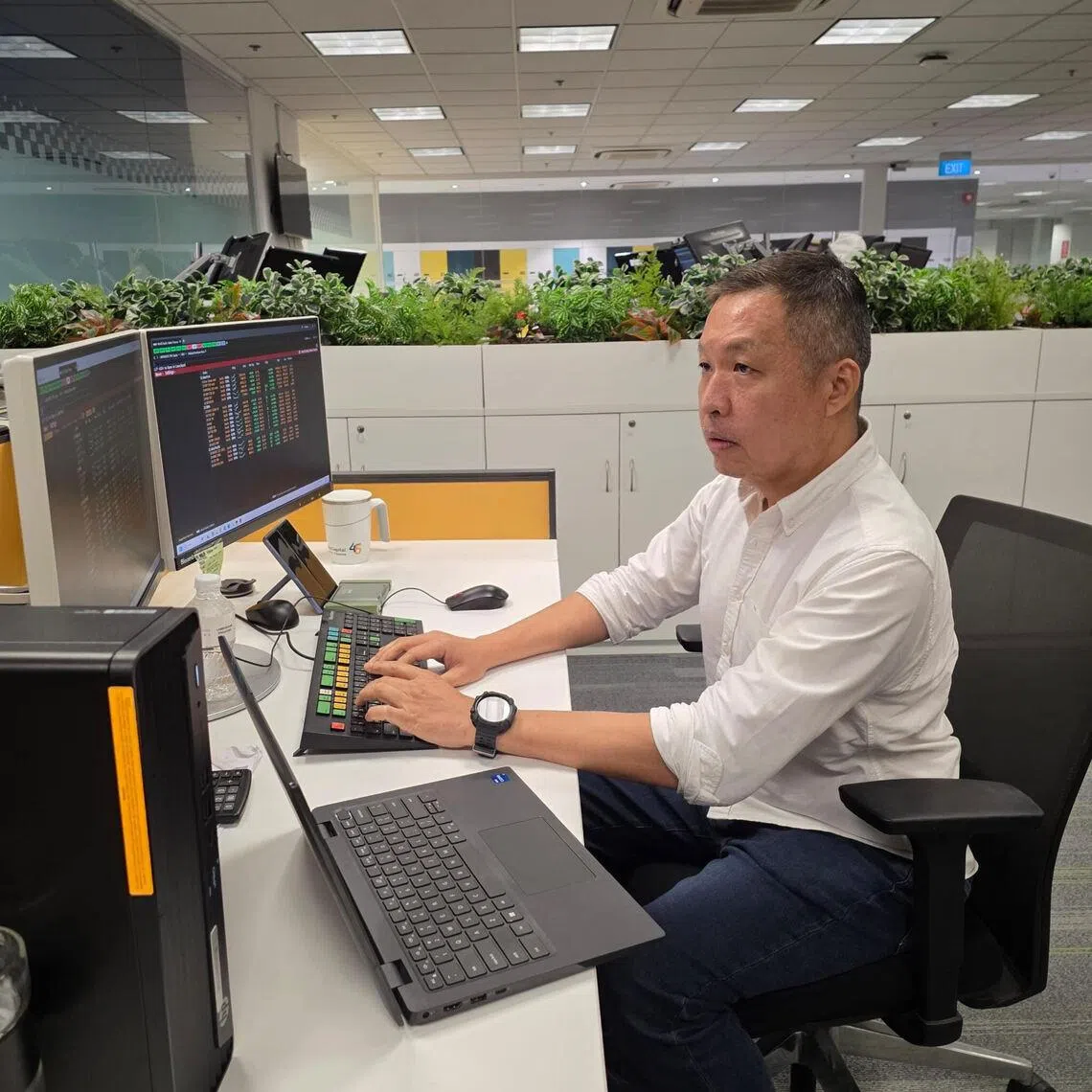
Wickramasinghe echoed that view. “You get to meet founders, people who created businesses at a very high – almost an all-access – level. That is a privilege, and one of the coolest things you get to do.”
He added: “You also get to meet investors. These people direct massive amounts of capital. That is a privilege in terms of the ability to stand on your own and pitch ideas.”
The most rewarding moments, however, come when research translates into real-world impact.
“When a client acts on a recommendation and it plays out well, that’s deeply satisfying,”said FSM Global’s You.
There is also a quieter kind of reward that comes from the intellectual journey itself, he added. It lies in “the months spent building a thesis, engaging with management, tracking the data, and eventually seeing the story unfold the way you anticipated”.
For UOB Kay Hian’s Adrian Loh, the satisfaction is more immediate. “It is always about money-making ideas for clients, who then voice their appreciation and tell us “That was a great call”, and that they made money from it,” he said.
But the job has its challenges.
The proliferation of information has made it more difficult for analysts to stand out, said CGS International’s Tay.
“Analysts need to compete with the speed of information while making sure that they deliver differentiated, well-reasoned insights and opinions that add value,” he added.
Evolving roles, brighter prospects
Wickramasinghe said that the main role of analysts at local brokerage firms used to be servicing institutional investors, but the job scope is broadening, especially for analysts in large commercial banks.
“They are increasingly doing more work with private wealth customers and the corporate banking side, as well as their retail customer base.”
The advancement of artificial intelligence is also changing the way analysts work, said Morningstar’s Lee.
“Some of the more time-intensive aspects of the job, such as data gathering, information processing and financial modelling, may increasingly be automated by AI tools,” he added.
The way their research findings is distributed has also evolved. Beyond traditional written reports, analysts are increasingly expected to communicate through podcasts, short videos and social media.
“Once a week I do a podcast, for instance, so that will take some time,” said Wickramasinghe. “I have to prepare for that podcast and produce it within our team.”
Demand for analysts has taken off over the past couple of years, thanks to the moves being made to revitalise the Singapore market – in particular, the Equity Market Development Programme. Under this, S$6.5 billion is being channelled to fund managers with a focus on local stocks.
Loh of UOBKH noted that foreign brokers such as Jefferies, Macquarie and UBS have expanded coverage of Singapore’s small- and mid-cap stocks – something that would have been “unthinkable” just a few years ago.
“We expect hiring conditions to remain relatively bullish,” he said.
At FSM Global, the shift has also been reflected in deeper coverage. The firm now has two dedicated analysts covering Singapore equities.
“That may sound modest, but context matters,” said You. Until recently, Singapore coverage was undertaken by a single analyst, who was also expected to track multiple markets.
The decision to expand FSM Global’s dedicated headcount, he added, was a direct response to the renewed energy surrounding Singapore equities.
“As investor interest in Singapore’s equity market continues to grow, we expect our coverage to deepen further,” he said.
Decoding Asia newsletter: your guide to navigating Asia in a new global order. Sign up here to get Decoding Asia newsletter. Delivered to your inbox. Free.
Copyright SPH Media. All rights reserved.