Disclosure, threshold fee for non-sponsor jobs being reviewed: SGX RegCo
 Add BT as a preferred source
Angela Tan
DeeperDive is a beta AI feature. Refer to full articles for the facts.
Singapore
THE majority of Singapore Exchange (SGX) Catalist sponsors and issuers are in compliance with regulations, with less than 5 per cent of issuers paying non-sponsor fees which exceed 100 per cent of sponsor fees. Still, the frontline regulator says there is always room for improvement.
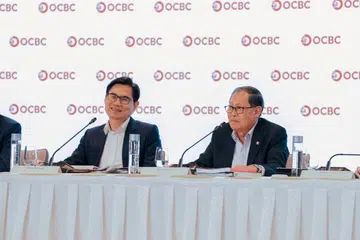
In an interview with The Business Times, SGX Regulation (SGX RegCo) chief executive officer Tan Boon Gin said the sponsor regime of SGX's second board - which targets growth firms - has worked well.
"From our review, majority of Catalist companies and sponsors are compliant. The regime has worked well," he said. There is, however, still room for improvement.
"Two areas that we are looking into is whether we can improve the level of disclosure and whether we can better calibrate the 100 per cent threshold for non-sponsor fees to sponsor fees," Mr Tan said.
Giving a glimpse into what else is in store, he shared: "In the next publication, we intend to look at the monitoring of trading activities, maintaining a proper documentation and audit trail, as well as the escalation and approval process within a sponsor organisation."
Navigate Asia in
a new global order
Get the insights delivered to your inbox.
On Wednesday, SGX RegCo released its inaugural "Findings and Recommendations on Continuing Sponsorship Work" publication, which aims to highlight areas for improvement following its observations from reviews and inspections of sponsors.
The publication focuses on four areas of continuing sponsorship work: due diligence standards for continuing sponsorship work; assessment of suitability of board and key management of sponsored issuers; continuous monitoring of sponsored issuers as well as the conflict of interest and sponsor independence.
Mr Tan stressed: "I think it is really impossible for us to anticipate everything down to the very last letter. In a way, that's what we are trying to do here.
"Some sponsors are better than others. So we see varying standards. The reason why we are publishing this is to raise standards across the board."
Unlike a mainboard listing, which is subject to review and approval by the exchange and the Monetary Authority of Singapore (MAS), a Catalist listing is supervised and approved by its appointed sponsor, who is responsible for ensuring his sponsored issuers are in compliance with listing rules. Sponsors are answerable to the SGX under the Catalist rules, and subject to SGX reviews.
The report is timely as it comes hot on the heels of a study - co-authored by associate professor Mak Yuen Teen of the NUS Business School and Chew Yi Hong, an active investor and researcher - which highlighted the conflicts of interest in the sponsorship regime, due to business relationships between sponsors and the companies they sponsor.
June Sim, head of listing compliance at SGX RegCo, said that just because a sponsor takes on other non-sponsor related jobs, it does not mean the sponsor is automatically in breach or has fallen short.
"Providing those services don't mean sponsors are in breach of rules, but if through our inspections when we look at the nature of the services and how the sponsors have discharged their duties, we need to be satisfied those safeguards are fulfilled," Ms Sim said.
The exchange has multiple layers of safeguards against potential conflicts of interest in the Catalist sponsor regime.
These include a very strict test of independence, which emphasises substance over form where the regulator looks at not just an ownership test, but also whether a company exerts influence over its sponsor.
The exchange also has disclosure requirements at both the company and sponsor level. Ultimately, the burden of proof rests on the sponsor to demonstrate that a conflict has been mitigated and addressed.
Sponsors must have a "China Wall Policy" between the sponsorship team and non-sponsorship services teams, separation of functions and reporting lines for sponsor activities and non-sponsorship services.
A registered professional is also prohibited from acting as the partner-in-charge to advise on legal matters of the sponsored issuer.
Sharing the thinking behind the sponsor regime, Mr Tan said: "Sponsors are quite uniquely placed because of their close relationship with the company, they are able to work with internal audit, external auditors, with compliance and audit committee to make sure that any weaknesses are rectified."
Ms Sim added: "Having done their KYC (know-your-customer due diligence), the sponsor would be familiar with the owners and business.
"We wanted the sponsor regime because they bring a company to initial public offer (IPO) and it is a case of you make your bed, you lie in it. The sponsors will continue to be accountable. For three years, they remain as a sponsor of the company. That promotes accountability."
The regulator said a box-ticking exercise is not sufficient for sponsors to discharge their duties of achieving a thorough understanding of the issuer, directors and key management.
Areas of concern identified by sponsors during client acceptance process must be monitored on a continuing basis.
Boilerplate statements such as "to pursue personal interest" or "for personal reasons" that are commonly disclosed as the reason for departure are not acceptable, and sponsors must press for more detailed disclosure.
Ong Hwee Li, SAC Capital's CEO, stressed that sponsors should be viewed as someone "assisting the company in compliance matters while helping it grow in the capital market" - no different from the investment banking model.
"We need to go back to the basics - why companies list on Catalist. They are generally smaller and when they come into the market, they hope to raise funds as they grow and have benchmark pricing.
"Sponsors do the due diligence at IPO and advise companies on listing compliance. It works well as these smaller companies need guidance and sponsors are closer to them," Mr Ong said.
Another sponsor shared that with sponsor fees so low, it is easy for non-sponsor fees to exceed that.
"All it takes is to do one placement and it will pass the 100 per cent threshold quickly," he said.
Welcoming the findings, Prof Mak said: "Greater transparency about the amount of non-sponsor fees paid by issuers to sponsors and their related entities is important, as is transparency about the nature of the non-sponsor work, as certain types of work pose a greater risk of conflict compared to others."
He remains unconvinced that the reliance on continuing sponsors in supervising issuers can work in many cases. If they press too hard, the issuer can always replace them.
He believes that having the full sponsor acting as continuing sponsor for at least three years after the IPO cuts both ways.
"While it may give a stronger incentive for the full sponsor to ensure a quality listing, it may also lead the sponsor not to report issues that emerge soon after listing, which may call into question their work as full sponsor.
"One could argue that having another sponsor appointed after IPO will result in a fresh pair of eyes and less concern about reporting lapses that emerge soon after. Perhaps more thought should be given to this."
Decoding Asia newsletter: your guide to navigating Asia in a new global order. Sign up here to get Decoding Asia newsletter. Delivered to your inbox. Free.
Copyright SPH Media. All rights reserved.