As the greenback dives, one of Asia-Pacific’s top-performing currencies is trouncing the Singdollar
The Australian dollar surges to its strongest position against the American currency in over two years

[SINGAPORE] The US dollar skidded to a four-year low on Wednesday (Jan 28), sparking a broad currency realignment after comments from US President Donald Trump accelerated a “sell America” sentiment across global markets.
“The (US dollar index) slammed lower after Trump mentioned… he is not concerned about the (greenback’s) weakness and went on to criticise Asian countries for devaluing their currencies,” analysts from Maybank said in a note.
The US dollar index fell to 95.6 on Wednesday morning in Asia – its lowest level since early 2022. By around 2 pm (Singapore time), the index had pared its losses slightly to stand at 96.
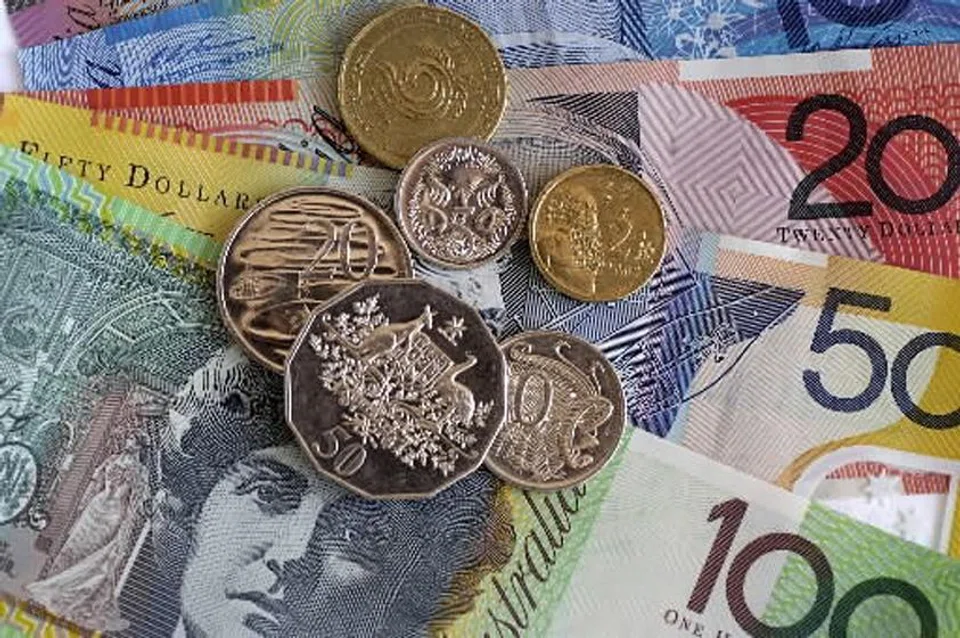
Standing out as a primary beneficiary is the Australian dollar, which this week surged to its strongest position against the greenback in over two years.
It is also one of the top-performing currencies in the Asia-Pacific this year, appreciating against the Japanese yen, Chinese renminbi, Malaysian ringgit, Thai baht, Indian rupee and Indonesian rupiah.
For Singapore-based investors and businesses, the Australian currency’s strength is becoming increasingly expensive, too.
“Despite these advantages, investors should keep in mind that the Australian dollar is sensitive to Chinese demand and, as a cyclical currency, offers no protection in risk‑off episodes.”
David Meier, economist at Julius Baer
The AUD/SGD rate has established a steady upward trajectory, marking a turnaround in its fortunes over the last few years. It climbed to 0.8826 in Wednesday trading, the highest it has been for more than a year.
The pair climbed 2.3 per cent in the past month, and on a year-on-year basis, the Australian dollar rose 4.5 per cent against the Singapore dollar.
Trump’s comments suggested that his administration is now favouring a weaker greenback to boost exports and temper imports, providing fresh impetus for markets’ bearish US dollar bets and other debasement trades, AmBank Group analysts said on Wednesday.


They also noted that the Group of 10 (G10) currencies rallied an astonishing 1 to 2.1 per cent against the US dollar – adding to the list of investors’ concerns, which already include risks of a government shutdown, uncertain Trump policies (including renewed trade and tariff risks), and speculation of US-Japan joint FX intervention in US dollar devaluation.
Aussie resurgence
The Australian dollar spent the past few years on a weak trajectory due to the greenback’s relative strength and the slowing Chinese economy hurting demand for commodities. But the currency is now being boosted by a softer US dollar and strong commodity prices.
As the greenback weakened, the AUD/USD pair punched through key resistance levels to trade at 0.7018 as at 8.30 am on Wednesday. This marked the currency pair’s highest level in more than two years, and analysts across the board remained bullish on the Australian dollar.
“(The) pair has been lifted by positive risk sentiment and broader US dollar weakness for much of the past few sessions,” Maybank analysts said.
“Firm industrial commodity prices further strengthen the near-term Australian dollar backdrop,” OCBC analysts also noted.
Maybank added: “Domestic factors helped as well – Australia’s stronger-than-expected labour report brought the probability of a rate hike in February back to 50 per cent from (the) 26.1 per cent seen earlier last week.”
Further, Australia’s Consumer Price Index delivered an upside surprise, accelerating sharply to 3.8 per cent year on year in December, up from 3.4 per cent the month before.
Headline inflation for the fourth quarter also quickened to 3.4 per cent, exceeding the Reserve Bank of Australia’s (RBA) November projections.
This data, combined with a tightening labour market and a stronger-than-expected recovery in household spending, has firmly tilted the odds towards an earlier rate hike, potentially forcing the RBA to act in February.
David Meier, an economist at Julius Baer, pointed out that the Australian dollar also enjoys a distinct cyclical advantage.
With Australia’s gross domestic product growth forecast to outpace that of most advanced economy peers in 2026, the RBA is under pressure to maintain a hawkish stance to curb sticky inflation.
This policy divergence positions the Australian currency to offer some of the highest interest rates in the G10 space.
However, Meier warned: “Despite these advantages, investors should keep in mind that the Australian dollar is sensitive to Chinese demand and, as a cyclical currency, offers no protection in risk‑off episodes.”
Decoding Asia newsletter: your guide to navigating Asia in a new global order. Sign up here to get Decoding Asia newsletter. Delivered to your inbox. Free.
Copyright SPH Media. All rights reserved.