Euro parity back on market’s radar as US yields surge
 Add BT as a preferred source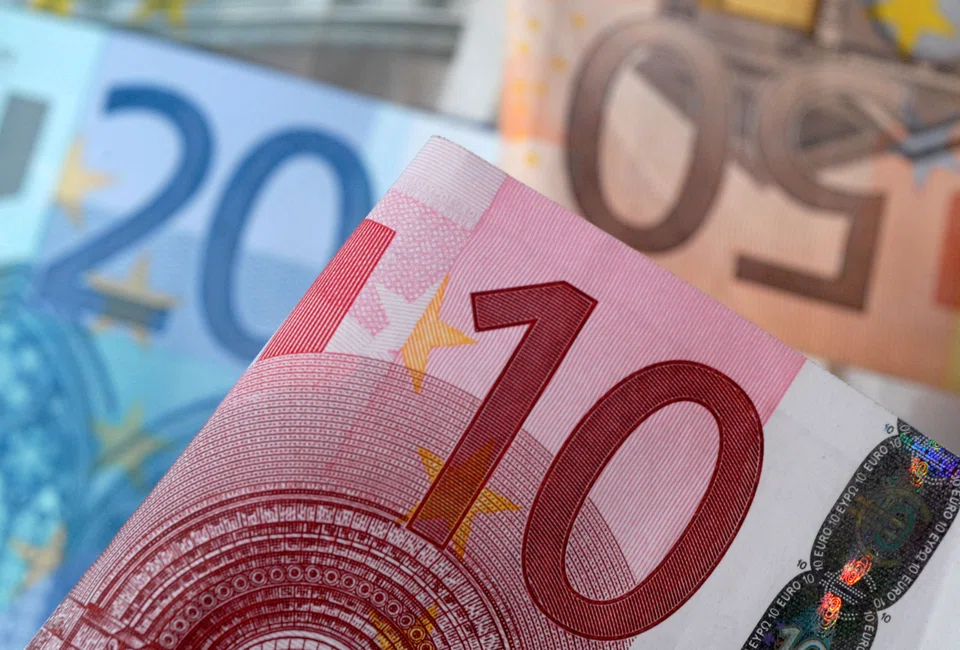
DeeperDive is a beta AI feature. Refer to full articles for the facts.
IT HAS been under a year since one euro was worth a US dollar, and talk of the common currency falling back to that level is again creeping into the market’s discourse.
Over the past two weeks alone, analysts at Nomura International, Rabobank and ING Groep have slashed their forecasts to just shy of US$1. References to the word “parity” in Google searches have surged, and the odds of the euro hitting that level by early next year have more than doubled, a Bloomberg options model indicated.
A big part of the gloom has to do with US yields, which are climbing fast and bolstering the US dollar. But there are important domestic factors at play too. Growth in the eurozone’s biggest economies remains sluggish, fears about Italy’s bloated government debt load are bubbling up again, and rising energy prices are reviving concerns over inflation.
If oil prices surge past US$110 per barrel, “it will be difficult for the euro to avoid parity”, said Jordan Rochester, an FX strategist at Nomura. The levels of “US rates suggest that the euro should be at US$1.01 to US$1.03 already”.
The euro was trading around US$1.06 last Friday (Oct 6). Rochester recently revised his forecast for it to US$1.02 by the end of the year from US$1.06.
When it fell to US$1 last year – the first time in over two decades – Europe was reeling. The war in Ukraine had just kicked off, cutting the region’s gas supply. The European Central Bank (ECB) was embarking on its tightening drive, and investors were worried that higher interest rates would tip Italy’s indebted government over the edge.
Navigate Asia in
a new global order
Get the insights delivered to your inbox.
While a lot has changed, the euro’s slide shows how bleak the picture remains, especially now that steeper borrowing costs are filtering through the economy. It has weakened about 6 per cent from a peak of US$1.13 in July.
For some investors, that means betting on a slide to parity may prove to be painful. Much of the pessimism is already baked in to the euro’s price, said Andreas Koenig, head of global FX at Amundi.
“Of course it’s a possibility, but I don’t think we will see parity this time,” said Koenig, who expects the euro to recover to US$1.07 by the end of the year. “I think we have now priced everything positive for the dollar.”
Analysts also appear sceptical for now. The median forecast in a Bloomberg survey sees the euro bouncing to US$1.08 by year end.
Still, the longer the euro remains weak the more it risks feeding into inflation. While the ECB does not have a currency target, it typically keeps an eye on the foreign-exchange market, cognisant of the impact it might have on consumer prices. BLOOMBERG
Decoding Asia newsletter: your guide to navigating Asia in a new global order. Sign up here to get Decoding Asia newsletter. Delivered to your inbox. Free.
Share with us your feedback on BT's products and services