

Euro, pound set for biggest weekly gains since July, US payrolls loom
 Add BT as a preferred source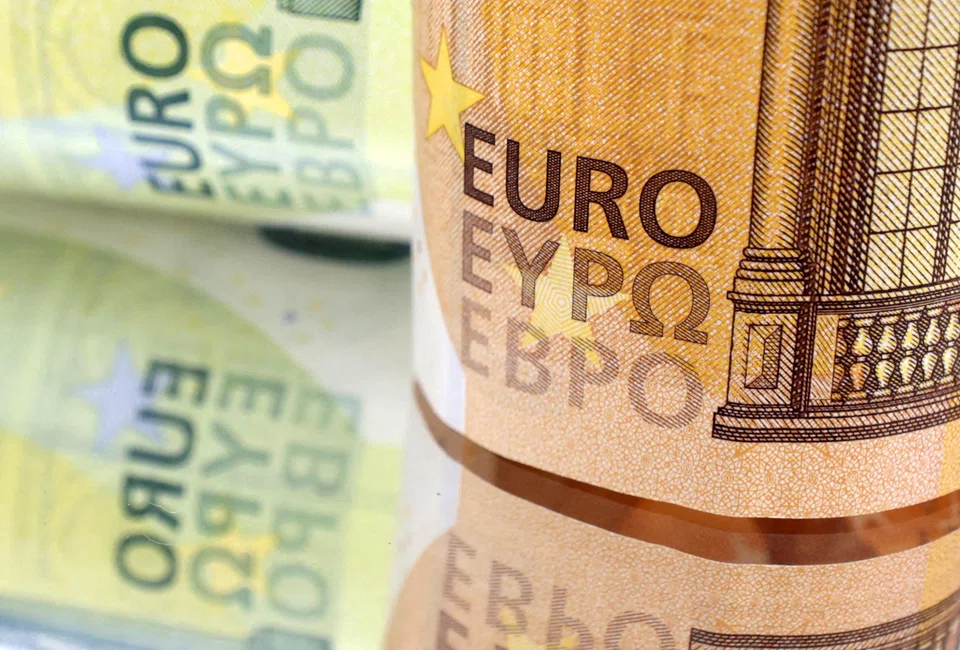
DeeperDive is a beta AI feature. Refer to full articles for the facts.
THE euro and pound rose on Friday (Nov 3) and were heading for their biggest weekly gain in four months, as the US-led rally in global bonds sent yields down, and with them the US dollar, bringing relief even to the embattled Japanese yen.
Always-crucial US non-farm payrolls data due at 1230 GMT – the most important data point in a packed week – could change that narrative completely however.
The euro was last up 0.27 per cent at US$1.06515, and thanks to gains earlier in the week was heading for a weekly gain of 0.8 per cent, which would be its most since July.
Sterling likewise was up 0.2 per cent on the day at US$1.2228, and set for a 0.86 per cent weekly gain, also its most since July.
The decline in the US dollar after a very strong recent rally – the US dollar index is on course to drop 0.6 per cent for the week, just its third week of losses in the last 16 – mirrors a decline in US yields. The benchmark US 10-year treasury yield is heading for a near 20 basis point weekly fall, its most in a week since July.
This week’s fall was sparked by a combination of the US Treasury Department announcing smaller-than-expected increases in longer-dated Treasury supply, and Federal Reserve chair Jerome Powell seeming more confident suggesting the Fed is done hiking interest rates at his press conference after their Wednesday meeting.
Navigate Asia in
a new global order
Get the insights delivered to your inbox.
Markets are now pricing in less than a 20 per cent chance of a rate increase in December compared with 39 per cent earlier in the week, the CME FedWatch tool showed, even though the Fed officially left the door open to a further increase in borrowing costs in a nod to the economy’s resilience.
But the week’s main event, US payrolls, is still to come.
“We’ve had plenty of events this week, the BOJ, the Fed, the Treasury refunding, the BOE, but what’s most important is payrolls,” said Yusuke Miyairi, an FX strategist at Nomura.

“If there’s a big miss, say 100,000 compared to consensus, I think that’s the time that people could really start selling US dollars, I don’t think we’re at that inflection point yet, but people’s sentiment is starting to go in that direction,” he said.
Meanwhile if it comes strong then people are back to buying US dollars, he said.
Analysts think US non-farm payrolls likely increased by 180,000 jobs in October, slowing from 336,000 in September, partly due to strikes by the United Auto Workers (UAW) union against Detroit’s “Big Three” car makers, which depressed manufacturing payrolls.
The Bank of England joined other major central banks in holding rates steady on Thursday and while it stressed that it did not expect to start cutting them any time soon, that added a further nudge to the rally in bonds.
The yen strengthened on Friday with the US dollar down 0.2 per cent to 150.19 yen, after a whirlwind week, in which the Japanese currency touched a one-year low against the US dollar and 15-year low against the euro after the Bank of Japan tweaked its yield curve control policy on Tuesday, but not by as much as markets had expected.
Kazuo Ueda, the central bank’s governor, will continue to dismantle its ultra-loose monetary policy and look to exit the decade-long accommodative regime next year, Reuters reported on Thursday, according to six sources familiar with the central bank’s thinking.
The Australian dollar was up a touch at US$0.6444, just shy of the over one-month high of US$0.6456 it reached on Thursday.
Both the Aussie and the New Zealand dollars are up 1.7 per cent for the week, their best weekly performance since again mid-July.
The Swiss franc, however, which was a beneficiary of a flight-to-safety bid in October, has weakened this week. The US dollar is heading for a weekly gain of 0.25 per cent on the franc and was last at 0.9041 francs. REUTERS
Decoding Asia newsletter: your guide to navigating Asia in a new global order. Sign up here to get Decoding Asia newsletter. Delivered to your inbox. Free.
Share with us your feedback on BT's products and services
TRENDING NOW

From 1MDB to ‘corporate mafia’: Is Malaysia facing a new governance test?

Higher costs, lower returns: Why are Singaporeans still betting on real estate?

South-east Asian markets account for 8.8% of global capital inflows from 2021 to 2024: report

Richard Eu on how core values, customers keep Singapore’s TCM chain Eu Yan Sang relevant

