

Europe: UK shares slip after Hunt’s new budget raises taxes, squeezes spending
 Add BT as a preferred source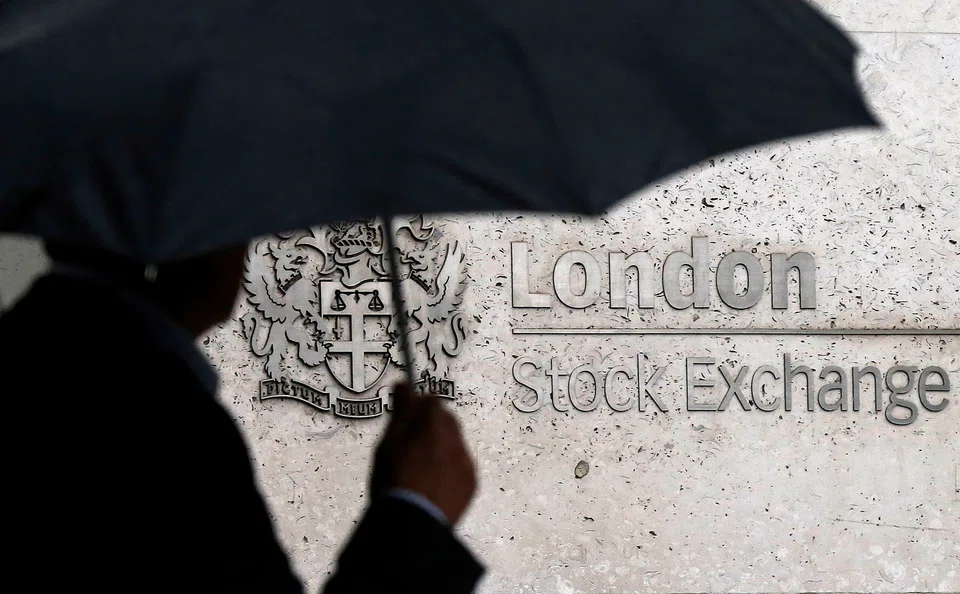
THE FTSE 100 index slipped on Thursday (Nov 17) after briefly hitting a one-week low, while midcap stocks cut losses sharply after the government set out plans to cut spending and raise taxes, reversing course after a market plunge over unfunded tax cuts.
The exporter-heavy FTSE 100 closed 0.1 per cent lower after dropping as much as 0.8 per cent as the pound briefly pared some of its losses following a statement by UK Finance Minister Jeremy Hunt.
Miners weighed on commodity-heavy main index tracking weak metal prices.
The more domestically exposed FTSE 250 index cut losses sharply and was last down 0.1 per cent.
Hunt sought to bury Britain’s failed “Trussonomics” experiment by cutting spending and raising taxes, a policy reversal from the unfunded tax cuts promised by former Prime Minister Liz Truss that sent British markets in a tailspin.
“The UK government looked to fill its fiscal hole with backloaded fiscal contraction, cushioning the blow in the near run, but pushing the costs past the date of the next election,” said Vivek Paul, chief investment strategist for UK, BlackRock Investment Institute.
Britain’s economy is forecast to shrink next year, Hunt said, with the GDP projected to contract by 1.4 per cent next year compared with an estimate for 1.8 per cent growth, according to data published in March by the Office for Budget Responsibility.
UK’s energy index slipped 0.5 per cent after Hunt said the government would increase a windfall tax on oil and gas firms and extend it to power generation firms. He was also looking to cut the tax-free allowance for dividend income and capital gains.
Power companies such as Drax, SSE and Centrica rose between 1.5 per cent and 5.4 per cent after sliding briefly on the news.

“Energy companies will get to keep more of the revenues from the cap because the government won’t be subsidising it. That’s why you’re seeing a bit of a rebound in the likes of Centrica,” said Michael Hewson, chief market analyst at CMC Markets.
Data on Wednesday showed surging household energy bills and food prices pushed British inflation to a 41-year high in October, piling pressure on the Bank of England to keep on raising rates.
Traders were placing 88.4 per cent odds of 50 basis point rate hike in December versus 70 per cent odds before the statement.
Banks gained 1.6 per cent. REUTERS
Decoding Asia newsletter: your guide to navigating Asia in a new global order. Sign up here to get Decoding Asia newsletter. Delivered to your inbox. Free.
Share with us your feedback on BT's products and services
TRENDING NOW

Singapore banks’ battle for wealth talent goes beyond private bankers

Flight to safety: New citizens and PRs drive Singapore luxury home sales as broader market cools
5 reasons why analysts are still upbeat on S-Reits despite interest rate pressure

Malaysia’s data centre pipeline beats its neighbours, but Singapore will retain premium status: JPMorgan

