

European defence stocks rise as Russia invades Ukraine
 Add BT as a preferred source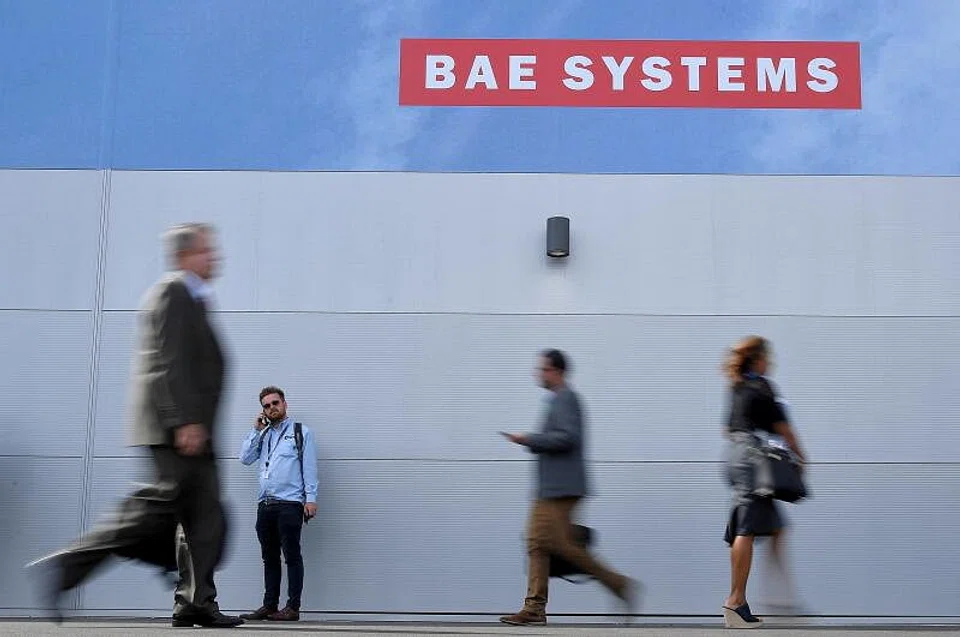
DeeperDive is a beta AI feature. Refer to full articles for the facts.
[MILAN] European defence stocks were among the rare gainers in a falling market on Thursday (Feb 24) on bets of bigger spending after Russian forces invaded Ukraine in the biggest attack in Europe since World War II.
Shares in Britain's biggest defence company BAE Systems rose 4.8 per cent to a 1-year high, and Germany's Rheinmetall gained more than 2 per cent. France's Thales added 1 per cent in late morning trading.
Shares in major US defence contractors gained in premarket trading, with Lockheed Martin, Raytheon Technologies and Northrop Grumman rallying between 3 per cent and 6 per cent.
Investors expect defence companies to benefit from rising geopolitical tensions, with European and US defence contractors well positioned, especially if Nato member states boost spending.
"Invasion will likely result in Nato military involvement, initially benefiting short cycle product spending (weapons and ammunitions) and putting significant upward pressure on Nato defence budgets over the medium term," said Law Ross, analyst at Berenberg in London.
Rheinmetall and BAE have the largest exposure to weapons and ammunition, while UK contractor Chemring along with BAE are most exposed to cybersecurity and electronic warfare, according to the German investment banks. Chemring rose 1 per cent.
Navigate Asia in
a new global order
Get the insights delivered to your inbox.
BAE said on Thursday that Russia's invasion of Ukraine would place a sharper focus on security, anticipating growth over the coming years across all sectors, with cyber intelligence also becoming globally relevant.
Traders also highlighted that the industry's stock market valuations remain cheap, which could make it attractive for investors seeking to diversify away from pricey tech stocks.
The European defence sector, which has been hit by ESG concerns and worries over budget cuts, trades at around a 20 per cent discount to the market, according to Morgan Stanley estimates.
Among other companies with defence exposure, shares in Ultra Electronics were little changed, while QinetiQ and Meggitt fell slightly but still outperformed the steep market falls. European shares fell almost 4 per cent.
The majority of Nato members including Germany spends in defence less than the targeted 2 per cent of gross domestic product. If all countries were to reach the target, that would result in 73 billion euros in incremental defence spending, per Berenberg.
In an unusual public rant a few hours after Russia invaded Ukraine, the chief of the German army vented his frustration over what he saw as the long-running neglect of military readiness in his country. REUTERS
Decoding Asia newsletter: your guide to navigating Asia in a new global order. Sign up here to get Decoding Asia newsletter. Delivered to your inbox. Free.
Share with us your feedback on BT's products and services
TRENDING NOW

China pips the US if Asean is forced to choose, but analysts warn against reading it like a sports result

Beijing’s calculated silence on the Iran war

Shelving S$5 billion office redevelopment plan proved ‘wise’ as geopolitical risks mount: OCBC chairman

Vietnam formalises new state leadership, redefining ‘four pillars’ power balance

