

European shares close lower as oil spike intensifies inflation worries
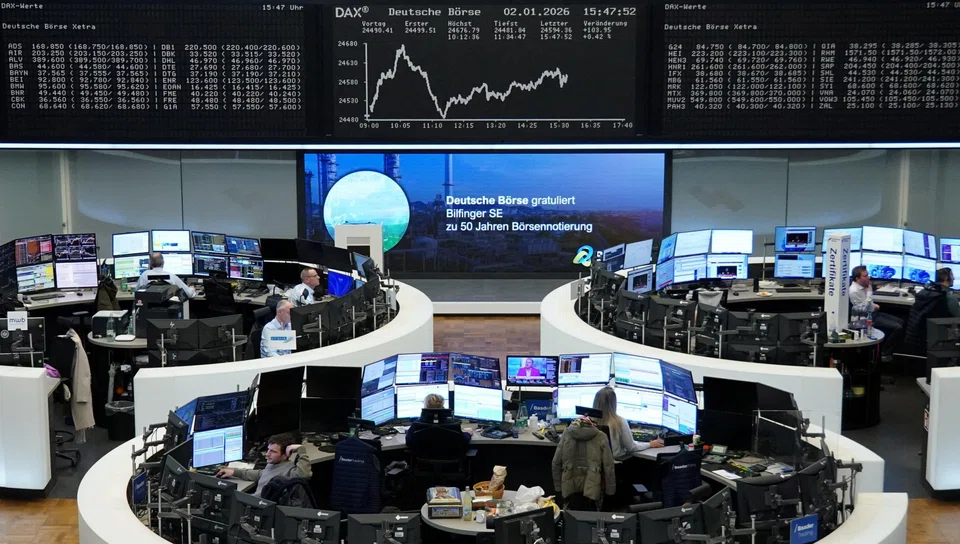
EUROPEAN shares hit their lowest level in more than two months on Monday before paring some declines, as a sharp surge in oil prices exacerbated inflation fears while the US-Israeli war with Iran showed no signs of easing.
The pan-European Stoxx 600 fell for a third straight session, closing down 0.63 per cent at 594.92, after marking its worst weekly performance in nearly a year.
The index has tumbled nearly 6 per cent below its record closing high hit on Feb 27. Europe’s fear gauge, the Stoxx volatility index, hit its highest since April, before closing lower for the day.
Iran named Mojtaba Khamenei as successor to his father, Ali Khamenei, as supreme leader - a move seen as reinforcing the grip of hardliners in Tehran, and closing paths to a swift end to the war.
Europe is heavily dependent on liquefied natural gas and imported oil, which has surged more than 25 per cent to just under US$120 a barrel, leaving it particularly exposed to supply shocks. A prolonged conflict could drive energy and transport costs even higher at a time when economic growth is already fragile.
“There may potentially be further moves higher, before the eventual decline... if prices do then fall back, the global economic cycle would have a more stagflationary feel but wouldn’t be fundamentally derailed,” said Paul Diggle, chief economist at Aberdeen.
Energy stocks on the Stoxx 600 were the only ones trading higher, up 1.4 per cent. Real estate stocks were hit the most as concerns over reviving inflation pushed back bets on interest rate cuts, down 2.7 per cent.
Central banks across Europe came under market pressure on Monday to lift interest rates, with the European Central Bank seen raising rates once by June or July. European bond yields touched their highest levels in a year.
Meanwhile, G7 countries have not yet decided whether to release emergency oil reserves as prices surge above US$119 a barrel due to the Iran war, France’s finance minister said.

“The market has been somewhat calmed by the prospect of a coordinated release of strategic oil reserves by the G7 allies, however, there are still upside risks to the oil price, and anything the G7 does may only have a temporary impact,” said Kathleen Brooks, research director at XTB.
Banks - at the heart of last week’s selloff - extended losses, falling 0.5 per cent. Travel and leisure stocks were hit again, down 2 per cent.
Frankfurt’s bourse briefly slid to its lowest level in more than 10 months, while Milan and Madrid sank to three-month lows. Paris touched its weakest level in over five months.
Among stocks, Kinnevik tumbled 17 per cent to the bottom of the Stoxx 600 after Ningi Research said it was short on the company.
Roche dropped 2.6 per cent as the drugmaker’s oral breast cancer drug failed in a trial. REUTERS
Decoding Asia newsletter: your guide to navigating Asia in a new global order. Sign up here to get Decoding Asia newsletter. Delivered to your inbox. Free.
Share with us your feedback on BT's products and services
TRENDING NOW

DBS, OCBC, UOB rout lops billions off STI as inflation, rate concerns spook investors

Grab CEO’s wife Chloe Tong on life with Anthony Tan and finding her purpose

OCBC sheds S$8 billion in value as shares close nearly 6% down; analysts cautious on banks

Deal between tycoon friends sparks scrutiny of Philippine power sector

