European shares drop as Middle East continues to hit sentiment
Most sectors on the benchmark Stoxx ended lower on a day when a South Korean ship was hit by an explosion in the Strait of Hormuz
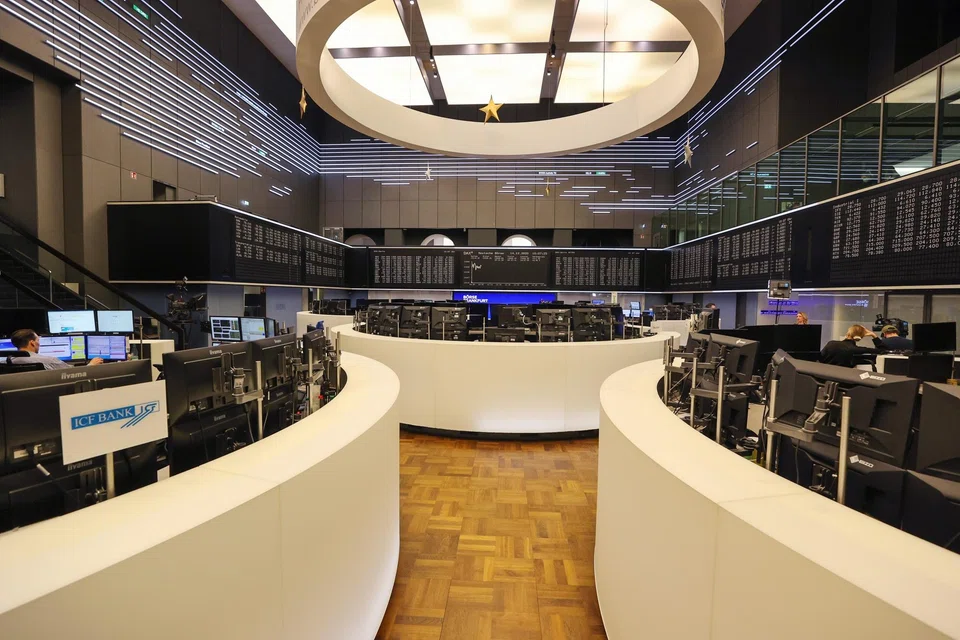
[BENGALURU] European shares dropped on Monday (May 4) as hostilities in the Middle East showed no signs of easing and crude oil prices soared, with investors grappling with the prospects of successive interest rate hikes by the European Central Bank this year.
The pan-European Stoxx 600 ended down 1 per cent to 605.51 points, its biggest one-day fall in around a month.
Most sectors on the benchmark Stoxx ended lower on a day when a South Korean ship was hit by an explosion in the Strait of Hormuz and Iranian drones caused a fire at a UAE oil port, as Teheran demonstrated its grip on Middle East oil.
The US military said that two US merchant ships had made it through the strait, without saying when. Iran denied any crossings had taken place, and there was no indication that US President Donald Trump’s “Project Freedom” had led to a meaningful surge of shipping through the waterway.
“The European market is a lot more exposed to the impact of higher commodity prices than the US economy is going to be... that’s exerting a considerable amount of pressure and just giving investors a little bit of pause for thought”, Michael Brown, senior research strategist at Pepperstone, said.
Worries that elevated crude oil prices on the back of the Iran war would stoke inflation worldwide have led to a sharp re-pricing of monetary policy, with traders now fully pricing in at least three 25-bps hikes by the European Central Bank this year, according to LSEG data.
Eurozone banks were hit hard on Monday, declining 2.7 per cent to clock their biggest one-day fall in more than six weeks.
Automakers shed 2.1 per cent after US President Donald Trump said late on Friday he would raise tariffs on cars and trucks from the European Union to 25 per cent this week, up from the previously agreed 15 per cent.
European equities remain more than 4 per cent away from their pre-war levels, as the region’s energy dependence has reinforced inflation and growth concerns, while Wall Street and global equities have rebounded on artificial intelligence-driven optimism.
Among other movers, Thyssenkrupp fell 1.8 per cent. The German industrial giant paused talks to sell its steel unit to India’s Jindal Steel.
Umicore jumped 15.3 per cent after the Belgian materials group lifted its full-year Ebita guidance, while Czech firm CSG slid 13.1 per cent after Hunterbrook Capital disclosed a short position on the ammunitions maker.
On the data front, German manufacturer sentiment turned negative in April for the first time since October 2024 and a separate reading showed investor morale in the eurozone improved slightly in May. REUTERS
Decoding Asia newsletter: your guide to navigating Asia in a new global order. Sign up here to get Decoding Asia newsletter. Delivered to your inbox. Free.
Share with us your feedback on BT's products and services