

European shares drop to one-month low as Middle East conflict widens
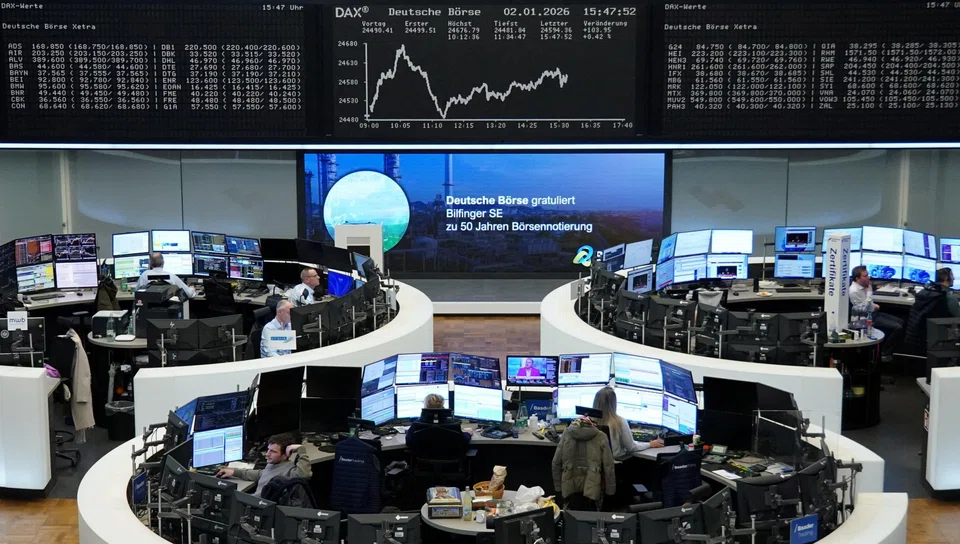
EUROPEAN shares slid to their lowest level in more than a month on Tuesday, pulled into a global equities rout as investors assessed the prospect of a prolonged Middle East war and the inflationary sting of a jump in oil prices.
The pan-European Stoxx 600 closed 3.1 per cent lower to 604.44 points, falling about 5 per cent from its record high close on Friday.
Many regional bourses and sectoral indexes, including the Stoxx 600, clocked their sharpest one-day falls since April when US President Donald Trump’s “Liberation Day” tariffs rattled global markets.
“Any ceasefire for now looks like a remote possibility as Iran appears content with damaging Western interests in the Middle East ... This is driving markets lower today as the threat of a protracted conflict becomes more realistic,” said Lindsay James, investment strategist at Quilter.
Every sector of the Stoxx 600 was dragged into the downdraft, led by financials.
The banking index sank to a near three-month low, with UK-focused lenders, seen as more exposed to Middle East risk, taking the hardest hits. HSBC was the biggest weight, down 5.2 per cent.
Insurance also slid, with the sector down 4.2 per cent, while industrial stocks lost 3.6 per cent.
Spain’s finance-heavy benchmark fell 4.6 per cent to its lowest since mid-December, while Germany’s export-heavy DAX hit a three-month low.
Oil spikes stokes inflation jitters

Oil prices soared 7 per cent in their third session of gains, with Brent hitting 19-month highs as the war entered its fourth day, with Iranian attacks disrupting commercial shipping through the crucial Strait of Hormuz.
Still, that offered little shelter for energy stocks which fell 1.4 per cent, a reminder higher crude can be as much a demand shock as a profit tailwind when investors are in full risk-off mode.
Travel names remained under heavy pressure. Lufthansa dropped 4 per cent, while British Airways-owner IAG fell 5.4 per cent and Air France-KLM slid 7.9 per cent.
Investors feared an energy shock will rekindle inflation while squeezing already tepid growth, as Europe depends heavily on products moved from the crucial corridor, and alternative routes could hike prices.
“If these (oil jumps) are sustained then inflation spikes become a real possibility and the path for interest rates gets thrown into question,” James said.
Markets are now pricing in a 40 per cent chance of an interest rate hike in 2026, compared with 25 per cent earlier in the session, according to data compiled by LSEG.
Reflecting the rising unease, Europe’s volatility gauge, the Stoxx volatility index, jumped for the fourth session to its highest level since mid-April.
Beiersdorf recorded its biggest one-day drop on record with a 20 per cent slide after the Nivea-maker forecast a slightly lower 2026 core operating profit margin.
Lottomatica shares gained 3.3 per cent after the Italian betting firm forecast 2026 adjusted core earnings of 940 million euros to 980 million euros, above last year’s 856 million euros.
Naturgy shares fell 7.4 per cent after BlackRock sold its remaining 11.4 per cent stake in the Spanish energy company at a discount through an accelerated bookbuilding. REUTERS
Decoding Asia newsletter: your guide to navigating Asia in a new global order. Sign up here to get Decoding Asia newsletter. Delivered to your inbox. Free.
Share with us your feedback on BT's products and services
TRENDING NOW

Government to bring forward raising of retirement age, give employers more financial support to create flexi-load jobs
If Europe goes to war, the fallout will be felt in East Asia

Indonesia stocks suffer worst plunge in nearly 30 years as MSCI proposes standalone status

Vietnam’s northern provinces, not Hanoi or Ho Chi Minh City, are powering near 10% GDP growth

