

European shares fall again as Middle East tensions keep investors on edge
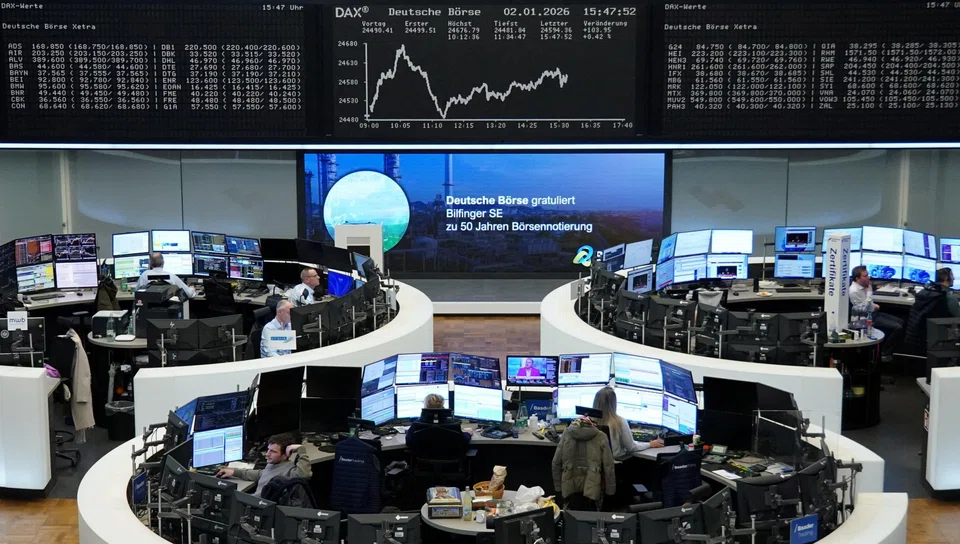
EUROPEAN shares declined on Wednesday as investors weighed the economic fallout of the Middle East conflict as it entered its twelfth day and digested a US inflation reading.
The pan-European benchmark Stoxx 600 closed 0.6 per cent lower at 602.54, with most regional bourses also in negative territory.
Germany’s DAX fell the most, shedding 1.4 per cent, dragged lower by a 8 per cent drop in Rheinmetall after the defence firm’s outlook for profit margin and free cash flow in 2026 fell short of some analyst forecasts.
The decline also pulled the broader defence sector down 1.8 per cent, while the industrial sector fell 1.2 per cent.
Iran’s military command said the world should be prepared for oil to hit US$200 a barrel, as three more ships came under attack in the blockaded Gulf, while Tehran fired at Israel and targets across the region.
Those events came in sharp contrast to Tuesday’s de-escalation hopes sparked by comments by US President Donald Trump that the war was nearly over, which helped the Stoxx 600 log its best day since April 2025.
The International Energy Agency (IEA) agreed to release 400 million barrels of oil, the largest such move in its history, to try to restrain soaring crude prices, which continued their upward march. Energy stocks were the biggest gainers on the Stoxx 600, up 1.6 per cent.
“Even where actions can provide near-term relief, the dominant driver for sustained (oil) price normalisation remains confidence in safe passage and the operational ability for tankers to resume regular transit,” said Laura Cooper, global investment strategist and head of macro credit at Nuveen.
“Policy steps may not be sufficient if physical flows aren’t credibly restored.”
The war has disrupted key shipping routes through the Strait of Hormuz, which carries one-fifth of the global oil trade, lifting oil prices and raising the risk of a price shock. The Stoxx 600 has shed 5 per cent from its late February record high.
European Central Bank policymakers acknowledged the economic risk from surging oil prices and promised swift action if they thought higher inflation was at risk of getting entrenched.
Money markets are pricing in an interest rate hike this year, compared to a slight cut before the conflict began, per LSEG-compiled data.
Barclays warned the STOXX 600 could fall to about 550 points if oil prices stay near US$100 a barrel.
Banks, among the worst hit in the selloff, lost another 0.6 per cent.
Among others, Legal & General shares declined 6.8 per cent after the insurer missed annual profit expectations.
On the flip side, Balfour Beatty forecast a high-single-digit percentage rise in 2026 profit from operations, sending the construction group about 9 per cent higher.
On the macro front, German inflation eased slightly in February to 2 per cent, while US inflation ticked up in line with estimates in February, but was overshadowed by the Iran war. REUTERS
Decoding Asia newsletter: your guide to navigating Asia in a new global order. Sign up here to get Decoding Asia newsletter. Delivered to your inbox. Free.
Share with us your feedback on BT's products and services
TRENDING NOW

Once staunchly pro-China, Malaysian Chinese businesses are now distancing themselves from Beijing

Looking beyond looming CEO succession, should UOB potentially pursue a transformative merger?

Could stablecoins be the future of money?

Grab CEO’s wife Chloe Tong on life with Anthony Tan and finding her purpose

