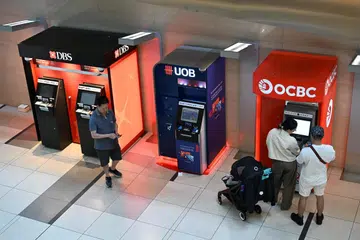
European stocks edge down, oil drops as midterm caution prevails
Markets face a pivotal week with investors digesting central bank moves and US midterms on Nov 3
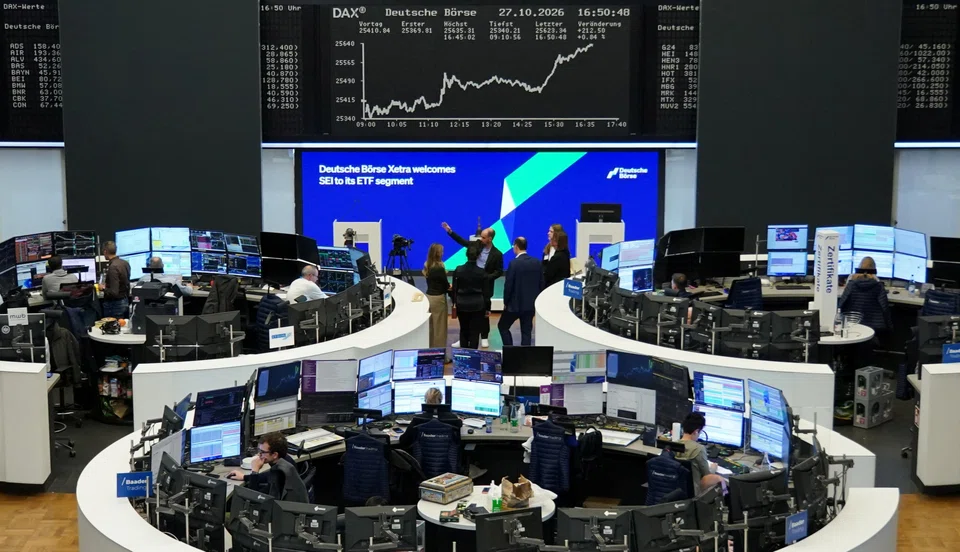
EUROPEAN stocks edged down on Monday (Nov 2) after Friday’s tech rout, with investors looking ahead to Apple’s earnings and taking comfort from a sharp fall in oil prices amid hopes for a deal to end the Iran war.
Markets face a pivotal week, with investors digesting the US Federal Reserve’s and the European Central Bank’s latest policy decisions, earnings season in full swing and the US midterm elections on Tuesday.
Eurozone government bonds were slightly lower after last week’s rally, while investor sentiment remained fragile amid concerns over France’s fiscal outlook and continuing street unrest.
MSCI’s main world stocks index was roughly unchanged, while Europe’s Stoxx 600 was down 0.1 per cent, with tech stocks rising 0.3 per cent.
Nasdaq futures climbed 0.73 per cent and S&P 500 futures increased 0.42 per cent. The S&P 500 index fell 1.82 per cent on Friday, while the Nasdaq tumbled 2.86 per cent.
Brent crude futures fell 4.5 per cent to about US$108 as Iranian negotiators have left talks with Qatari mediators and a draft proposal is being circulated with a follow-up meeting possible. Trump recently threatened new attacks against Iran.

Investors remain cautious ahead of the US vote, with European stock markets facing a different set of challenges from their US counterparts.
“Further expected downside for the euro area PMI is a drag on our Stoxx 600 forecast trajectory,” wrote Sebastian Raedler, head of European equity strategy at Bank of America.
“However, the main reason for our caution on European equities is the risk of disappointment in the AI capex cycle as AI models commoditise and competitive moats prove limited.”
While earnings outlooks remained in focus, investors expect US equities to come under pressure in the event of a Democratic sweep, as markets price in the risk of higher corporate taxes and tighter AI regulation.
Opinion polls suggest Democrats are favoured to win the House, while the Senate remains too close to call, leaving the party well short of a veto-proof two-thirds majority.
“The combination of deteriorating cash flows and rising capital commitments means the debate over whether AI returns can ultimately justify the scale of investment may not be resolved anytime soon,” Emmanuel Cau, head of European equity strategy at Barclays, said.
Apple will face scrutiny over three key issues: its crucial holiday-quarter outlook, CEO remarks on AI and the revamped Siri, and rising memory chip costs that analysts expect to drag quarterly profit growth to its weakest in six quarters.
Goldman Sachs analysts expect capital spending by hyperscalers to nearly double to US$800 billion in 2026 and rise further to US$1.2 trillion in 2027.
At the same time, they see S&P 500 earnings per share growth slowing to 18 per cent in 2027 from nearly 30 per cent in 2026.
“The next phase will be less about identifying who is exposed to AI and more about distinguishing who is already converting that demand into cash, who is still funding the build-out, and what valuation investors are being asked to pay for each,” Kristofer Barrett, head of global equities at Carmignac, said.
US dollar safe haven status under scrutiny
In foreign exchange markets, major currencies were largely subdued. The euro rose 0.46 per cent to US$1.1199, while the US dollar was up 0.16 per cent at 157.90 yen.
Rising oil prices tend to hurt the euro and yen as they worsen the outlook for energy-importing economies.
Investors are also questioning the US dollar’s safe haven status, concerned that a renewed tech-driven market sell-off could weaken the US currency.
George Saravelos, global head of forex strategy at Deutsche Bank, said the US’ reliance on foreign equity inflows was historically unprecedented and evidence showed that when the source of an equity shock is US-centric the greenback-equity correlation flips to positive.
Among central banks meeting this week, markets are pricing in rate increases from the Reserve Bank of Australia, Bank of England and Riksbank, while the Norges Bank is seen on hold.
Data due this week include the US ISM manufacturing survey for October later on Monday and the closely watched non-farm payrolls report on Friday. REUTERS
Decoding Asia newsletter: your guide to navigating Asia in a new global order. Sign up here to get Decoding Asia newsletter. Delivered to your inbox. Free.
Share with us your feedback on BT's products and services