European stocks edge higher; Middle East jitters temper relief
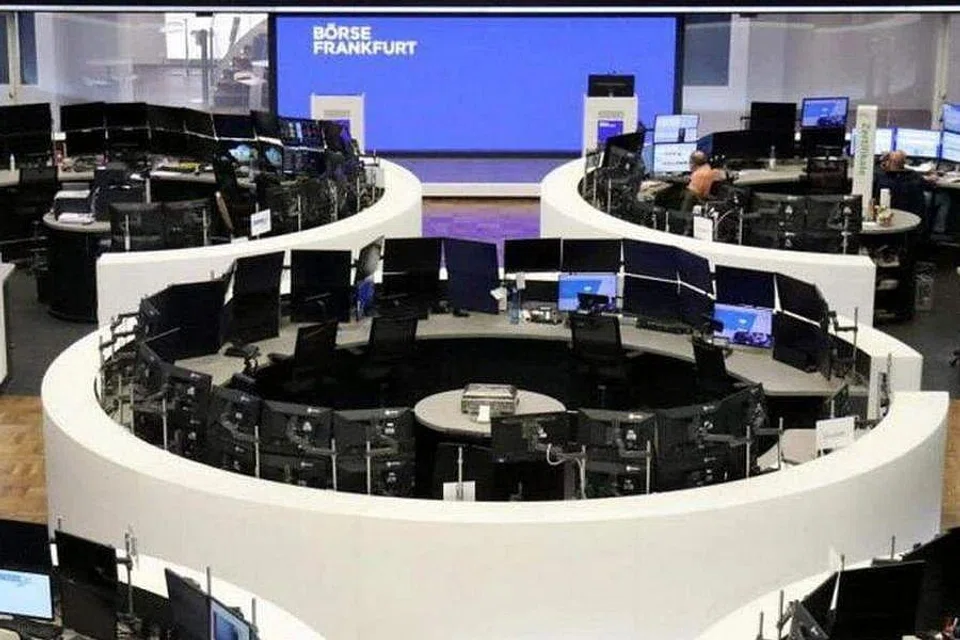
EUROPEAN shares kicked off the week on a stronger footing as utilities and media stocks climbed, but analysts warned that any reprieve could be temporary as the Middle East conflict continues to widen.
After a weak open, the pan-European Stoxx 600 rose 0.94 per cent to 580.73 points on Monday, following two straight sessions of declines.
The benchmark is down 8.5 per cent so far this month and is set to log its steepest monthly fall since March 2020, when the Covid-19 pandemic rattled investors.
The month-long US-Israeli war against Iran has been the central concern driving markets in recent weeks. But conflicting signals from Washington and Teheran on efforts to end the fighting have brought on some investor fatigue.
Over the weekend, Yemen’s Iran-backed Houthis entered the fray, launching an attack on Israel for the first time in the current war and deepening fears of a wider conflict.
Michael Hewson, senior market analyst at iForex, expects more pain ahead for European stocks, which are more sensitive to the Middle East headlines because of Europe’s reliance on energy imports.
“Markets are underpricing the prospect that this outbreak of hostilities will not have a speedy conclusion,” he said.
At one point during the Monday session, Brent crude surged above US$115 per barrel before settling slightly lower. It remains on course for a record monthly leap.
War fallout pushes German inflation higher

Data showed that inflation in Germany, the euro zone’s largest economy, gathered pace in March due to surging energy prices, and economists even see further increases ahead.
“Risks to (core inflation) are tilted to the upside in the coming months and quarters as second-round effects from the energy price shock feed through to prices,” said Claus Vistesen, chief eurozone economist at Pantheon Macroeconomics.
Utility stocks gained 2.7 per cent and media stocks rose 1.9 per cent. Among individual gainers, energy heavyweights Shell and TotalEnergies added 2.1 per cent and 3.2 per cent, respectively, pushing their energy index 1.7 per cent higher.
Orsted jumped 7 per cent after BofA Global upgraded its shares to “buy”, citing an improving outlook for the offshore wind developer in the wake of the war.
Tauron Polska Energia said it may pay a dividend for the first time in over a decade, sending its shares up 12.3 per cent.
The Polish energy group was the largest gainer on the index, followed by aluminium producer Norsk Hydro, which jumped 9.5 per cent as supply disruption concerns lifted the price of the metal.
The oil price-sensitive travel sector fell 0.6 per cent, with carriers Air France and Lufthansa declining 1.5 per cent each.
UK-listed shares of Rio Tinto firmed 3.5 per cent as the miner said operations at three of its four Pilbara iron ore port terminals have resumed after Tropical Cyclone Narelle swept through the region.
Investors continued to monitor expectations of monetary easing. Money markets are pricing in three 25-basis-point rate hikes from the European Central Bank by the end of 2026, LSEG data showed.
That marks a sharp reversal from before the war, when they had expected the central bank to hold rates steady through the year.
French central bank chief Francois Villeroy de Galhau said on Sunday that the ECB is determined to prevent any energy-driven inflation from broadening out, but it is too early to discuss dates for possible interest rate hikes. REUTERS
Decoding Asia newsletter: your guide to navigating Asia in a new global order. Sign up here to get Decoding Asia newsletter. Delivered to your inbox. Free.
Share with us your feedback on BT's products and services