European stocks rebound from selloff driven by war fears; Spain shrugs off US threats
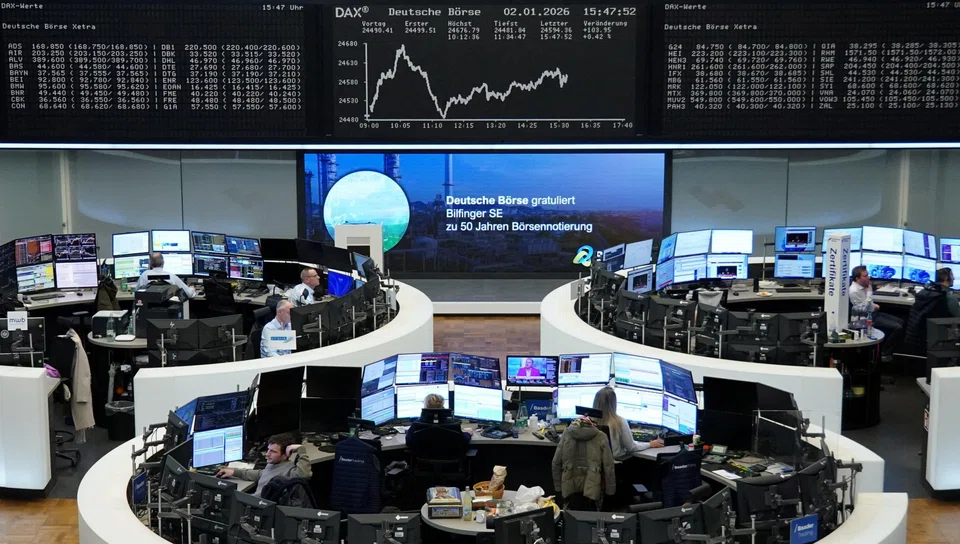
EUROPEAN shares rebounded on Wednesday from the previous day’s bruising selloff, as investor fears over the ripple effects of a prolonged Middle East conflict ebbed for the time being, while Spanish stocks shrugged off US trade threats.
The pan-European Stoxx 600 closed 1.4 per cent higher at 612.71 points, after dropping more than 4 per cent from Friday’s record high, while Germany’s DAX gained 1.7 per cent. The rally marked the biggest one-day gain for both indexes since May.
Sentiment stabilised after the New York Times reported Iranian intelligence operatives signalled openness to talks with the US Central Intelligence Agency on ending the war. Iran’s semi-official news agency Tasnim later said the story was “absolute lies”, citing a source in the Iranian intelligence ministry.
Still, the Times report was enough to bring out buyers in Europe.
“The merest whiff that a resolution to the conflict is on the cards is helping European stocks rebound,” said Kathleen Brooks, research director at XTB. “Sentiment is fragile and headline risk can materialize at any time.”
The US sank an Iranian warship off the Sri Lankan coast, widening the war zone, while US Defence Secretary Pete Hegseth said that the US could fight as long as needed. Banks, which shed over 7 per cent in the selloff, rebounded 2.3 per cent, led by Santander and BBVA.
Travel and luxury stocks, the epicentre of the selloff, rose 2.8 per cent and 1.9 per cent respectively. Tech stocks and industrials gained 2.5 per cent and 1.9 per cent, among the biggest boosts to the Stoxx 600.
The STOXX volatility index eased over 5 points after gaining for four consecutive sessions.
Spain’s finance-heavy benchmark index gained 2.5 per cent. It fell as much as 1 per cent in early trading after US President Donald Trump threatened to impose a trade embargo on the country, following Madrid’s refusal to allow the US military to use its bases for missions linked to strikes on Iran.
Oil climbs higher, jitters persist
Oil prices remained close to multi-month highs as attacks disrupted energy infrastructure and shipments across the region.
Europe’s reliance on energy and goods shipped through the Strait of Hormuz has left it exposed, reviving inflation fears, as alternative routes would likely mean higher cost pressures. The oil sector declined for the second consecutive session, down 0.3 per cent.
Markets are also contending with a mixed economic picture. PMI readings showed euro zone services activity expanding slightly faster in February, Germany’s growth hit a four-month high, France remained stuck in contraction, and Italy’s growth cooled.
Among movers, Vistry slumped 25 per cent after the UK home builder announced its CEO and Chair, Greg Fitzgerald, intends to step down and the roles will be separated after his retirement.
Adidas shed 3.6 per cent following results, while ASM International climbed 5 per cent after the world’s second largest chip equipment maker said it expects first-quarter 2026 revenue to rise to about 830 million euros. REUTERS
Decoding Asia newsletter: your guide to navigating Asia in a new global order. Sign up here to get Decoding Asia newsletter. Delivered to your inbox. Free.
Share with us your feedback on BT's products and services