

Fed likely to do nothing amid inflation, recovery doubts
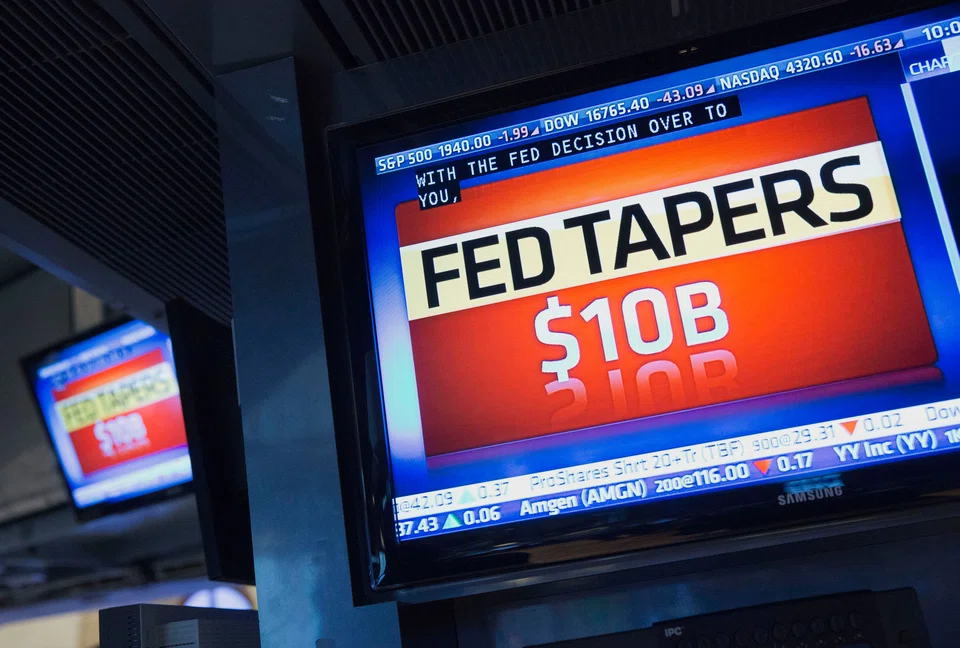
Looking only in the short term, two questions would be uppermost in every market player's mind. First is whether Friday's bounce can extend into this week and second is what the US Federal Reserve will do at this week's Federal Open Markets Committee (FOMC) meeting.
With oil having risen to US$32 per barrel on Friday, momentum plays a key role in debating these questions - optimists might speak of a significant reversal having occurred because Wall Street finally recorded a weekly gain, while pessimists might warn of "dead cat bounces".
Beyond these two short-term questions is the issue of the effectiveness of monetary stimulus - or its lack thereof. Reports indicate that Friday's rally in Europe was thanks to heavy hints from European Central Bank chief Mario Draghi of easing in March, while earlier on Friday, Japan and China stocks rallied after their central banks opened the monetary taps for the umpteenth time over the past few years.
Whether or not dead cats actually do bounce is of course irrelevant though the analogy is perhaps apt when accompanied by sonic embellishment. For instance, Rabobank Financial Markets Research, in its Friday commentary "Big Deal(ers)", said: "From a fundamentals perspective, the answer is 'weeeee . . . splat!! . . . boing!', or whatever a dead cat sounds like."
That is probably the first time this column has featured sound effects but on a more serious note, given the tribulations that markets have endured over the past three weeks (longer, if you count the third quarter of 2015 after China's yuan devaluation in August), it's perhaps appropriate to be careful about forming premature conclusions - furthermore, market momentum is always heavily distorted by short-selling and short-covering activity that in the short term, will mask true direction.
As for the Fed, having decided in December that the situation in China had sufficiently stabilised to allow a first interest rate hike only to see the whole thing go to pot a few weeks later, officials must now be nervously asking themselves if perhaps they were a) too hasty in passing judgement on China's health, and b) too presumptuous in declaring the US economy healthy enough to withstand a series of rate hikes.
Our guess is that notwithstanding the positive momentum in oil and stocks of Friday and possibly Monday, the negative momentum of much of January will push the Fed to do nothing other than make holding statements about rate hikes being "data dependent" and that it will be monitoring overseas developments (meaning those in China) very closely. In other words, not very much different from the statements it made in September and October 2015.
It is a view shared by most experts, one being Rabobank, which on Friday said that while some Fed speakers continue to be complacent, it has its doubts about both the inflation outlook and the pace of the economic recovery, and consequently also about the four rate hikes that the Fed intends to deliver this year. "In fact, a few Fed speakers now appear to share our concerns. We expect only two hikes with risks skewed to the downside," said the bank.
The subject of how effective monetary policy of the post-US sub-prime crisis of 2008 is depends on whether there's any validity to the "wealth effect", which says that pushing up stock prices through monetary loosening creates a "feel good" effect in the masses, which eventually lures them into spending more, thereby lifting economic activity.
We don't subscribe to this "tail wagging the dog" method of trying to engineer economic recoveries since it breeds complacency and inefficiencies. But markets demand it and compliant central banks have apparently found it to be a convenient if stopgap solution.
For full listings of SGX prices, go to http://btd.sg/BTmkts
TRENDING NOW

He built the Vingroup empire. Now South-east Asia’s richest man is handing some key roles to his sons

US dollar falters after Iran’s offer to reopen Hormuz sends oil lower

Temasek’s Wan Chee Foong to helm PIL, Lars Kastrup to be board adviser
Despite the de-dollarisation debate, demand for dollar liquidity in Asia is growing

