

Financial astrology: Is the STI really hoping for Spain to win the World Cup?
The index has tended to rally after a European triumph and fall after a South American victory

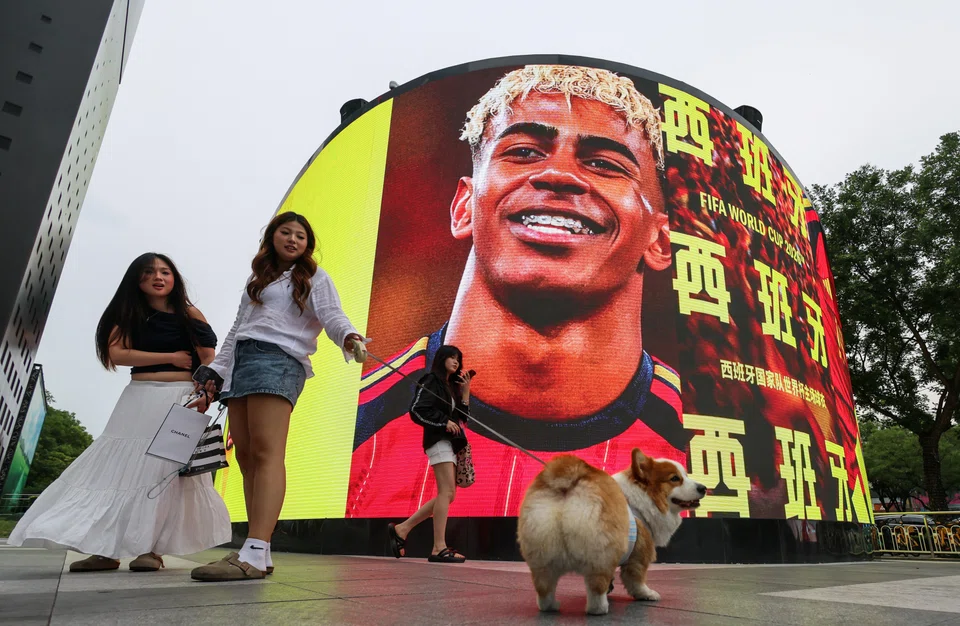
[SINGAPORE] On Monday (Jul 20), at 3 am in Singapore, the world will watch Spain and Argentina clash in New Jersey for the 2026 Fifa World Cup.
It is a fight between the European and South American No 1s, and for a certain breed of superstitious investor, the stakes may go beyond the trophy.
Historically, the Straits Times Index (STI) has picked a clear favourite between the only two regions to have ever won the world title.
Since 1990, in the six months after a European World Cup victory, the STI has averaged an 8.7 per cent rally.
When a South American team lifts the cup, the index averages a 5.7 per cent drop over the same time frame.
Institutional analysts are already placing their bets.
Thilan Wickramasinghe, Maybank’s head of research in Singapore, told The Business Times that the bank’s proprietary artificial intelligence model is predicting a Spanish win, “narrowly edging out Argentina”.
While it predicts football results, the model does not look at team formations. Instead, it weighs playing-nation macro factors such as economic growth, gross domestic product per capita and inflation against match-day climate conditions.
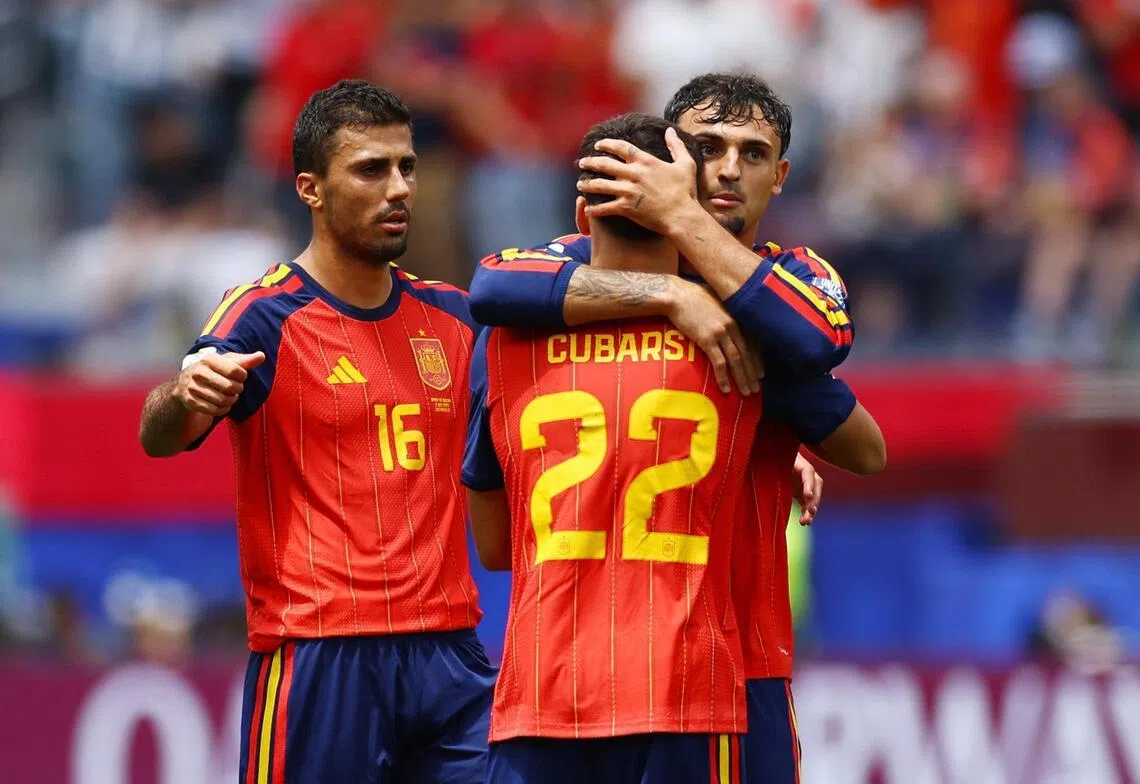
But the statistical correlation between a European win and a market bump sits at a weakly positive “r-value” of 0.38.
SEE ALSO
This value, also known as the Pearson coefficient, measures the strength and direction of a linear relationship between two variables – in this case, the federation of a World Cup winner and the STI’s performance in the next six months. It can range between minus-one and plus-one.
So before you place a trade based on Lionel Messi’s silky touch or Lamine Yamal’s teenage pace, here is BT’s rigorous look at what is very much non-rigorous financial astrology.
The stats
Let’s bring in the receipts. While a correlation of 0.38 is not entirely meaningless, a peek under the hood reveals it is a classic case of seeing patterns in the clouds.
Because 1987 marks the official inception date of the modern STI calculation, the data set is limited to nine World Cups going back to the 1990 edition.
Run a standard test for significance on this data and it also does not hold up. With a sample size this small, the maths shows you would see a gap this wide roughly one out of every three times purely by random chance.
The verdict? A statistical fluke.
The confounders
Breaking the illusion requires just one look at the macroeconomic timeline, which proves that the stock market is largely blind to the football pitch – as fun as it may be to believe otherwise.
Take 2002, for example. Brazil, a South American team, took home the trophy, and the STI suffered a 15.4 per cent drop in the following six months.
But the market was not mourning the German loss. It was instead bleeding out from the burst of the dotcom bubble.
Alternatively, look at the 2022-to-2023 window. Argentina won the tournament, and the subsequent six months effectively flatlined.
As painful as the loss may have been for Kylian Mbappe supporters, Emiliano Martinez’s penalty shoot-out save was not the market driver. Instead, the US Federal Reserve’s aggressive interest rate-hiking cycle was actively choking off global equity growth.
Even if you strip out global market noise – measuring the STI’s performance strictly against the S&P 500 – the European versus South American gap still fails the statistical significance test.
The true market alpha
So, is there any real alpha to be found in the World Cup? Yes, but a football-frenzied investor would have to pivot from the myth to the mechanism.
Instead of chasing who wins, institutional analysts point to the tournament’s direct consumption effects.
The real transmission channels are the broad uplifts across hospitality, F&B, media and e-commerce.
Maybank’s June strategy report highlighted Thai Beverage as a key beneficiary, noting that the company’s beer volume jumped 14 per cent year on year during the 2022 tournament.
The report also pointed to major local banks such as DBS as beneficiaries, which likely gained from a substantial boost in World Cup-related credit card spending.
In fact, if the STI does rally in the second half of 2026, it will not be because a European captain lifted a gold trophy.
As Wickramasinghe points out, the real momentum is entirely structural.
“Even without the World Cup, the Singapore market is in a strong position to deliver positive momentum,” he said.
“We think the combination of safe-haven flows, large-cap restructuring and a small-and-mid-cap value upswing should drive market valuations further in the second half.”
When the final whistle is blown, the home nation of the winning team will not dictate the STI’s trajectory for the rest of the year – even if they move in lockstep.
But it certainly might be fun to pretend that you – and the rest of the market – are feeling the joy or the pain of however this World Cup final shakes out. As Wickramasinghe personally hopes: “Viva Espana!”
Decoding Asia newsletter: your guide to navigating Asia in a new global order. Sign up here to get Decoding Asia newsletter. Delivered to your inbox. Free.
Copyright SPH Media. All rights reserved.
TRENDING NOW

LTA proposes combining car COE categories, adding rebate-surcharge system

StarHub to acquire MyRepublic’s mobile business amid ongoing telco consolidation

DBS, OCBC, UOB rout lops billions off STI as inflation, rate concerns spook investors

Grab CEO’s wife Chloe Tong on life with Anthony Tan and finding her purpose

