



Geopolitical concerns add to woes for pre-IPO activity, M&As for Chinese companies
The US-China trade war deepens the cautious mood amid tightened scrutiny for domestic listings
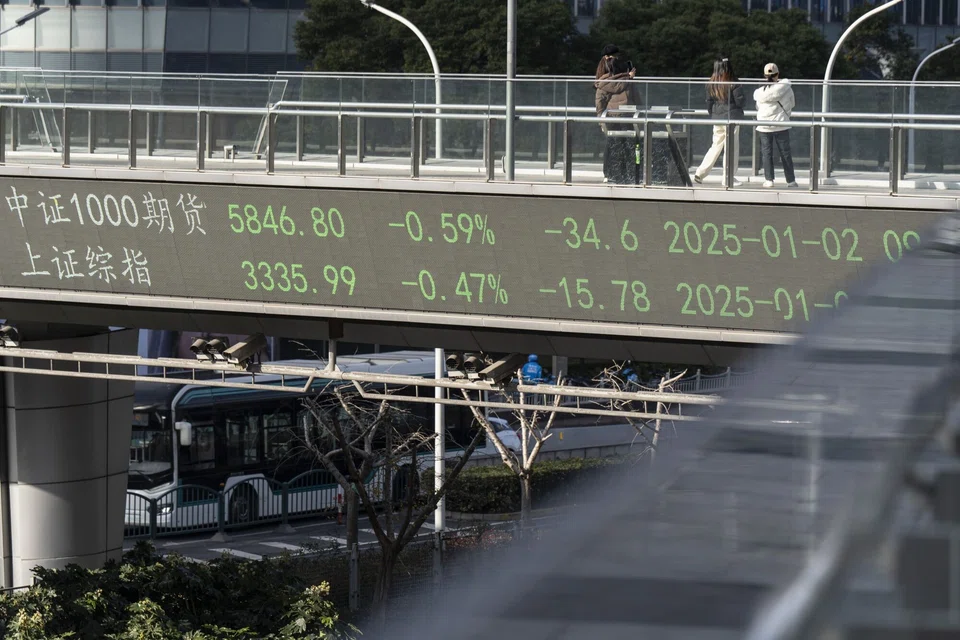
GROWING geopolitical concerns from the trade tensions between the US and China are compounding an already-cautious outlook among investors on pre-listing activities and mergers and acquisitions (M&A) involving Chinese firms.
Pictet Asset Management, for one, in November projected a renaissance in the number of initial public offerings (IPOs) from Asia this year, spurred mainly by China. But the tit-for-tat trade war between the world’s two largest economies has doused that optimism somewhat.
Referring to the IPOs that could have come from the 167 Chinese unicorns, Jon Withaar, who manages around US$1 billion as head of Asian special situations at Pictet, said that number is likely to be significantly lower.

“Uncertainty around trade policies has given buyers pause for thought,” he told The Business Times. “We expect state-owned enterprise-related restructurings to continue.”
He added that valuations have fallen, and “the broader market is taking a wait-and-see approach to trade policy for the moment”. That is even as markets anticipate an IPO by Shein in London this year, and possibly some pre-IPO activity at TikTok.
A special situations strategy refers to the investment approach driven around catalysts that include pre-announced or speculative M&As, investments in unlisted securities, asset sales and restructures, and leveraged buyouts. It is one used by Pictet, which had US$282 billion in assets under management as at Jun 30, 2024.
Chinese equities have suffered in the past three years as the world’s second-biggest economy logged disappointing growth while taking a hit from a persistent property slump, following a longer Covid-19 lockdown than in most countries.
Aggravating the domestic slowdown were the scrutiny and restrictions on US investments in the country under former US president Joe Biden, which led major American pension and endowment funds to cut their exposure.
Uncertainty of exit
Another expert pointed out that the trade war is not the only factor crimping deal activity involving Chinese companies.

Leon Lim, a partner at TSMP Law, said: “While tariffs would impact valuations, it appears that investors remain cautious about Chinese companies, with the key reason being the uncertainty of an exit.” He added that the cautious mood is likely to persist through this year, until Beijing sends a clear signal of its support for capital markets and businesses.
A December report by Dealogic indicated that among the 10 biggest private equity (PE) companies with operations in China, there was not a single record of any having listed a Chinese company, or sold their stake through an M&A deal last year. This was the first time this had happened in at least a decade.
The pace of PE exits has slowed since Beijing slapped curbs on Chinese companies’ ability to list in 2021. This is limiting the options for buyout groups, which rely on the ability to sell or list companies – usually within three to five years of buying them – to generate returns for the pension funds, insurance companies and others whose money they manage.
Beijing further tightened scrutiny on listings in March 2024. China’s securities watchdog said then that regulators would vet IPOs more closely, to ensure the capital market’s safety and resiliency.
The outlook for Chinese companies reliant on exports is further clouded by US President Donald Trump’s recent series of tariffs on Chinese imports. These include 10 per cent taxes on all Chinese imports from Feb 4. In response, China levied 15 per cent on US coal and liquefied natural gas, and 10 per cent on crude oil, farm equipment and some automobile vehicles, effective Feb 10.
But it is not all doom and gloom for Chinese IPOs. Given Beijing’s clampdown on domestic listings, market experts expect more profitable Chinese companies seeking to list offshore, notably in Hong Kong.
Well-received Chinese consumer IPOs
Recent Chinese consumer listings have done particularly well, noted Jun Qian, head of PE China at Schroders Capital, which manages US$97 billion worth of assets.

He cited the Hong Kong IPO of Mao Geping Cosmetics. The Chinese skincare and cosmetics company raised HK$2.3 billion (S$399.6 million) in December 2024, and skyrocketed 77 per cent on its Dec 10 debut.
The Jan 10 debut of Bloks Group, the popular Chinese maker of Ultraman and Transformers figurines, was also received with fanfare; the counter had jumped 41 per cent by the close. The Shanghai-based company raised US$215 million from its IPO, which drew overwhelming demand from retail investors.
Market participants attributed the demand to Chinese consumer appetite for lower-ticket mass-market items, and access to zero-interest loans that mum-and-pop investors could use to buy the stock.
These examples have “stimulated PE investors’ enthusiasm for pre-IPO opportunities for solid companies”, said Schroders’ Qian.
He is also more sanguine on the prospects of A and H share listings, seeing the regulatory tightening of domestic IPOs as a “short-term adjustment”.
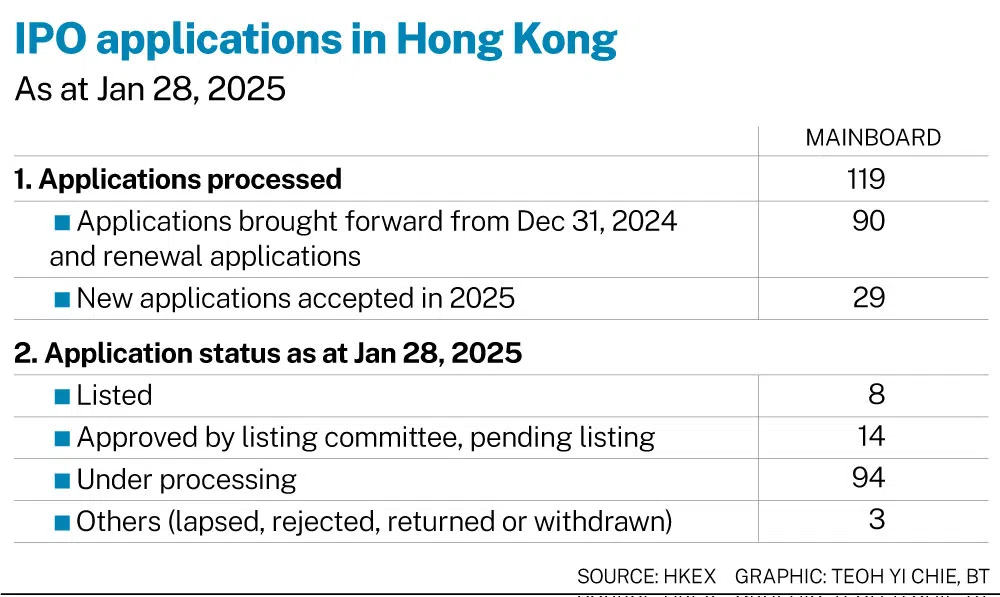
More IPOs are on the way in Hong Kong. Its bourse received 29 new applications for its mainboard this year, based on a Jan 28 report from Hong Kong Exchanges and Clearing Ltd. These are on top of the 90 applications brought forward from December 2024. Of the total of 119, eight have listed, and 14 are pending listing.
Decoding Asia newsletter: your guide to navigating Asia in a new global order. Sign up here to get Decoding Asia newsletter. Delivered to your inbox. Free.
Copyright SPH Media. All rights reserved.
TRENDING NOW

DBS, OCBC, UOB rout lops billions off STI as inflation, rate concerns spook investors

Grab CEO’s wife Chloe Tong on life with Anthony Tan and finding her purpose

OCBC sheds S$8 billion in value as shares close nearly 6% down; analysts cautious on banks

Deal between tycoon friends sparks scrutiny of Philippine power sector

