

Global stocks set for weekly drop as rates reality bites
 Add BT as a preferred source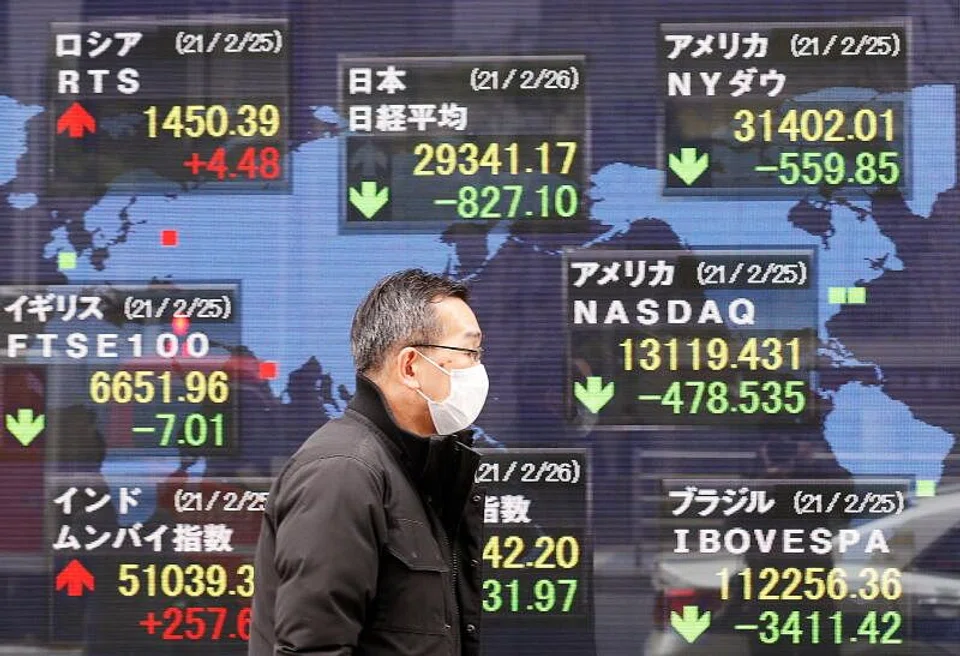
DeeperDive is a beta AI feature. Refer to full articles for the facts.
[SINGAPORE] Stocks headed for a weekly loss on Friday (Apr 8) as the prospect of aggressive global rate hikes finally began to rattle investors, while bonds fell and the dollar looked set for its best week in a month.
MSCI's broadest index of Asia-Pacific shares outside Japan was steady in morning trade and down about 1.5 per cent for the week so far. Japan's Nikkei fell 0.2 per cent on Friday to head for a weekly loss of nearly 3 per cent.
A late rally had lifted Wall Street indexes modestly, but they are also all down for the week led by a 2.5 per cent loss for the rates-sensitive Nasdaq. US futures were flat.
Federal Reserve policymakers are ready to start cutting the central bank's asset holdings from May and are prepared to move rates higher 50-basis-points at a time to curb inflation, meeting minutes and remarks from officials showed this week.
War in Ukraine and the shockwave it has sent through commodity prices, as well as lingering damage to supply chains from the pandemic has heaped even more pressure on consumer prices and is adding to a sense of a major shift in trends.
"Combine those ... and equity risk premium, no matter in which market, has to go up," said Lirong Xu, chief investment officer at Franklin Templeton Sealand Fund Management in Shanghai. "And interest rates will not go down further."
Navigate Asia in
a new global order
Get the insights delivered to your inbox.
"The last 2 decades brought low inflation and a relatively peaceful world. Going forward geopolitical conflicts may become more and more volatile and have more of an impact on the whole world's economy."
Risk of a populist upset in French presidential elections has also sent jitters through markets - dragging on French debt and the euro - ahead of the first round of voting on Sunday.
A victory for far-right leader Marine Le Pen over incumbent Emmanuel Macron, while still unlikely, is now within the margins of error, opinion polls show and the euro edged down to a 1-month low of US$1.0858 in morning trade.
Elsewhere long-end Treasuries have borne the brunt of this week's selling in haemorrhaging bond markets as traders see it hit hardest by the Fed cutting bond holdings.
The benchmark 10-year Treasury yield is up 25 basis points (bps) to 2.6409 per cent this week, and was steady in Asia trade on Friday. The 30-year yield is up 22 bps.
The US dollar has been the primary beneficiary and the dollar index, which measures the greenback against a basket of 6 major currencies hit an almost 2-year high of 99.904 on Friday.
The stronger dollar, and an oil price easing with supplies being released from reserves, has also pushed commodity currencies from recent peaks and redoubled pressure on the struggling yen. Japan's currency is near its lowest levels in years and was under pressure at 124.23 per dollar.
Brent crude futures were steady at US$100.56 per barrel and US crude futures held at US$96.17.
There were also some brighter spots, with Australia's bank-and-miner heavy equity market hanging in for a steady week and European futures and FTSE futures posting gains of about 0.8 per cent on Friday.
"A higher rate environment that transpires through the hiking cycle will continue to benefit value vs growth equities and provides a more constructive outlook for sectors like financials," said Clara Cheong, a Singapore-based strategist at JPMorgan Asset Management. REUTERS
Decoding Asia newsletter: your guide to navigating Asia in a new global order. Sign up here to get Decoding Asia newsletter. Delivered to your inbox. Free.
Share with us your feedback on BT's products and services
TRENDING NOW

From 1MDB to ‘corporate mafia’: Is Malaysia facing a new governance test?

Higher costs, lower returns: Why are Singaporeans still betting on real estate?

South-east Asian markets account for 8.8% of global capital inflows from 2021 to 2024: report

Richard Eu on how core values, customers keep Singapore’s TCM chain Eu Yan Sang relevant

