

Healthy correction or sign of worse to come?
There's consensus on continued market volatility this week as investors track US Treasury yields
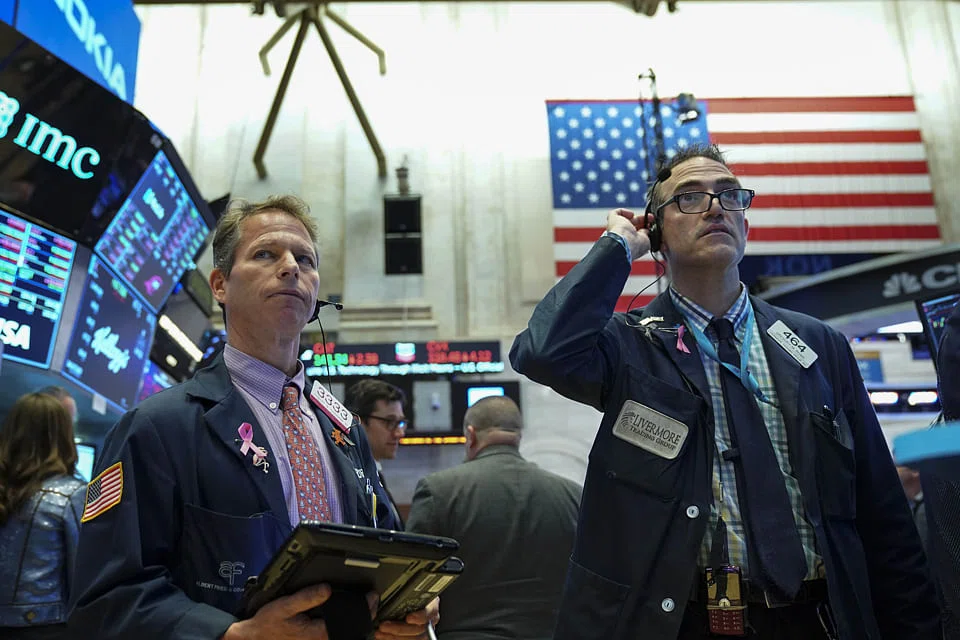
FOLLOWING a massive selldown over two sessions last week, US stocks surged on Friday - setting the scene for further volatility this week.
Fears about rising Treasury yields and slowing global trade are at fever pitch as unnerved traders respond to Treasury markets, diplomatic haggling on world trade and quarterly earnings reports.
The blue-chip Dow Jones Industrial Average dropped more than 1,300 points last Wednesday and Thursday and finished 4 per cent lower for the week for its biggest loss since March.
Riskier small cap, international and technology stocks suffered even more damage, with the Russell 2,000 small-cap index finishing near its lows for the year and more than 10 per cent from its recent highs, in official correction territory.
The bulls say last week's slide was nothing more than a healthy adjustment after months of steady gains during the summer, and anticipate the Dow and broad Standard & Poor's 500 bouncing back, just as they did after the spring correction.
"I think it was investors worrying about higher interest rates and also becoming more concerned about slower global growth especially in China as there continues to be little resolution in the tariffs and the trade disruptions there," said Kate Warne, an investment strategist at brokerage Edward Jones.
She said the fears about rising yields, at least, were misplaced. To her, the reason for the increase in yields is critical.
Ms Warne said the yield on the 10-year Treasury note is reacting to a brightening outlook for economic growth rather than overheating inflation.
The bears counter that the pace of yield increases is more critical than the reason.
Analysis by brokerage Goldman Sachs suggests that stocks are more likely to have an inverse relationship with yields when the rates, which form the benchmark for mortgages and other consumer loans, move more quickly than historical averages, as has been the case recently.
Last Friday, JP Morgan Chase, Citigroup and Wells Fargo - three of the largest banks in the US - all reported that they were generating more income from loans to consumers without any sign of slowing demand.
Ms Warne said those reports suggested that the outlook for economic growth is much brighter than the panicky midweek selloffs would allow.
"I'm more concerned about the possibility of a trade war with China for the long term than I am about rising interest rates," she said.
"Fears of trade disruption in China and, as a result, slower growth in the rest of the world could become more pronounced and actually lead to slower growth."
There was ample evidence of these knock-on effects from Chinese trade tensions last week.
The International Monetary Fund cut its estimate for global economic growth in 2018 ahead of its meeting in Bali.
While many of the stocks that led the mid-week selloff, including tech companies like Facebook and Advanced Micro Devices, rose sharply last Friday, the luxury houses did not. That suggests the flight from that niche was more than a panic.
Luxury design stable LVMH warned that it was seeing a slight slowdown in Chinese demand, causing a plunge in luxury shares.
The retail sector is among those most sensitive to rising Treasury yields, because of the immediate effect on mortgage and credit-card rates.
Sears Holding, a US chain that traces its roots back to the turn-of-the-20th-century sales catalogue, looks set to file for bankruptcy.
A survey of Wall Street analysts by brokerage Morgan Stanley revealed expectations that Amazon's decision to raise the minimum wage will lead to higher wages in the retail sector, which will weigh further on the slim profit margins in the sector.
Overall, third-quarter earnings for the corporations that make up the broad S&P 500 index are expected to rise about 22 per cent from a year earlier, according to estimates from Thomson Reuters Refinity.
This week, Bank of America will help complete the vision of US consumer borrowing while IBM will provide hints on any slowdown in corporate spending worldwide.
One reason to expect unpleasant surprises is the fact that the boost to earnings from US President Donald Trump's tax cuts is set to wear off in the fourth quarter.
"It's not just the earnings, but more their forward looking statements," said Joe Kinahan, chief market strategist at TD Ameritrade. "What are they seeing for the fourth quarter? What's on the horizon for 2019? Are tariffs slowing things down?"
An optimistic outlook from major corporations could ease volatility. Any signs of slowing demand will likely spur further selloffs.
The most critical factor, however, may be whether the yield on the 10-year Treasury note stays near its week-end level of around 3.1 per cent or starts rising again.
Portfolio strategists at money manager Alpha Capital Management are among those who expected yields to settle down once investors become comfortable with the Federal Reserve's plan to gradually raise interest rates.
"It's possible that volatility could persist in the near term, perhaps even through the mid-term elections into year end," they said.
TRENDING NOW

Fed hike throws Singapore banks a margin lifeline; UOB most likely to feel impact

He built the Vingroup empire. Now South-east Asia’s richest man is handing some key roles to his sons

Real-estate veteran Desmond Sim quits from CEO roles at Realion, ETC

Chagee, Mixue and Luckin won the market. Sustaining their edge is the harder part

