

China’s 5% GDP target for 2025 a sign of confidence, but warrants stronger policy support: analysts
Markets across the Asia-Pacific mostly edged up in response on Wednesday, with Hong Kong shares rising nearly 3%

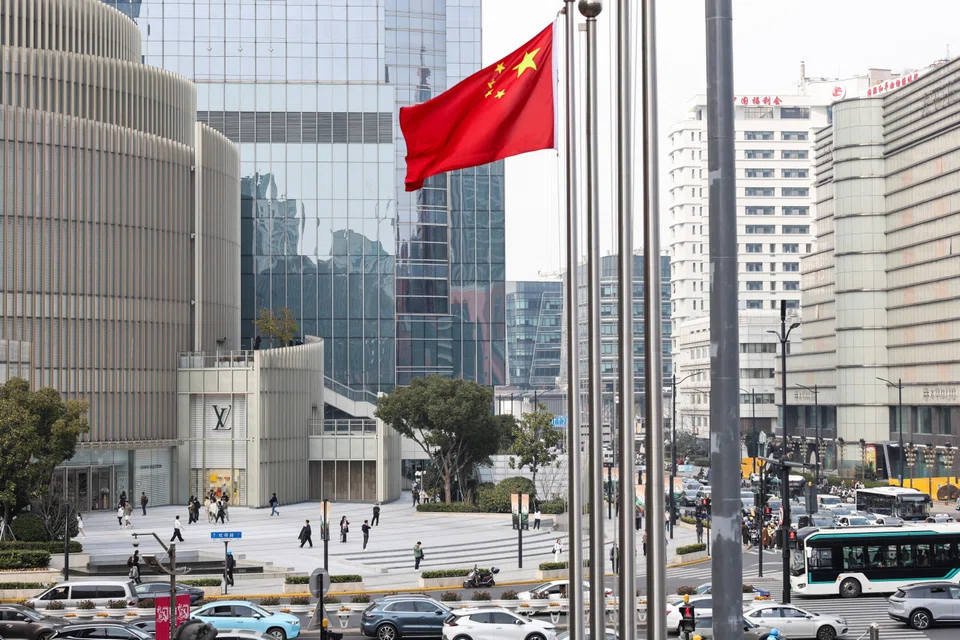
WHILE China’s latest growth target is a sign of the country’s confidence in its economy, analysts have cautioned that stronger policy support may be needed to achieve it.
On Wednesday (Mar 5), Beijing maintained its 2025 gross domestic product growth target at about 5 per cent – for the third consecutive year, and despite US tariffs.
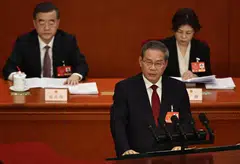
Premier Li Qiang announced the latest target as he delivered the government’s annual work report at the opening of the third session of the 14th National People’s Congress.
China achieved 5 per cent growth in 2024, down from the 5.2 per cent growth achieved in the previous year.
In 2022, the world’s second-largest economy grew by just 3 per cent – its second-worst performance since the 1970s. The fourth quarter of that year was hit by stringent Covid-19 curbs, as well as a property market slump.
Lynn Song, chief economist for Greater China at ING, said: “Repeating the ‘around 5 per cent’ growth target, despite a more challenging external environment, is in our view a show of confidence and a harbinger of stronger policy support for domestic demand.”
DBS Group Research noted that the latest growth target signals the Chinese government’s confidence in the economy’s resilience.
“Meeting this goal is critical to staying on track for doubling GDP by 2035 (relative to 2020 levels), which requires an average annual growth rate of 4.8 per cent,” the research house said in a report.
Jamus Lim, associate professor of economics at Essec Business School, noted that the latest growth target “is already a step down from the previous decade, where targets were routinely set several percentage points higher”.
“A major impetus behind this reduction – even prior to the pandemic and the implosion of the housing market – is the headwind from an ageing, shrinking workforce, diminishing returns to investment, and a saturation of educational attainment in the graduate population.”
He added: “Within this context, 5 per cent strikes me as still sustainable insofar as the economy’s growth potential is concerned.”
Asia markets were mostly in positive territory by the close. Hong Kong’s Hang Seng Index advanced 2.8 per cent and the Shanghai Stock Exchange Composite Index closed 0.5 per cent higher.
However, the Australian market – widely regarded as a proxy for China – declined, with the ASX 200 closing 0.7 per cent lower. Taiwan’s Taiex gained 1.2 per cent, Japan’s Nikkei 225 edged up 0.2 per cent and South Korea’s Kospi rose 1.2 per cent.
The FTSE Bursa Malaysia Kuala Lumpur Composite Index climbed 0.6 per cent, and Singapore’s Straits Times Index gained 0.2 per cent.
Trade tensions and other challenges
The Chinese economy has struggled in recent years due to significant challenges that have yet to be resolved.
Essec Business School’s Lim pointed out that the real estate market “is undergoing a painful period of restructuring and reorganisation”, a process that remains ongoing.
“While China’s consumption share of income has recovered from the pandemic-related shrinkage, consumer demand is still anaemic, and is only half that which is common among advanced economies,” he noted.
He added that the external environment will not be supportive this time, given the recently increased tariffs on Chinese goods imported by the United States.
ANZ Research said that the unchanged growth target reflects that the authorities are confident about the domestic outlook, given the developments in the field of artificial intelligence. It sees “upside risk” to its 2025 GDP forecast of 4.3 per cent.
“The policymakers preserve policy room for future headwinds... We also expect the authorities to adjust the Budget by mid-year if the growth momentum is hit by trade disputes,” ANZ Research said in a note.
China’s latest growth target also comes amid escalating trade tensions with the US. On Feb 4, the 10 per cent tariff by the US on Chinese imports came into effect.
China announced retaliatory tariffs from Feb 10, including 15 per cent on imports of coal and liquefied natural gas from the US and 10 per cent on crude oil, agricultural machinery and large-engine cars.
US president Donald Trump has since doubled the rate of tariffs on Chinese imports to 20 per cent from Tuesday.
In turn, China responded by imposing tariffs of up to 15 per cent on US farm goods, such as chicken and pork, from Mar 10.
On Tuesday night, Trump remarked to a joint session of Congress in the US that his new tariffs will cause “a little disturbance”, but he defended his plan to remake the world’s largest economy.
He said: “Tariffs are about making America rich again and making America great again. And it’s happening, and it will happen rather quickly.”
Julius Baer economist Sophie Altermatt pointed out that weakness in domestic demand, unresolved issues in the property sector and strained local government finances remain headwinds in China.
“The international trade environment is becoming more challenging with rising global protectionism and higher US tariffs in particular, all of which need to be offset by stronger policy support measures to achieve the ambitious 5 per cent growth target,” she said.
Decoding Asia newsletter: your guide to navigating Asia in a new global order. Sign up here to get Decoding Asia newsletter. Delivered to your inbox. Free.
Copyright SPH Media. All rights reserved.
TRENDING NOW

Grab CEO’s wife Chloe Tong on life with Anthony Tan and finding her purpose
Jacqueline Loh to step down as MAS deputy MD in senior leadership reshuffle

Why 1 in 2 young Singaporeans who said ‘no kids’ now say ‘yes please’: new study
Private home prices accelerate with 1.4% rise while HDB resale values dip further in Q3: flash data

