Hopes of trade war, Brexit breakthrough bring cheer
Modest step towards partial US-Sino deal may keep stock market rally going, but may not prevent global slowdown
US STOCKS rallied last week as two of the darkest clouds on the market horizon parted simultaneously.
This week, the rally could continue, particularly if the Brexit and trade-war clouds continue to lift and third-quarter earnings come in strong.
Last Friday, US President Donald Trump said the US and China had reached "Phase One" of a trade agreement, which could result in US$40 billion to US$50 billion in agricultural purchases by China.
He said he expects a deal, which would also address disputes over intellectual property and currency, to be finalised in the coming weeks.
Mr Trump was characteristically hyperbolic in his language, saying there "was nothing bigger than what we are doing with China".
The response on the Chinese side was more guarded, with President Xi Jinping noting the "goodwill" on both sides.
But one strategist said the demonstrations of goodwill and the modest step towards a deal would be enough to keep last week's stock rally going.
"The reason the market is focused on this is there is a direct positive correlation between headlines and business certainty and uncertainty," said Quincy Krosby, chief market strategist at Prudential Financial.
A boost to business confidence means that economic growth within China and the US "can pick up if there is a thaw in the trade war".
In the short term, the Chinese economy could get a boost from the decision not to impose tariffs due to take effect next week, while US farmers will get much-needed relief after more than a year of bearing the brunt of the trade war.
Not all the hatchets were buried. Analysts at brokerage Bank of America Merrill Lynch argue that hostilities continue on the "tech war" front even as the truce takes effect in the trade war.
In the same week that the Trump administration welcomed Chinese Vice-Premier Liu He to Washington, it blacklisted Chinese makers of facial-recognition technology it alleged was used in the oppression of Uighur Muslims.
Beyond the intractable cybersecurity dispute, some economists warn that the partial agreement could be too little, too late. There's still a possibility that more tariffs are applied before the two sides can sign off on "Phase Two" of any agreement.
Even if an agreement is signed and sealed in a matter of weeks, as Mr Trump suggested, it might not be possible to turn the giant ship of the global economy when it is so close to a recession iceberg.
Last Friday, the International Energy Agency cut its projection for oil prices for the fourth time this year, citing a likely slowdown in global growth this year and next, echoing warnings from the International Monetary Fund and the World Bank.
The trade war likely caused the ship to turn in the iceberg's direction, as tariffs took their toll on exporters in China, Germany and the US, but there's no guarantee that the truce is comprehensive or timely enough to prevent the impact.
"That's inherent in this tug of war between the optimists and the pessimists," said Ms Krosby. She said the optimists' case is a little stronger, thanks to the Fed's rate cutting, which could continue in October and a range of Chinese stimulus measures.
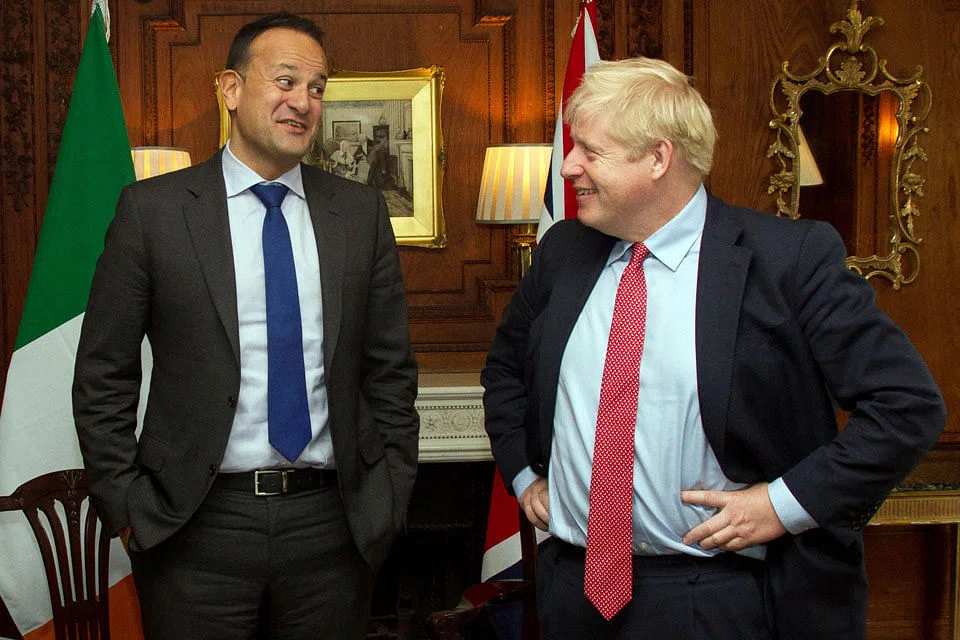
That followed a meeting between British Prime Minister Boris Johnson and his Republic of Ireland counterpart Leo Varadkar that unexpectedly yielded a joint statement, touting the possibility of a Brexit deal.
A week earlier, observers believed that British and European Union leaders had given up on a last-minute agreement.
The apparent compromise between Mr Varadkar and Mr Johnson sparked a furious round of renewed negotiations between UK and EU diplomats that may now yield an agreement before the Halloween deadline by which Mr Johnson has vowed to leave the common market, deal or no deal.
The value of sterling has now risen roughly 5 per cent from its lows a few weeks ago, reflecting bets that this "stroke-of-midnight" deal will materialise. While strategists say Brexit's direct impact on US markets is limited, a formal agreement would likely trigger a short-term rally at the least.
As the impeachment drumbeat grows in Washington and the Democratic party gets closer to nominating a presidential candidate, the stock market will eventually have to take notice.
While some economists, including influential French scholar Thomas Piketty, argue that Elizabeth Warren's "tax-the-rich" approach is the prudent one for long-term economic prosperity, there is little doubt that, should she clinch the nomination, it will be a short-term shock for markets.
One reason the healthcare sector is one of the weakest on the Standard & Poor's 500 for the year to date is the fear that Democratic proposals to limit the role of private insurers and introduce drug-price controls will hurt profits.
Investors anticipate slowing in third-quarter earnings growth, and it's possible that corporations will surpass these modest expectations.
"What you primarily listen for on that is: 'Hey, it's going to be OK,' " said Joe Kinahan, chief market strategist at TD Ameritrade, adding: "Investors hope to hear executive outlooks along the lines of 'It's not going to be worst thing in world, it's not going to be the best thing in the world, but it's going to be OK...we can continue at this pace".
READ MORE: Brexit hangs in balance amid intensifying EU talks
TRENDING NOW
Simba admits exceeding spectrum limits amid failed M1 deal; full-year profits surge 277%
He built the Vingroup empire. Now South-east Asia’s richest man is handing some key roles to his sons
What’s on the agenda when Xi and Trump meet in Washington
Ex-execs of CW Group, Allied Tech charged with offences linked to lawyer’s S$76 million misappropriation