The Hour Glass continues buyback, Wilmar chair Kuok raises stake
Navene Elangovan
THE Straits Times Index fell 0.52 per cent over the five trading sessions from Dec 1 through Dec 7.
There were 56 filings for changes in director interests and substantial shareholdings in that period from 32 companies, as well as 70 filings for share buybacks by 27 companies.
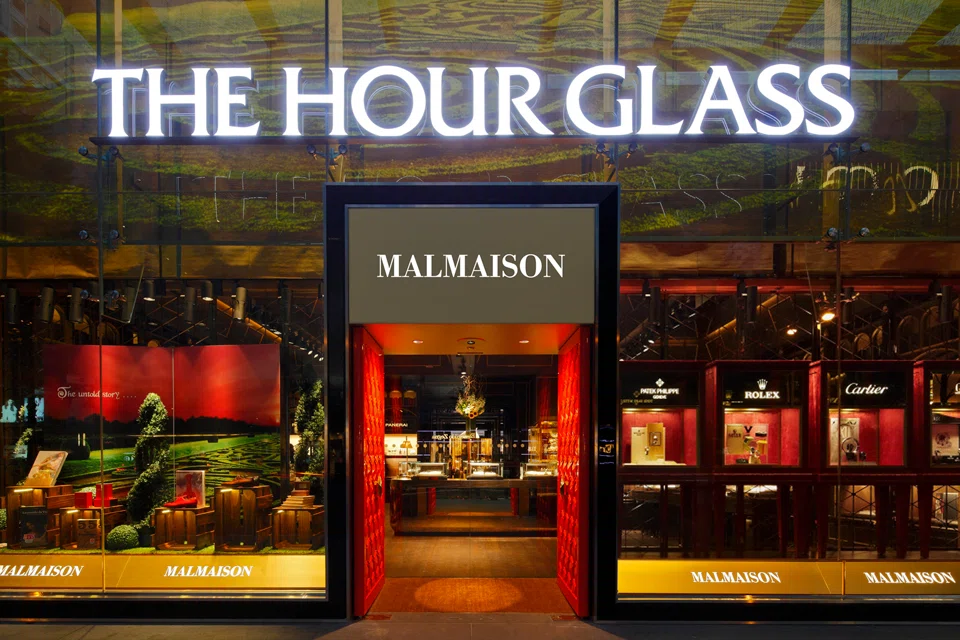
The Hour Glass
Luxury watch retailer The Hour Glass continued its buyback spree over the five trading sessions, acquiring more than one million shares for an average share price of S$1.58 per share.
On Dec 1, it purchased 540,000 shares at S$1.561 per share for a total consideration of S$845,132.65. On Dec 5, it purchased 238,000 shares at S$1.566 for a total consideration of S$373,629.73.
The following day, it purchased 45,000 shares at S$1.57 for a total consideration of S$70,818.24. On Dec 7, it purchased 251,000 shares at S$1.61 for a total consideration of S$403,991.20.
These transactions bring the total number of share buybacks by the company to 31 since July this year.
Its shares have been falling since April 2022, with a steep drop since September this year. Over the past month, its share price has declined 8 per cent.
The Hour Glass started off as a subsidiary of Metro Holdings in 1979, before it was transferred to lifestyle company Transmarco. It was later acquired by founding directors Henry Tay and Jannie Tay and publicly listed in 1988.
The company sells watches, jewellery and related products with distribution rights for luxury brands such as Burberry, Christian Dior and Hublot.
It is also the authorised retailer for watch brands Patek Philippe and Rolex.
The Hour Glass posted a 9 per cent fall in net profit for the first half of FY2024, as exchange rate movements hit its margins while revenue stayed flat.
Net profit for the six months ended Sep 30 fell to S$77 million, from S$84.6 million in the year-ago period.
On a per-share basis, its earnings fell 7 per cent to S$0.1171, down from S$0.1258 previously.
The falling share price of The Hour Glass is a reversal of the extraordinary boom between March 2020 and March 2022, when the stock gained more than 300 per cent as demand for luxury timepieces soared during the pandemic.
Its counter ended at S$1.65 on Friday (Dec 8), down 19.9 per cent for the year, valuing the company at S$1.2 billion.
The Hour Glass’ price-to-book value as at Dec 7, 2023 was 1.293 while its price-to-earnings ratio stood at 6.63.
Wilmar International
Kuok Khoon Hong, chairman and chief executive of Wilmar International , continued to add to his deemed interest in the agribusiness via trust accounts controlled by him and his spouse, Yong Lee Lee.
On Dec 5, Jaygar Holdings acquired 517,120 shares, Longhlin Asia acquired 1,034,240 shares and Hong Lee Holdings acquired 1,034,240 shares for S$3.566 per share.
On Dec 6, Jaygar Holdings acquired 235,820 shares, Longhlin Asia acquired 471,640 shares and Hong Lee Holdings acquired 471,640 shares for S$3.553 per share.
On Dec 7, Jaygar Holdings acquired 54,820 shares, Longhlin Asia acquired 54,820 shares and Hong Lee Holdings acquired 109,640 shares for S$3.53 per share.
Kuok added some four million shares to his holdings over the three days. This brought his total interest in the company to 13.56 per cent, up from 13.5 per cent prior to the transactions. The latest transactions follow on from his acquisitions the previous month.
In November, Kuok acquired a total 2,208,900 shares and disposed of 476,000 shares.
Kuok has been increasing his interest in the company since Aug 14 this year, before which his total interest in the company stood at 13.24 per cent.
The recent acquisitions coincide with a steady drop in the share price of Wilmar, which has been on a downward trend this year. The counter has fallen 8 per cent over the past month.
Its net profit for the third quarter ended Sep 30, 2023 fell 59 per cent to US$313.9 million, from US$766.2 million in the year-ago period.
Its core net profit also fell by similar margins, due to compressed refining margins from the tropical oils business and weaker performance by its fertiliser operations, it said in a bourse announcement in October.
Revenue in Q3 slipped by a smaller margin of 6.4 per cent, to US$17.7 billion, from US$18.9 billion in Q3 last year.
The company’s business activities include oil palm cultivation, flour and rice milling, sugar milling and refining and manufacturing of consumer products.
Kuok has served as the chairman of Wilmar since July 2006. He has been involved in the grains, edible oils, and oilseeds businesses since 1973 – working for his uncle, Malaysian businessman Robert Kuok.
He has over the years gradually increased his total interest in Asia’s leading agribusiness group, from 12.20 per cent in May 2017.
Wilmar announced on Dec 1 it had completed the disposal of its entire 30.1 per cent equity shareholding in Cosumar, a company incorporated in Morocco and listed on the Casablanca Stock Exchange, for an aggregate cash consideration of 5,962,455,660 dirham (S$792.3 million).
Wilmar also announced in September this year that it has appointed independent non-executive director Jessica Cheam as a member of its board sustainability committee with effect from Oct 1.
Cheam is the founder and managing director of Eco-Business, a media organisation dedicated to sustainability.
The stock closed at S$3.63 on Friday, down 11.7 per cent for the year. At that price, Wilmar has a market capitalisation of S$23.2 billion and is valued at 85.5 per cent of its book value and 9.6 times its historical earnings.