

‘Inconceivable’ that topic of climate change will somehow go away: MSCI president
Baer Pettit says the index provider’s ESG and climate business likely to be ‘material’ in future

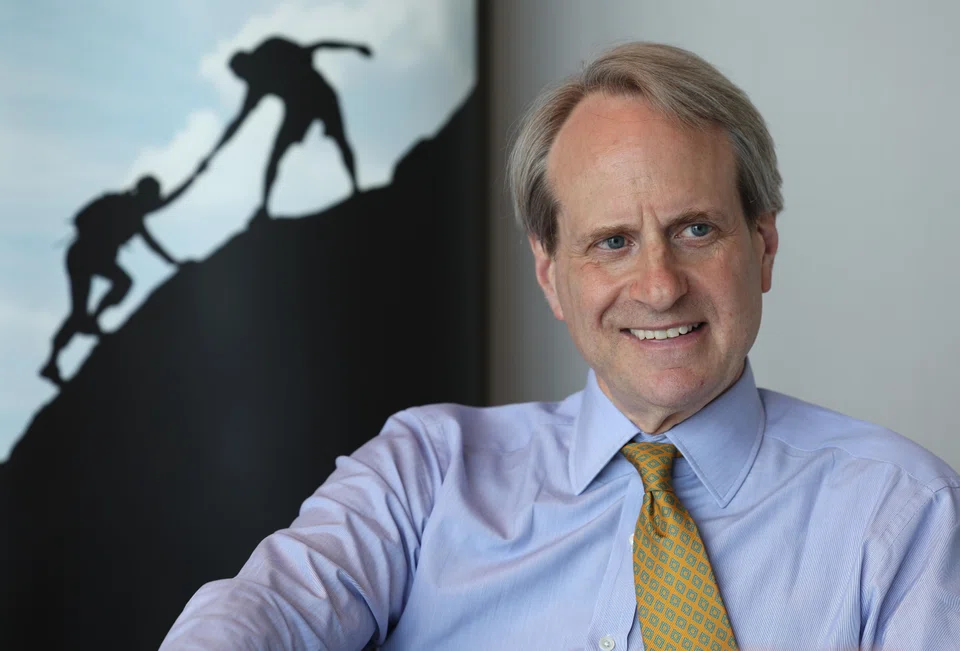
IT HAS been 14 years since index provider MSCI paid US$1.6 billion for a risk management platform called RiskMetrics Group, and used it to build an environmental, social and governance (ESG) research arm. Little did the index provider imagine the opportunity it had stumbled on to. Or, perhaps it did have some idea.
“The history of MSCI is such that where today we have some measure of success, it’s typically that we have got ahead of a trend in investing,” said Baer Pettit, the company’s president and chief operating officer.
“Going way back in time, decades ago, that was in different categories: benchmarking, and risk management, and portfolio construction. I think the most recent big example – and there are lots of smaller examples – has been in ESG and climate.”
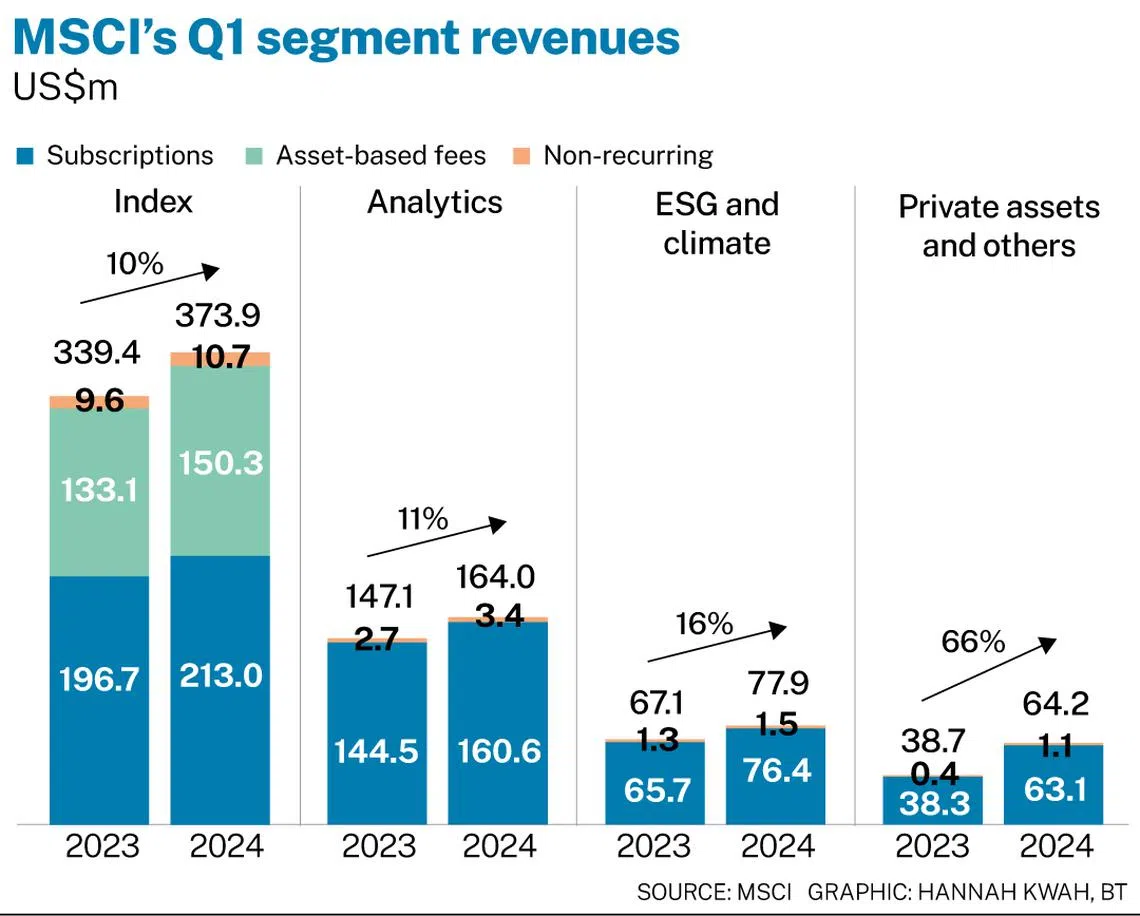
At the time of the acquisition, MSCI and RiskMetrics had a combined annual revenue of some US$750 million. Last year, MSCI’s total revenue was US$2.6 billion. Revenue from ESG and climate alone totalled US$287.6 million.
In the first quarter of 2024, ESG and climate revenue increased 16 per cent – outpacing the revenue growth for the index (10 per cent) and the analytics (11 per cent) segments.
MSCI’s ESG and climate offerings today include thematic indices, data and ratings, research, and analytical tools.
Fund managers use its indices to create index-linked products; and institutional investors use its offerings to analyse ESG-related portfolio risks or identify ESG-related investment opportunities.
This successful development of a new business segment is illustrative of the type of company MSCI hopes to be – constantly anticipating how investing will change so that it can continue to be a market leader. Its challenge is convincing investors it has placed the right bet, and will continue to place the right ones in the future.
In its 2023 annual report, chairman and chief executive Henry Fernandez said that MSCI is not in the index business. “Instead, we (are) in the business of helping clients build better investment portfolios,” Fernandez noted.
This means, Pettit said, that the company has to “always be thinking of what things are new and important for investors”. The ESG and climate business is just one example of that.
ESG backlash
Demand for MSCI’s ESG offerings may be growing, but that demand is also under threat. In the United States, large swathes of the investor population have pulled money out of ESG strategies.
Some say ESG-derived metrics don’t generate outperformance. Others have a more philosophical aversion to what has been described as “woke capitalism”. Meanwhile, even ESG supporters worry that the movement is not creating a positive impact.
The result of this backlash is that a growing number of voices are calling ESG investing a fad. If they are right, where does that leave MSCI’s investments?
In response, Pettit said that it’s important to distinguish the various components of MSCI’s ESG and climate business and the various purposes they serve.
The ESG ratings it provides, for instance, are “intended as an additional form of information for investors to understand the risks and returns of their portfolios”, said Pettit.
Available data shows that indices or portfolios built with the help of these ratings outperform over a longer time horizon, he adds. “We believe that those will continue to be important.”
These ESG ratings are quite distinct from the ESG labels that might be applied to funds, even funds built using ESG data from MSCI.
Pettit concedes that regulation of ESG-labelled funds is becoming stricter, but added that this use of ESG data falls under “a slightly different goal”.
Of all the use cases for MSCI’s ESG and climate offerings, however, Pettit is most optimistic about the demand that will be generated from companies’ climate-related commitments.
He believes that, whether induced by regulation, stakeholder pressures or external factors, those commitments are here to stay.
“We are convinced that climate is by far the most important and will be the longest lasting,” he said. “People have made promises, and now they have to show that they are living up to those promises... Even if they were cut back, for sure they are not going away.”
It is also “inconceivable” that governments will reverse gears, and say diesel engines are fine and renewable energy transition is off the table; or that a consensus will emerge that climate change isn’t real and we don’t need to worry about investments.
“What can be debated, reasonably, is the pace at which this occurs,” Pettit added. While the pace of growth has slowed slightly, he pointed to a long tail of private companies that will also be required to get on the climate disclosure bandwagon in time. “It’s hard to conceive of this category not being material in the future.”
New trends
The ESG opportunity has been insufficient to support MSCI’s stock, which closed at US$481.75 on Friday (Jun 28). That puts it down 13.3 per cent this year – lagging the S&P 500, which is up 14.5 per cent.
Much of that performance can be attributed to a disappointing set of results for Q1 – the stock fell 13.4 per cent after quarterly financials were released.
Oppenheimer analysts Owen Lau and Guru Sidaarth called it “one of the most underwhelming quarters in all our time covering MSCI”, according to a Bloomberg article quoting a research note.
They expect growth from both the index and the ESG and climate businesses to slow, and see an “increased risk of downward earnings revision”.
Pettit urged investors to look beyond the quarterly ups and downs. “We had some specific events that happened in the quarter, including a very large bank merger in Europe of two of our largest clients,” he said, adding that the business is “still fundamentally the same”.
He noted that the company is continuing to innovate – he is executive leader of the company’s innovation initiative – and that various other parts of the company are growing too.
Combined revenues from real assets and private-capital solutions, for instance, are growing even faster than revenue from the ESG and climate segment.
MSCI last year completed the acquisition of Burgiss Group, which it said gives it the world’s largest private-asset database – covering US$15 trillion of private equity, private real estate, private debt, infrastructure and natural resources; and US$45 trillion of real-estate transactions and portfolio assets.
Artificial intelligence (AI) is another area Pettit is excited about, for its potential to create new solutions for clients.
MSCI on Jun 11 launched two generative AI products that combine data with risk and performance models to generate insights for portfolio managers and answer questions about portfolios.
“It’s early stages for that, but we’re quite excited about it,” Pettit said. “Hopefully, we’ll be able to keep innovating in that sort of way.”
TRENDING NOW

Motoring tycoon Peter Kwee is back in court: Here are his previous legal battles

Demand, tech capabilities position Apac and AI as Skyscanner’s next growth frontiers: CEO Bryan Batista

Beyond the greenback, Vietnam’s big borrowers turn to Asian-currency bonds

Nvidia’s outlook cut to stable by Moody’s on governance concerns

