

Indonesia rupiah rises most in six months, stocks gain in reopen
The rupiah has also weakened past Asian Financial Crisis levels to a record low
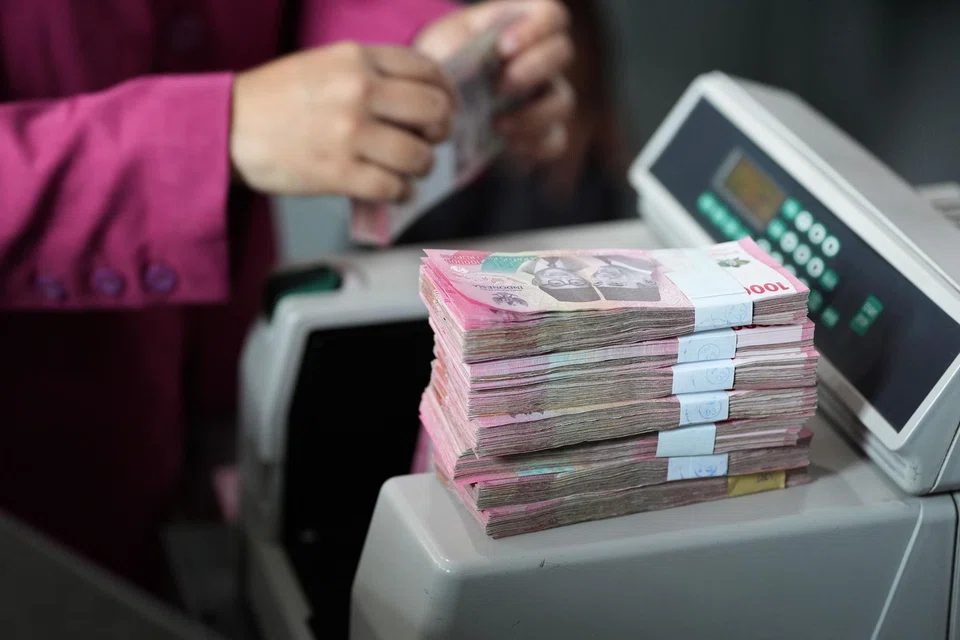
[JAKARTA] The Indonesian rupiah and stocks gained as domestic markets reopened after a week-long holiday, buoyed by hopes over the Trump administration’s push to ease Iran war tensions.
The rupiah rose as much as 0.6 per cent against the US dollar, the most in more than six months, to lead Asian peers in Wednesday (Mar 25) trading. The Jakarta Composite Index of shares jumped as much as 1.5 per cent. The benchmark 10-year bond yield climbed six basis points.
The gains mirrored broader advances across Asia as investors welcomed US President Donald Trump’s signal that Iran had offered a “present” as a good-faith gesture in negotiations, even as the US deploys more troops to the Middle East. Oil prices, a key concern for investors in Indonesian assets, fell on Wednesday.
“Uncertainty remains very elevated,” Rully Arya Wisnubroto, head of research at Mirae Asset Sekuritas Indonesia, wrote in a note. “As a result, market volatility continues to be driven by headline risk and shifting perceptions of escalation versus de-escalation.”
Investors braced for turbulence as markets reopened. A US-listed exchange-traded fund tracking Indonesian stocks slid about 2 per cent while markets were closed for Eid, the holiday marking the end of Ramadan. An Asean stock gauge dropped 1.8 per cent during the break.
Broader pressures remain, with global ratings agencies cutting Indonesia’s credit outlook and MSCI warning of a potential downgrade of its market status pending reforms. Before the holiday, the Jakarta Composite Index was the world’s worst performer this year, plunging more than 20 per cent from its January peak into bear territory. The rupiah also had weakened past Asian Financial Crisis levels to a record low.
SEE ALSO




Still, Indonesia can draw strength from its role as a major coal and palm oil exporter while oil prices remain high.
“Indonesia as a market has some distinct vulnerabilities to extreme geopolitical risks in the Persian Gulf,” Homin Lee, strategist at Lombard Odier Singapore, said on Tuesday (Mar 24). “But it can also benefit from East Asia’s aggressive search for alternative fossil fuel sources outside the Strait of Hormuz.” BLOOMBERG
Decoding Asia newsletter: your guide to navigating Asia in a new global order. Sign up here to get Decoding Asia newsletter. Delivered to your inbox. Free.
Share with us your feedback on BT's products and services
TRENDING NOW

Once staunchly pro-China, Malaysian Chinese businesses are now distancing themselves from Beijing

Cliff Tan has 7 million followers and a 4-month waitlist. Why won’t he expand his business?

Could stablecoins be the future of money?

Grab CEO’s wife Chloe Tong on life with Anthony Tan and finding her purpose

