

Indonesia’s rupiah reform: Will it make my Bali holiday more expensive?
Redenomination can improve the country’s economic efficiency and enhance confidence in the currency, but risks driving inflation

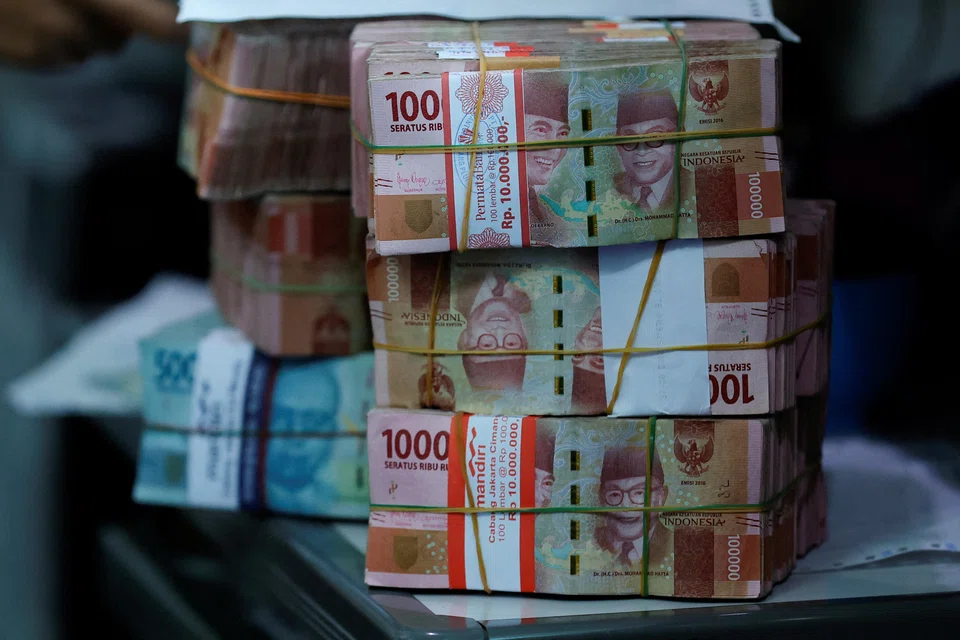
[SINGAPORE] In Indonesia, travellers and even locals have long grappled with prices in rupiah that stretch into the millions and billions, making regular purchases seem confusingly expensive.
A cocktail at a high-end beach club in Bali can cost up to 190,000 rupiah (around S$15) while a full-day spa package at a luxury resort there can run up to 1.05 million rupiah (about S$82).
But South-east Asia’s largest economy is finally pressing ahead with plans to reduce the number of zeros on its national currency – a move that would make price tags easier to read, and transactions simpler for consumers.
On Nov 8, Indonesia’s Ministry of Finance unveiled plans for a new Bill to redenominate the rupiah that involves cutting three zeros from the currency.
The redenomination, a type of currency reform, could improve Indonesia’s economic efficiency and enhance confidence in the currency. However, experts said it also runs the risk of driving inflation.
With the Bill set to be finalised in 2027, the plans come at a time when the rupiah is one of Asia’s weakest currencies – having slumped by more than 3 per cent against the greenback year to date – and have sparked warnings from analysts who say now is not the right time for redenomination.
The Business Times breaks down how Indonesia’s redenomination would work and what it could mean for consumers.
What is redenomination?
Redenomination simplifies the face value of a currency by reducing the number of digits on a currency without changing its purchasing power or exchange rate.
Usually deployed after hyperinflation, it is intended to improve the efficiency of financial transactions, raise currency credibility, manage inflation and reduce the number of fake notes in circulation.
The process typically involves issuing new notes while progressively removing old notes from circulation.
Countries that have succeeded in redenomination include Turkey, which stripped six zeros from its lira in 2005. Another example is Ukraine, which rolled out a new currency – the hryvnia – in 1996. One hryvnia is worth 100,000 karbovanets, the currency it replaced.
Ghana, Brazil, Russia, Venezuela and Romania have also redenominated their currencies.
While it can bring benefits, redenomination is not without risks and can lead to hyperinflation, cautioned Bhima Yudhistira, executive director of Indonesian think tank Center of Economic and Law Studies.
In 1965, Indonesia’s redenomination trimmed three zeros from its currency but this was short-lived due to economic instability. In 1966, inflation soared 635 per cent, and the currency’s purchasing power was reduced.
Why is Indonesia embarking on redenomination now?
Indonesia is no stranger to redenomination. A long-discussed topic, the country has courted plans to carry out the currency reform since its 1965 attempt, only to halt them.
The latest formal attempt at redenomination in 2013 was shelved amid volatile inflation. Then, the government had submitted a draft to parliament that proposed eliminating three zeros from the rupiah.
In 2023, the country’s central bank said that it was ready for redenomination but had not found the right time. Bank Indonesia’s governor Perry Warjiyo told The Jakarta Post in 2023 that an appropriate timing hinged on three criteria: strong macroeconomic conditions, a conducive political environment, as well as financial and monetary system stability.
Some industry watchers believe that Indonesia is ready for denomination. On Nov 13, Jakarta Globe reported Fakhrul Fulvian, an economist at financial services company Trimegah Sekuritas Indonesia, as saying that Indonesia has a solid macroeconomic foundation to support redenomination given its low inflation, financial system stability and credible monetary policy.
Claudio Piron, Asia-Pacific foreign exchange and rates strategist at Bank of America Securities, told BT that the effects of redenomination on Indonesia’s economy are expected to be modest given stable inflation and credible fiscal policy. This comes as the country’s inflation has been low in 2025, within Bank Indonesia’s target range of 1.5 to 3.5 per cent.
How will this affect consumers and tourists?
With the rupiah having fewer zeros, redenomination will bring more convenience for consumers and tourists, said David Sumual, chief economist at Bank Central Asia.
“In terms of the fundamental aspects of the currency, redenomination is actually neutral, but its positive impact is more related to perception due to the psychological effect of having smaller ratios compared to other hard currencies,” he explained.
Yudhistira warned that redenomination should be implemented with “extreme caution” as it could lead to opportunistic rounding – a phenomenon where sellers round prices upward to the nearest higher nominal value to maintain profit margins during redenomination. For example, an item priced at 9,000 rupiah is likely to become 10 rupiah instead of nine rupiah when rounded up after redenomination.
This can cause a surge in inflation and weaken purchasing power, which in turn could hinder the 8 per cent economic growth target Indonesian President Prabowo Subianto aims to hit by 2029, given that household consumption is a key growth driver, Yudhistira said.
To avoid this upward rounding of prices which may cause panic and inflation, Yudhistira stressed that redenomination requires ample preparation time of around eight to 10 years – making 2035 the earliest possible time for implementation.
“If the redenomination Bill discussion is completed in 2027, that would be too short a timeline,” he said, adding that a transition period is needed to prepare new currency denominations and to manage the exchange of old notes at Bank Indonesia.
Sumual pointed out that redenomination would likely impact businesses and the financial sector, because preparations for the transition require significant amounts of time, as well as capital expenditure to accommodate changes in databases, accounting systems and existing machines.
Similarly, Yudhistira highlighted that the exchange of cash into new denominations would also be complex, requiring people to line up at banks. This is especially since most transactions in Indonesia are still conducted in physical cash, though digital payments are growing.
This could create confusion and have an impact on tourists, who may become victims of the rounding up of prices and inflation.
Yudhistira remarked that public education is key to the success of redenomination, adding: “A lack of effective communication could cause administrative confusion, especially among retail businesses, since thousands of product prices would need bookkeeping adjustments.”
TRENDING NOW

If Europe goes to war, the fallout will be felt in East Asia

Indonesia stocks suffer worst plunge in nearly 30 years as MSCI proposes standalone status

Director of PR firm sacked for secretly recording internal meeting loses wrongful dismissal claim

Firms linked to haze pledge cooperation in meeting with Shanmugam; government to table changes to haze law

