IPOs of tiny foreign firms nearly vanish in US after pump-and-dump crackdown
2026 sees micro-cap IPOs raise under US$300 million, against US$1.6 billion in 2025
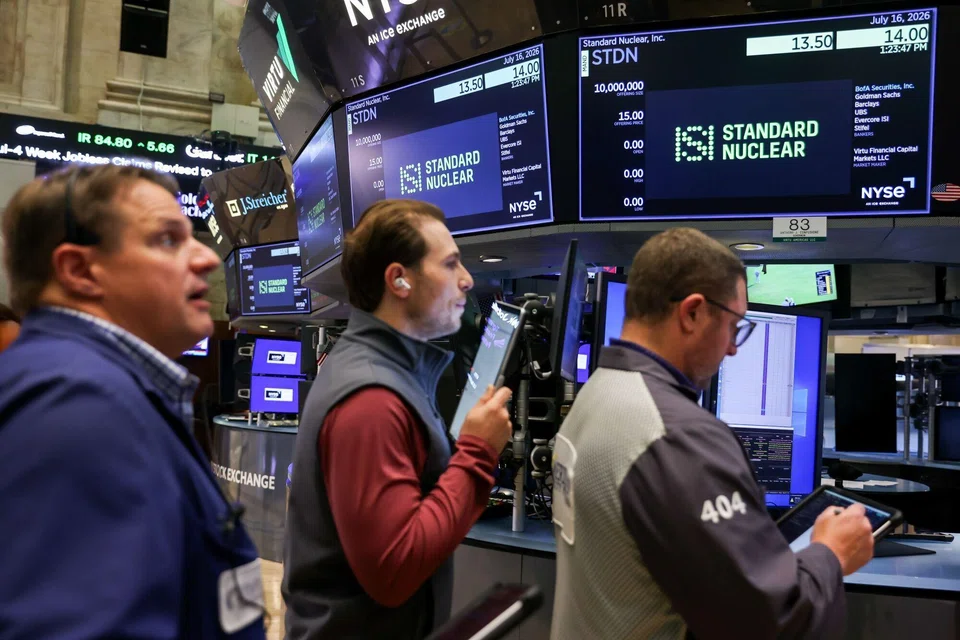
[WASHINGTON] Initial public offerings of tiny foreign companies in the US have all but disappeared this year after regulators cracked down on apparent pump-and-dump schemes, many of them based in Asia, that authorities say cheated mom-and-pop investors around the globe.
Only 13 so-called micro-caps have gone public on Nasdaq and the New York Stock Exchange so far in 2026, compared with almost 80 by the midpoint of 2025.
Just two of 2026’s newest companies come from Asia, a fraction of the almost 100 tiny Asia-based companies that debuted on US exchanges in 2025, according to public filings.
All told, 2026’s crop of micro-caps based in the US and overseas raised less than US$300 million, with one taking in US$40 million and the rest less than US$25 million apiece.
The tally contrasts with the nearly 140 micro-cap IPOs that raised US$1.6 billion in all of 2025, many of which soared and then crashed in spectacular fashion.
Some of last year’s debuts, including an Indonesia-based online travel agent and an all-you-can-eat hotpot chain with three Hong Kong outlets, had their trading suspended by the US Securities and Exchange Commission, which issued unusual warnings about people using social media to artificially inflate share prices of the two firms.
The once-hot market for such tiny newcomers has cooled as exchanges tightened rules for small listings and regulators stepped up scrutiny on firms with wild price gyrations.
While fewer IPOs was not necessarily the goal, cutting off the spigot for new listings of small overseas firms means fewer opportunities for would-be market manipulators to suck in investors and erase billions in market value.
“There was a resounding message from market participants that there was a problem here and that something needed to be done,” said Jamie Selway, chief of the SEC division that oversees trading and markets.

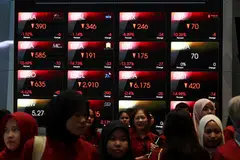
In a pump-and-dump scheme, perpetrators acquire stakes in a company and cajole others to buy at ever-rising prices, sometimes using high-pressure tactics via online forums and chatrooms.
Then they dump their own holdings in bulk, sending the price plunging and leaving investors who fell for the pitch with painful losses.
Regulators and market heavyweights like Citadel Securities and Charles Schwab have been warning for years about the risks of investing in overseas microcaps with thin track records and robust social-media campaigns.
The warnings intensified in 2025, when a record number of small public companies debuted.
A Bloomberg analysis in January showed evidence that promotions on WhatsApp and subsequent crashes affected a quarter of the smallest companies that have gone public on Nasdaq since 2023. Most of those affected were based in Asia.
Nasdaq added rules in December that will give it more tools to reject new listings if something seems amiss at a company or at the advisory firms helping to bring it public.
The exchange is also targeting firms headquartered in China and Hong Kong with new requirements that include increasing the amount of money companies based there would need to raise to go public.
A Nasdaq analysis of data from August 2022 to April 2025 found that 143 of 151 China-based companies would not have qualified to list under the stricter new rules.
The message to the market has been clear, said Mark Donohue, a former SEC policy adviser.
“The numbers speak for themselves,” said Donohue, founder of Thirty4 Advisory, a regulatory consulting firm.
“With the SEC’s statements on these matters and the Nasdaq’s efforts to tighten its listing programme, the writing is on the wall for both the issuers and those trying to manipulate the stocks.”
To be sure, not all microcaps with falling share prices are the subjects of pump-and-dump campaigns.
Many are early-stage but legitimate firms seeking to raise capital, and company managers are not necessarily involved or aware of such schemes.
The stock prices for the two Asia-based microcaps that launched so far in 2026, Japan’s Micware and Hong Kong-based Green Circle Decarbonise Technology, have steadily declined by more than 50 per cent since their IPOs.
Regulators have not accused either company of wrongdoing. Prices for microcaps can be volatile because there are fewer available shares available to absorb surges in trading that can happen for benign reasons.
Takuma Segawa, Micware’s chief financial officer, told Bloomberg News he does not believe the firm’s stock has been targeted by any illegal pump and dump schemes, but recent news of microcap manipulations meant the firm needed to proceed carefully.
“As a Japanese company, we are new to the US stock market,” Segawa said. “And it can be very scary.”
In March, Green Circle told investors the New York Stock Exchange contacted the company after noticing “unusual market activity”, adding that the firm would continue to monitor trading and disclose any material information when required.
Green Circle did not respond to messages seeking comment for this article, nor did Happy City, the hotpot chain whose trading the SEC suspended in June.
NusaTrip, the online travel agent whose stock was halted last year, said it was working to file updated financial reports.
Trading halt
The heightened scrutiny of microcaps led regulators to halt trading in more than a dozen firms last year, with some at risk of losing their listings entirely.
One of them was Hong Kong-based QMMM, a digital advertising and virtual avatar firm whose shares surged almost 1,000 per cent in less than three weeks after it announced it was getting into cryptocurrency.
A year earlier, the company’s CEO had the honour of ringing the closing bell at Nasdaq’s iconic Times Square headquarters.
The SEC cut off trading of its shares in September 2025, citing potential manipulation by social media, and Nasdaq has since moved to permanently boot QMMM from its exchange.
The company, which has not been accused of wrongdoing or participating in any stock manipulation scheme, plans to challenge the de-listing process, it said in a securities filing.
Smart Digital Group also was suspended by the SEC in September 2025 after the agency flagged potential social media manipulation.
Originally based in Singapore, the firm, whose investor presentations included a Gmail address to contact the chief executive, disclosed in January that it moved its operations to mainland China.
Nasdaq kicked off Smart Digital on Jul 13; the firm did not respond to messages seeking comment.
Nasdaq’s new rules give the exchange’s officials discretion to turn down stock listings when they spot red flags, even if a would-be public company meets all of Nasdaq’s other requirements.
The exchange said it would evaluate the trading patterns of similar companies and the track record of the company’s auditor, underwriter or legal counsel and whether they were involved in any other problematic listings.
Nasdaq declined to comment on how it is using this new authority.
Joseph Lucosky, managing partner at law firm Lucosky Brookman and a long-time adviser to emerging growth companies, said companies trying to go public have already felt the increased scrutiny.
“Literally, they could say no if they don’t like the color of your tie,” Lucosky said.
The impact is showing up in the backlog of small companies awaiting regulatory nods.
More than a dozen US-based microcaps and nearly 40 companies based in Asia since the start of 2025 have submitted paperwork to go public and have not yet debuted, according to data compiled by Bloomberg.
Lucosky, who helped shepherd three US-based microcap IPOs this year, is not lamenting the dearth of debuts of tiny, money-losing companies with dubious business plans.
Raising the bar can be good for encouraging investment in growing companies that need a capital infusion to take their next steps, he said.
“We want to upgrade our markets to keep them safe,” he said.
But there is concern that rules could swing too far in the other direction and discourage promising small companies from entering the market.
Nasdaq “is figuring out a way to work through and interpret the new rules in a real market setting. They’re doing it slowly, they’re doing it methodically,” Lucosky said.
“The problem is, they’re really holding up a dynamic market.”
Scores of individuals, trade groups and small biotech companies, have raised concerns about a pending proposal that would give Nasdaq even more leeway to kick struggling companies out of the market, including one that would delist companies if their market value drops below US$5 million for 30 days. The proposal is under SEC review.
In practice, this could prematurely remove hundreds of companies and cut off their funding options before they have a chance to recover, the Small Public Company Coalition wrote in February to the SEC, which has the final say on whether to approve the rule.
The group, whose specific members are private, includes companies, broker-dealers and investors, its president said.
“The increased risk of delisting would make it significantly more difficult for such companies to attract and retain equity and debt financing,” the group wrote.
“These consequences are directly at odds with the Commission’s repeatedly stated commitment to facilitating capital formation for smaller issuers.”
The SEC in US President Donald Trump’s second administration has been vocal about encouraging capital formation and “making IPOs great again”.
Indeed, 2026 has been the year of mega IPOs, with a record-breaking debut from Elon Musk’s SpaceX and an expected jumbo listing for Claude developer Anthropic.
Encouraging IPOs at any cost is not the end game for regulators, said David Woodcock, the SEC’s director of enforcement.
“If an IPO raises US$10 million for a foreign issuer but results in hundreds of millions of dollars of losses of retail investor funds through these pump-and-dump schemes, that is a net negative for capital markets,” Woodcock said. BLOOMBERG
Decoding Asia newsletter: your guide to navigating Asia in a new global order. Sign up here to get Decoding Asia newsletter. Delivered to your inbox. Free.
Share with us your feedback on BT's products and services