

Is Coinbase another FANG stock, or part of the Tesla-Bitcoin nexus?
Coinbase's margins look fat now, but the disruptor will be disrupted when rivals jump in and margins plunge.
 Add BT as a preferred source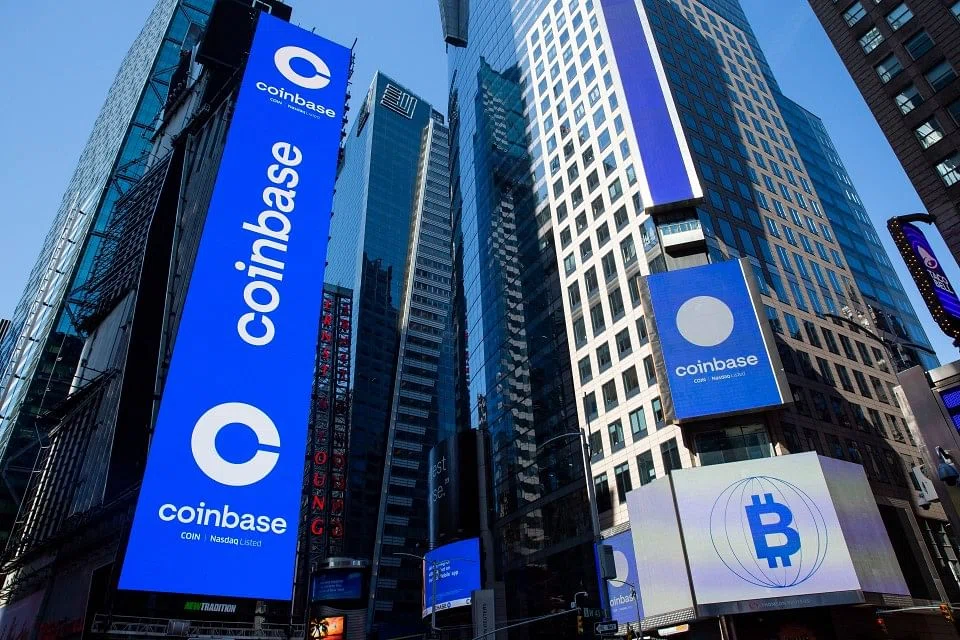
DeeperDive is a beta AI feature. Refer to full articles for the facts.
IT feels like a sweeping narrative is needed to make sense of a world in which cryptocurrency exchange Coinbase Global is a publicly-listed company worth US$86 billion (three times more than the exchange it is listed on), one Bitcoin is worth more than US$62,000 and a digital-art file is worth US$69 million - all in the heat of a global health crisis.
Luckily for the perplexed, one already exists in the archives of Coinbase billionaire co-founder Brian Armstrong's blog.
Published in 2016, the "Coinbase Secret Master Plan" sets out the four stages for forging an "open financial system for the world". Modelled on the Internet's own journey from a communication channel between computers to a universe of consumer-friendly websites and smartphone apps, it portrayed Bitcoin and crypto-exchanges as very early steps towards the recreation of the entire financial system on open networks.
This vision of the "Internet of Value" as a new decentralised era fulfilling the "old" Internet's early promise - sweeping away establishment systems in favour of smart contracts and tokens - is heady Silicon Valley stuff that fills in the blanks of how Coinbase might justify a valuation of 54 times forward earnings (equivalent to Netflix). That puts Coinbase in the same bucket as the FANGs (Facebook, Amazon, Netflix and Google), which revenues grow at double-digit rates: a disruptive tech stock defying financial gravity and institutional naysayers, its value rising even in the face of recessions and pandemics.
But sweeping narratives in the world of crypto are never far from the less utopian reality of frantic speculation and price-driven trading. Huge demand for Coinbase from retail buyers drew comparisons not with Netflix, but with GameStop, the consummate day trader's punt. Even as traditional hedge funds pile into Bitcoin, we are still living at a time of meme trading where grown men and women put laser eyes on their Twitter avatars to signal that they are HODLers.
Coinbase might turn out to be less a FANG than a BAT - driven by the self-fulfilling speculative faith that supports Bitcoin, ARK Investment Management and Elon Musk's Tesla. Appropriately enough, ARK bought about US$246 million worth of Coinbase stock for three of its funds.
Navigate Asia in
a new global order
Get the insights delivered to your inbox.
As Coinbase's own risk disclosures note, crypto-fever does not always end well: About a year after Mr Armstrong's 2016 blog post, he was forced to publish another note pleading with customers to "please invest responsibly" in the face of an epic price bubble that eventually popped.
It is fun to dream that the killer app of the crypto-revolution will be something like Ethereum, which offers a platform to build all kinds of apps using tokens as fuel for bigger things such as digital art or decentralised finance. Judging by Coinbase and other fintech firms like Square, though, today's killer app is more the buying and selling of digital coins that brings the adrenaline rush of watching their price in real time, every waking hour.
Tech blogger Ranjan Roy wrote in February that after feeling "giddy" at the prospect of disrupting opaque ad-tech companies by buying a new digital currency that monetised attention more transparently, he found himself hoarding coins and wondering if they would make him insanely rich one day.
Ironically, this cynical worldview does not have to be bad for Coinbase. Unlike 1990s dotcom browser Netscape, it is an exchange with an easy to understand business model, one that has been around for almost a decade. And unlike Uber Technologies or WeWork, it is seriously profitable. The company made operating profit of US$409 million on US$1.14 billion of revenue last year. It seems perfectly fine with being the kind of middle-man that real crypto-evangelists supposedly dislike - even in 2019, when prices were subdued, it had one million monthly users trading on its platform.
It does mean, however, that the usual rules of business apply. Coinbase's margins look egregiously fat, and right now it is in a market of one. If more exchanges are able to jump over rising regulatory barriers to entry, competition will increase and margins will fall. Crypto-folks are also already working on the next generation of decentralised exchanges, meaning the disruptor could be disrupted. A valuation near US$100 billion might therefore look much less realistic.
The "Internet of Value" is an investment narrative with a lot to live up to, like a lot of tech stories. After all, Facebook, YouTube and Google also promised to sweep in a democratic Internet age. They are obviously valuable companies, but they face more political scrutiny and open distrust from the public than they used to. One famous halo-crashing moment was when Facebook's Mark Zuckerberg, being grilled by Congress, summed up his business in monosyllables: "Senator, we run ads."
If Coinbase keeps booming in an industry attracting regulatory heat that fails to live up to utopian ambitions, Mr Armstrong may one day find himself in the hot seat ditching his secret master plan for a simpler one: "We settle trades." BLOOMBERG
Decoding Asia newsletter: your guide to navigating Asia in a new global order. Sign up here to get Decoding Asia newsletter. Delivered to your inbox. Free.
Share with us your feedback on BT's products and services
TRENDING NOW

Shelving S$5 billion office redevelopment plan proved ‘wise’ as geopolitical risks mount: OCBC chairman

Why where you park your joint venture matters: Lessons from a US$689 million shareholder dispute

China pips the US if Asean is forced to choose, but analysts warn against reading it like a sports result
Singaporeans can now buy record amount of yen per Singdollar

