Japan’s Nikkei extends losses; bonds rise as global trade frictions weigh
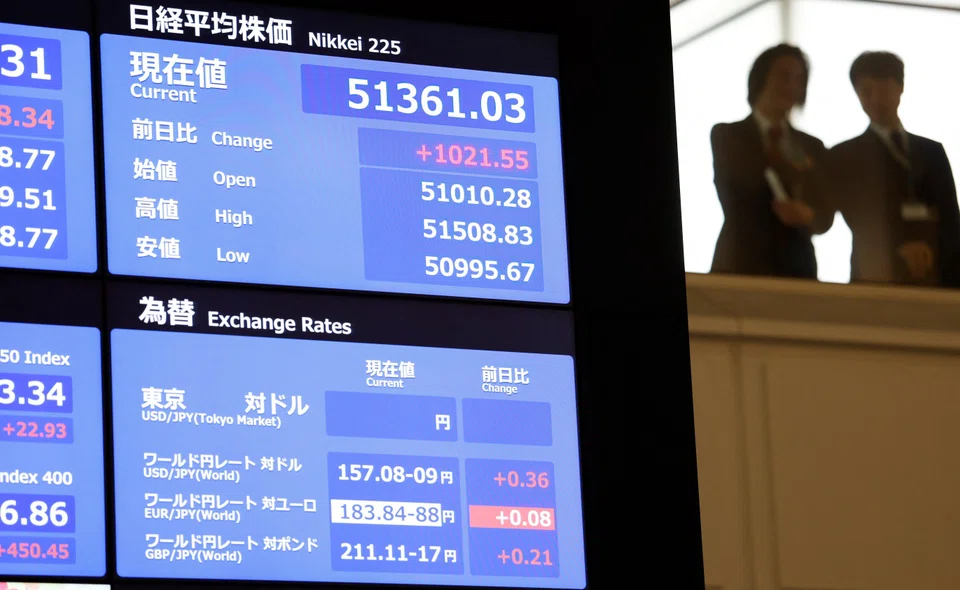
[TOKYO] Japan’s Nikkei share average fell for a fifth straight session on Wednesday as global trade frictions weighed on risk sentiment, while the nation’s bonds bounced back after a plunge in the previous session.
The Nikkei was down 0.45 per cent to 52,751.16, as of 0137 GMT, as it pared losses after falling as much as 1.5 per cent earlier in the session.
The broader Topix slipped 0.88 per cent to 3,593.85.
Japan’s stocks fell, and the yen and bond prices plunged in the previous session, sending yields to record highs after Prime Minister Sanae Takaichi called for a snap election on Monday.
Takaichi echoed her rival parties and vowed to suspend an 8 per cent food levy for two years, fuelling concerns about the potential strain on the country’s already precarious finances.
“Today, investors are probing the market with small buys after the sharp declines of the Nikkei. The market wanted to defend the psychological line of 52,000,” said Kazuaki Shimada, chief strategist at IwaiCosmo Securities.
Chip-testing equipment maker Advantest and chip-making equipment maker Tokyo Electron reversed losses to rise 1.23 per cent and 0.56 per cent, respectively, becoming the biggest support for the Nikkei.
“The declines in yields on the Japanese government bonds also eased sentiment,” Shimada said.
Japan’s 20-year government bond yield, which rose to a record high level, slipped 4.5 basis points to 3.3 per cent. The 30-year JGB yield slipped 8 bps to 3.795 per cent.
SEE ALSO



US equities, which ended weaker overnight, also weighed on local stocks, with all three major Wall Street indexes closing with their biggest one-day drops in three months on concerns that fresh tariff threats from President Donald Trump against Europe could signal renewed market volatility.
Financial stocks fell, with the brokerage and banking sectors losing more than 2 per cent each to become the worst-performing sectors. REUTERS
Decoding Asia newsletter: your guide to navigating Asia in a new global order. Sign up here to get Decoding Asia newsletter. Delivered to your inbox. Free.
Share with us your feedback on BT's products and services