South Korean won’s 24-hour trading era begins with cheers, applause
The extended trading hours could boost the nation’s case for an upgrade to MSCI’s developed-market index
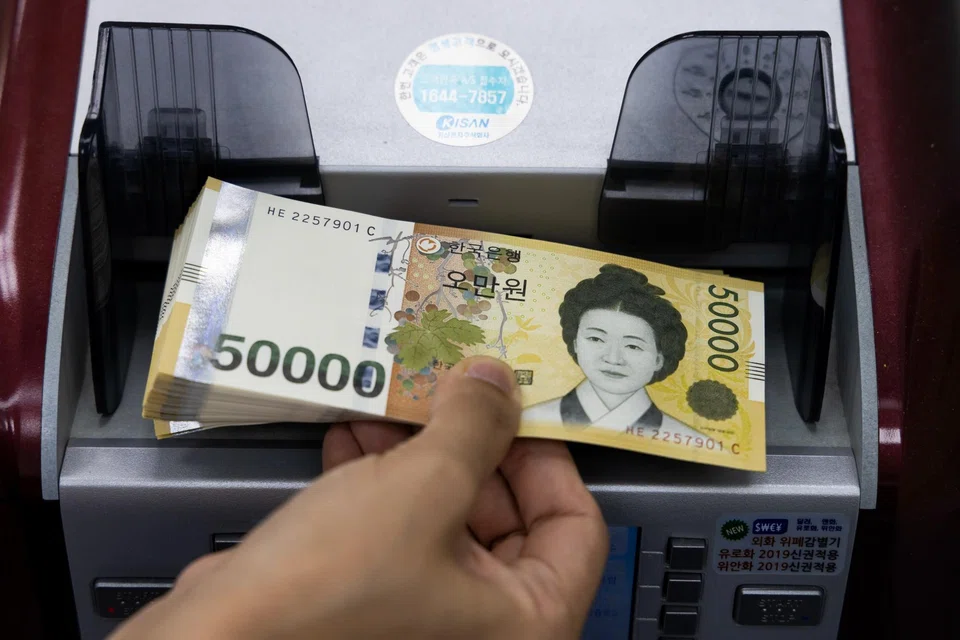
[SEOUL] As the South Korean won embarked on its first day of 24-hour trading, the country’s Finance Minister Koo Yun-cheol walked onto a bank trading floor to cheers and applause, as traders celebrated a key milestone in Seoul’s years-long drive to modernise its foreign exchange market.
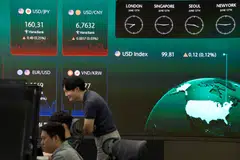
The newly renovated dealing room at Hana Bank, complete with high-tech features including a domed screen, was packed on Monday (Jul 6) with traders and officials eager to celebrate the currency’s round the clock debut.
A huge monitor displayed two live feeds: one linking a Samsung Electronics official and the other showing other traders in London.
As Koo looked on, a trader on the floor executed a US$10 million US dollar-won selling order for Samsung.
The extended trading hours could potentially bolster the case for the nation’s upgrade to MSCI’s developed-market index, where accessibility has long been a stumbling block.
The shift also reflects how the economy has evolved to one that invests more overseas, making it harder to justify limiting trading to Korean business hours.
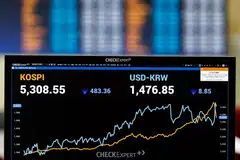
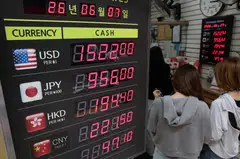
The won swung between losses and gains before trading at about 1,533 per US dollar, after opening at 6 am Seoul time on Monday.
Just last week, the currency had fallen towards its weakest since 2009, making the launch a delicate moment for regulators.
“This is the starting point for the won’s global leap,” Koo said. The move is designed to provide the level of accessibility and convenience in foreign exchange trading comparable to advanced markets, he added.
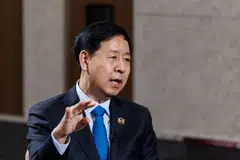
The government will monitor the market seamlessly and support frictionless round the clock trading, while continuing to push forward with its other foreign exchange market reforms, Koo added.
Unprecedented
The shift is an unprecedented loosening of South Korea’s grip on its currency, a policy shaped by the trauma of the 1997 Asian financial crisis that nearly brought the economy to its knees.
For years, South Korea has sought to leave behind its emerging-market status and be considered an advanced economy, to lure more global investors.
Whether liquidity holds up overnight will be put to test on Monday as Seoul traders head out of the office and the currency heads into London and New York trading hours.
“Theoretically, extended trading hours should cause more volatility in the near-term as liquidity tends to thin out during (hours that are) outside (of) regular trading hours,” said Lim Hye-youn, an economist at Hanwha Investment & Securities.
But markets seem highly vigilant against possible intervention by authorities, Lim said.
Authorities have bolstered jawboning against excessive currency moves as the won continued to fall last week.
Deputy Finance Minister Moon Ji-sung said on Jul 3 that authorities would strengthen monitoring of the won’s night trading session ahead of Monday’s opening.
The currency rebounded late last week after a Bloomberg report said officials were preparing for currency flows related to SK Hynix’s US offering of American depositary receipts.
The won remains one of Asia’s weakest currencies this year as the Iran war led to higher energy prices and foreign investors sold domestic stocks to rebalance portfolios after stellar gains. BLOOMBERG
Decoding Asia newsletter: your guide to navigating Asia in a new global order. Sign up here to get Decoding Asia newsletter. Delivered to your inbox. Free.
Share with us your feedback on BT's products and services