Likely September Fed rate cut will boost Asian bonds, equities: analysts

Markets are pricing a dovish outcome to Fed meetings, with future cuts included

Megan Cheah
Published Thu, Aug 1, 2024 · 01:41 PM
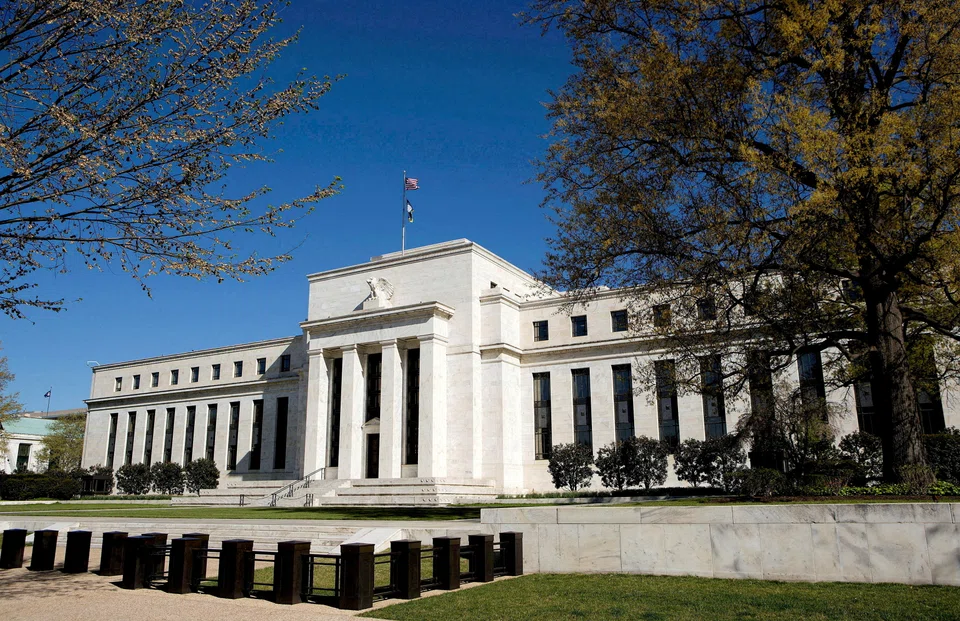
    • The Fed maintained key interest rate at 5.25 to 5.5 per cent, as “further progress” has been made towards its 2 per cent inflation goal.
    • The Fed maintained key interest rate at 5.25 to 5.5 per cent, as “further progress” has been made towards its 2 per cent inflation goal. PHOTO: REUTERS

    ANALYSTS continue to be positive on Asian fixed-income instruments and equities, after the US Federal Reserve chair Jerome Powell said a rate cut in September is “on the table”, provided inflation data continues to look promising.

    The Fed maintained the key interest rate at 5.25 to 5.5 per cent, as “further progress” has been made towards its 2 per cent inflation goal, said Powell at his post-Federal Open Market Committee (FOMC) press conference.

    Asian markets rallied at the news, but were mixed around midday. Around noon, Hong Kong’s Hang Seng Index and the Bursa Malaysia Kuala Lumpur Composite Index fell 0.2 per cent, while Singapore’s benchmark Straits Times Index was down 0.8 per cent.

    Australia’s S&P/ASX200 was up 0.6 per cent, while South Korea’s Kospi Composite Index climbed 0.8 per cent.

    Separately, Japan’s Nikkei 225 tumbled 2.6 per cent, one day after the index rallied on Wednesday (Jul 31) on Bank of Japan’s rate hike.

    Analysts said markets have started pricing in the first cut to come as early as September.

    ING said in a note that Treasuries have rallied aggressively on the news, with two-year US Treasury yield falling 10.1 basis points (bps) and 10-year yields falling 11 bps to 4.03 per cent.

    A September rate cut is “now priced in with certainty, and almost three cuts are priced in by the year-end”, the note added.

    Gary Dugan, chief executive of The Global CIO Office, said both US Treasury bonds “may need to take a breather” at around current yield levels.

    “US bond markets continue to enjoy the greater confidence in Fed rate cuts with the US 10-year close to the 4 per cent, almost flat on where we were a year ago,” he said.  

    Ray Sharma-Ong, South-east Asia head of multi-asset investment solutions at abrdn, said: “Markets are pricing a very dovish outcome post-FOMC, with 70 bps of cuts this year and another 111 bps of cuts in 2025. This implies that markets expect the Fed to cut at every meeting this year.”

    He noted that these sequential cuts, should they happen, will counterbalance market concerns, such as those around US elections and risks of increased trade conflict.

    It should also mitigate any impact to US Treasury yields “in a scenario where we end up with a red wave in Congress that will push for a higher fiscal deficit”.

    Ray Sharma-Ong, South-east Asia head of multi-asset investment solutions at abrdn, says: “Markets are pricing a very dovish outcome post-FOMC, with 70 bps of cuts this year and another 111 bps of cuts in 2025.” PHOTO: ABRDN

    Meanwhile, JPMorgan Asset Management (JPMAM) global market strategist Raisah Rasid said: “We continue to expect that the Federal Reserve will cut rates in September and December, followed by four 25 bps reductions in 2025.”

    Goh Rong Ren, portfolio manager at Prudential unit Eastspring Investments, said Singapore government bonds are “fairly well-correlated” with US Treasuries, which indicates that Singapore government securities (SGS) yields will likely decline in tandem with US yields.

    SGS bonds have rallied over the past weeks amid increased expectations of an impending Fed rate cut, he added.

    “After the recent rally in (SGS bonds), corporate bonds which have remained fairly stable look cheap on a spread basis. These include senior debt of real estate investment trusts (Reits) and property issuers,” said Goh.

    PGIM Fixed Income’s chief investment strategist and head of global bonds Robert Tipp believes the outlook for fixed income “looks quite favourable”.

    “Rates are at the high end of their range of recent decades, and we are passing the peak of the rate cycle and moving into the soft landing phase,” he said.

    Sharma-Ong noted that if the Fed eases further after September, the US dollar is likely to soften, which would be beneficial for Asian equities.

    “We expect regions like India and defensive stocks like Asia Reits to do well as they are less exposed to trade risks and stand to benefit from a lower rate environment,” he said.

    Nonetheless, JPMAM’s Raisah said investors should be mindful of potential risks, due to possibly sharper growth decline and impact of geopolitical uncertainties.

    “As the Fed is likely to move in a measured manner, investors should remain balanced across both US and global equities,” she said.

    “We still see plenty of reasons to remain constructive on Asian markets, including Japan, Taiwan and South Korea, amid positive factors such as ongoing corporate governance reforms and supply chains adjustments.”

    Sharma-Ong cautioned that the Fed’s intention to ease may be derailed by oil price spikes or surging inflation, which may occur amid geopolitical risk in the Middle East.

    He expects Powell to provide further guidance at the Jackson Hole Symposium in end-August, as the Fed would have had time to “factor in additional risks to the disinflation process”.