Market cap of Singapore stocks dips 0.4% in December as investors turn cautious

Tay Peck Gek
CONSUMER counters and those capitalising on China’s reopening were the top performers in December, but the last month of the year registered a 0.4 per cent dip in market capitalisation for Singapore stocks to S$827.1 billion.
Jardine Matheson Holdings (JMH) , Hongkong Land and their sister stock DFI Retail Group took three positions in the top 10 gainers tally for December, with JMH’s market value jumping S$1.6 billion to S$51.8 billion.
Paul Chew, head of research at Phillip Securities, said market direction for December was dictated by the relaxation of pandemic restrictions by mainland China and Hong Kong.
He noted: “Stocks riding off the China reopening theme… include DFI Retail Group and Hongkong Land. Another group of outperformers was hospitality real estate investment trusts (Reits), namely CapitaLand Ascott and CDL Hospitality .”
Consumer counters Thai Beverage and Emperador, hospitality stocks Genting Singapore , Shangri-La and CapitaLand Ascott Trust, as well as IHH and Wilmar International rounded off the top gainers list.
Colin Low, assistant manager of the research and portfolio management team at FSMOne.com, said the Straits Times Index (STI)’s traditionally defensive stocks – particularly, consumer stocks – have done well, possibly as risk-off investors sought shelter from an expected weakening of growth globally and in Singapore.
The market cap of blue-chip barometer STI stood at S$542 billion, 0.5 per cent lower month on month. The market cap of mainboard counters declined 0.4 per cent to S$817.9 billion.
By contrast, the Catalist market cap clocked an 0.8 per cent rise to S$9.2 billion.
Geoff Howie, market strategist at the Singapore Exchange (SGX) , pointed out that the STI spent much of December in a tight trading range, with the 88-point range being the narrowest trading band since September 2021.
He stated: “This saw net fund outflows across the Singapore stock market in December, within the vicinity of S$600 million for the month prior to the final session – led by net outflows in the financial services, Reits, and telecommunications sector, which together account for around two-thirds of the STI weightings.”
FSMOne.com’s Low noted that financial counters – all three banks and SGX – returned negatively in the month.
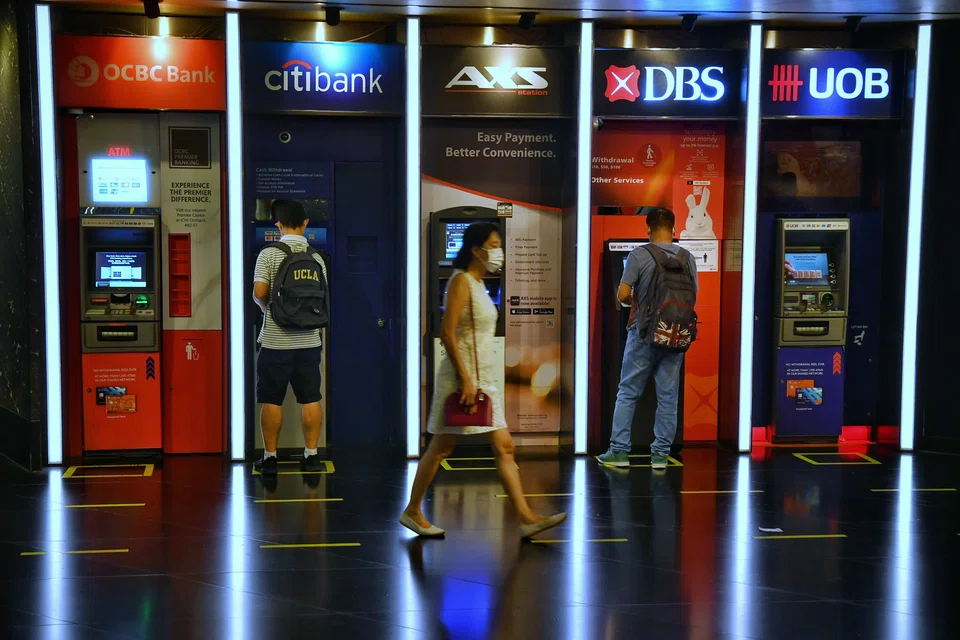
DBS’ market cap loss of S$3.3 billion made it the top loser, but it was still the most valuable stock in Singapore with a market value of S$87.6 billion.
Its competitors OCBC and UOB’s market values shrank S$1.2 billion and S$843 million, respectively, to S$55 billion and S$51.8 billion, placing them on the top losers chart as well.
SGX’s Howie said that the trade-centred nature of the Singapore economy, weakening global demand, supply chain challenges and operational cost pressures are the key global themes expected to remain in the spotlight in 2023.
Howie noted that February to March will be paramount for 2023 corporate outlooks, with close to 400 stocks due to report their FY2022 financial performance, in addition to the Budget on Feb 14.
The downside risks, he flagged, could be more global interest rate increases that may further decelerate growth or exacerbate market volatility and financial stability risks. Global geopolitical tensions could worsen as well.