

Nasdaq climbs as chip and AI-linked stocks bounce back
Seven of the S&P 500’s 11 major industry sectors end down as consumer discretionary stocks led gains
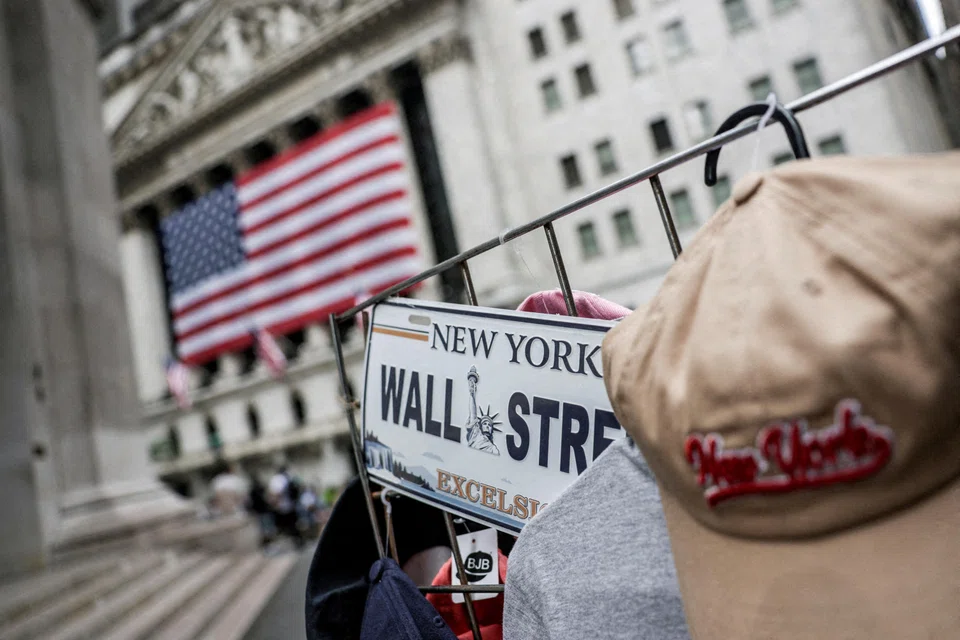
[NEW YORK] The tech-heavy Nasdaq Composite led Wall Street with a 1 per cent advance on Monday (Oct 19) as investors returned to the chip sector and other artificial intelligence-related stocks following last week’s bruising sell-off, while waiting for key corporate earnings reports.
On Friday, the benchmark S&P 500 and the Nasdaq had marked their biggest weekly declines since late June.
Concerns that higher interest rates could curb investments in AI infrastructure have been weighing on technology stocks, particularly chip companies and data centre operators.
The sell-off reflected mounting investor unease over how costly AI developments will be financed, a question that has increasingly pressured companies underpinning the US bull market, which recently marked its fourth anniversary.
Closing up 1.6 per cent on Monday, the Philadelphia Semiconductor Index snapped an eight-day losing streak in which it fell about 15.7 per cent for its longest run of declines since October 2008.
“Rubber bands can only stretch so far in one direction before they snap and start reversing, and you finally saw that enough-is-enough moment in the semiconductors after Friday’s close,” said Michael James, managing director and equity sales trader at Rosenblatt Securities in Los Angeles.
“Nothing changed between Friday’s close and this morning’s open, other than nothing bad happened over the weekend, and sentiment had gotten so negative that we were oversold to the point where a bounce was due,” he added.
And with a lot of technology company earnings reports due out in coming days and weeks, James cautioned that the market is “far from out of the woods”.
Social media company Meta, which finished down 0.5 per cent, is due to report results on Wednesday along with electric vehicle company Tesla, while SpaceX is scheduled to report on Tuesday.

The Dow Jones Industrial Average fell 36.38 points, or 0.07 per cent, to 51,966.03, the S&P 500 gained 31.29 points, or 0.41 per cent, to 7,690.73 and the Nasdaq Composite gained 290.85 points, or 1.11 per cent, to 26,430.89.
However, the market leaned massively on heavyweight stocks for its advance.
Also during the session, the indices had pulled away from their peaks for the day as energy markets removed some earlier support while oil prices fluctuated.
US crude oil futures reversed earlier losses to settle up 2.2 per cent at US$103.66 a barrel after attacks by Yemen’s Iran-aligned Houthis on a Yemeni military training camp and renewed attacks on Saudi energy, airport and military facilities.
Sector performance and stock movers
Among the S&P 500’s 11 major industry sectors, seven closed lower. Consumer discretionary was strongest with a 2.7 per cent advance while technology was next, rising 1.2 per cent.
Defensive utilities, down 2 per cent, and real estate, which lost 1.2 per cent, were the biggest laggards among the sectors.
The biggest boosts to the consumer sector came from companies including Amazon.com, which finished up 5 per cent after Morgan Stanley named the e-commerce and cloud computing firm its “top pick”.
Tesla provided the sector’s second-biggest index point boost with a 3.8 per cent advance.
CoreWeave was at the centre of last week’s sell-off after its shares plunged more than 25 per cent on worries over a US$50 billion debt load.
Trading in the cloud computing provider ended the session down 0.4 per cent after giving up early gains that appeared to be in response to Goldman Sachs’ upgrade of the stock to “buy” from “neutral”.
It was outperformed by peers Nebius, which added 2.9 per cent, and Iren, which advanced 2.7 per cent.
Intel shares rallied 2.4 per cent after JP Morgan upgraded the stock to “neutral” from “underweight”.
Cleveland-Cliffs shares surged 16 per cent after the steelmaker surpassed analysts’ estimates for its third-quarter profit.
Monday marked the 39th anniversary of Black Monday, the 1987 crash that marked the biggest one-day decline in the history of the Dow Jones Industrial Average.
Declining issues outnumbered advancers by a 1.69-to-1 ratio on the NYSE, where there were 83 new highs and 265 new lows.
On the Nasdaq, 2,258 stocks rose and 2,647 fell as declining issues outnumbered advancers by a 1.17-to-1 ratio.
The S&P 500 posted 12 new 52-week highs and 2 new lows while the Nasdaq Composite recorded 31 new highs and 361 new lows.
On US exchanges 15.27 billion shares changed hands compared with the 17.26 billion average for the last 20 sessions. REUTERS
Decoding Asia newsletter: your guide to navigating Asia in a new global order. Sign up here to get Decoding Asia newsletter. Delivered to your inbox. Free.
Share with us your feedback on BT's products and services
TRENDING NOW

The only common thing in S-E Asia is that we all eat rice: Cisco’s Asean president

Philippine power giant First Gen rebuffs foreign offers, plans up to US$2.6 billion in expansion

Singapore to use ‘every legal and regulatory lever’ against companies linked to haze: Shanmugam

Once staunchly pro-China, Malaysian Chinese businesses are now distancing themselves from Beijing

