Odds of a bear market rising in US; earnings reports unlikely to lift spirits
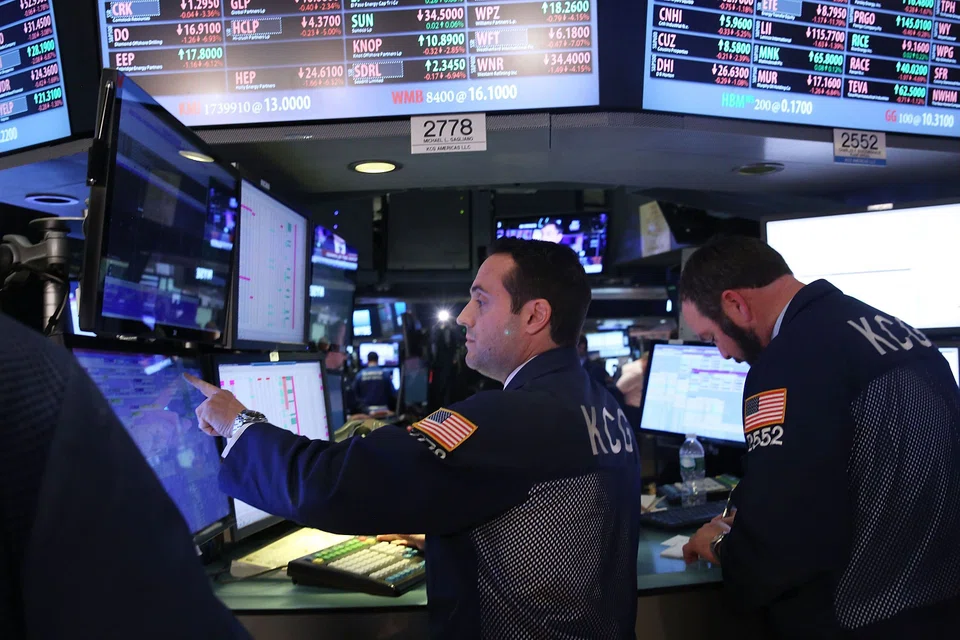
IT SEEMED that things couldn't get much worse on the US stock and commodities markets - until they did.
While stocks could bounce this week, the odds of a bear market are rising and earnings reports from banks and industrial companies are unlikely to lift dour investor spirits for long.
Both the Dow Jones Industrial Average and the Standard & Poor's 500 entered official correction territory last week, a week that was bookended by two of the biggest sell-offs in the latest downturns. On Friday, oil futures closed below US$30 a barrel - which had been the last redoubt for the bulls on oil for months - for the first time in more than 12 years.
A strategist at Royal Bank of Scotland opened the week by advising clients to sell everything in their investment portfolios except the highest quality bonds, and the market soon went about proving his doomsday advice correct. The only reason not to expect further losses on Monday is that the market is closed for Martin Luther King Day.
Robert Kaplan, the new president of the Dallas Federal Reserve, said the central bank was not married to the four rate hikes that are currently on its official forecast for the year. He said the Fed was biding its time, waiting to see if the second great wave of selling in China and commodities markets is a temporary phenomenon like the previous one in August, or something that will have lasting effects on economic and financial conditions in the US.
Among the Fed's main concerns, according to Mr Kaplan and others, are the "dislocations" in US junk bond, or high-yield bond markets. These bonds are becoming difficult to buy and sell because of uncertainties about the viabilities of energy companies, who are among the biggest issuers of junk bonds. Should the "illiquid" market conditions persist, it could freeze companies from a range of sectors, some entirely unrelated to energy, out of the high-yield market.
That "may or may not have significant implications for the rest of the economy", Mr Kaplan noted.
When companies and individuals were frozen out of the commercial paper and mortgage markets in 2008, the central bank stepped in.
That bankers are even talking about "financial conditions" again may sends shudders down the spine of anyone who followed that crisis closely.
Even Thursday's rally echoed the bad old days. The Dow Jones Industrial Average was down by more than 100 points at Thursday's lows only to move with a "violence" typical of bear-market rallies.
Every sector was hit last week: financials plunged, even as JPMorgan Chase and Citigroup, two of the largest US banks, posted earnings that surpassed most analyst targets.
Many strategists believe that some sectors, like financials and technology stocks, where growth prospects remain strong, may recover faster than others, such as raw materials and energy stocks, which are directly affected by the historic crash in commodities prices.
"There are clearly parts of the economy that are already in recession," said Eric Marshall, portfolio manager at Hodges Capital, in Dallas. "To some degree we've had an earnings recession with multinationals who are translating profits back to dollars."
In the US, the "underlying economy is doing OK", said Mr Marshall. "We have low petrol prices, low unemployment ... not every segment of the economy is weak right now."
For some other sectors, the outlook is murkier. Last week, Walmart, the world's largest retailer by sales, said it would close 269 locations worldwide, many of them in the US. For decades, Walmart had found a way to grow through thick and thin so the retreat came as a surprise to many.
The Dallas Federal Reserve's Mr Kaplan said traditional retailers are among those who are facing "disruption" - new approaches that are coming chiefly from Silicon Valley companies. In other words, Walmart's woes may not be caused by slowing consumer demand but by competition from Amazon.com and other online shopping sites.
It's also possible that retail sales tally, which showed anaemic growth for December, did not pick up all shopping activity online, where new channels pop up all the time.
This week, reports from International Business Machines and other multinationals will show whether their earnings are still feeling the pinch from slowing Chinese demand and the relative strength of the US dollar. Like its larger rival JPMorgan, Bank of America's stock will likely react more to events in junk-bond and other markets than to its earnings report. While General Electric could see strength in sales of jet engines, the conglomerate's huge energy unit remains exposed to the oil bust.
At some stage, energy, industrial and material stocks are bound to see a major bounce, said Lorenzo Di Mattia, manager of hedge fund Sibilla Global Fund. It just might not be this week. "I think the market is still potentially dangerous," he added. "Further downside is possible if not likely."