

Oil settles over US$100 after Houthi attack on Saudi tankers worsens oil supply disruption
Hormuz and Bab el-Mandeb carry the equivalent of roughly a quarter of the world’s oil supply
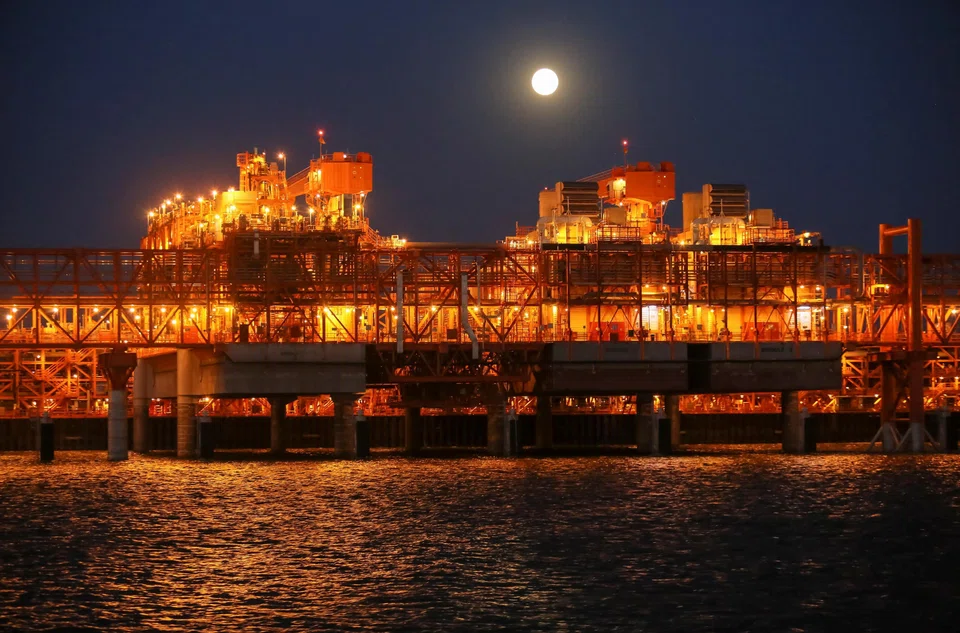
OIL prices settled above US$100 on Thursday (Jul 23) for the first time since May after Yemen’s Houthis said they attacked two Saudi oil tankers in the Red Sea, causing further global supply disruptions following a near-halt in trade through the Strait of Hormuz.
Brent futures finished up US$6.62, or 7 per cent, at US$100.69 a barrel, marking their highest close since May 22. The global crude oil benchmark’s prices are now nearly 40 per cent higher than when the Iran war began in February, with almost all of its gains coming in July.
US West Texas Intermediate crude closed up US$5.36, or 6.2 per cent, to settle at US$92.19 a barrel, the highest close since Jun 4.
“With the possibility of a ground war seemingly increasing by the day, and tanker traffic restricted through two of the most active chokepoints in the world, crude oil is suddenly positioning itself to within striking distance of the four-year high of US$126.41, with the global economy drawing down so fast it will eventually be running on fumes,” said Bob Yawger, director of energy futures at Mizuho.
Saudi tankers attacked
Yemen’s Houthis have opened a new front in the Iran war by targeting vessels carrying Saudi oil in the Bab el-Mandeb Strait after stating they would impose a naval blockade on shipments from Saudi Arabia.
The Houthi militia attacked two Saudi Arabian oil tankers in a military operation, the group said on Thursday, with the Saudi Arabian state news agency, SPA, later confirming that one of the two vessels was ablaze after an assault while sailing in the Red Sea. SPA did not say who attacked the vessel.
“The escalation compounds the near-halt in Hormuz traffic and the sharp reduction in Iranian exports, intensifying concerns over near-term global availability,” Gelber and Associates wrote in a note.
Analysts estimate that the Strait of Hormuz and Bab el-Mandeb carry the equivalent of roughly a quarter of the world’s oil supply. Still, following the attacks, two Chinese supertankers carrying a combined 4 million barrels of Saudi Arabian oil managed to exit the Red Sea via the Bab el-Mandeb Strait on Thursday, shipping data showed.
Goldman Sachs said Brent might exceed US$120 a barrel in the fourth quarter and average US$100 next year if the strait remains disrupted through 2027, with further upside if the Bab el-Mandeb Strait and Suez Canal also suffer persistent disruption.
SEE ALSO


Iran’s Revolutionary Guards said an oil tanker caught fire after an explosion while attempting to follow a mined route in the southern area of the strait near the coast of Oman and that two others had turned back.
The Guards said the strait was under their control and “completely closed” while US actions continued in the region, warning that no tanker would be allowed to enter or leave without coordination with Iran. US President Donald Trump promised “major military punishment” for Iran and its Houthi allies.
Hormuz traffic stalls
Iranian strikes on vessels crossing the strait have resulted in a drop in non-Iranian oil tankers traversing the waterway, and the reintroduction of a US naval blockade targeting Iranian ports likely has resulted in Iranian oil loadings falling to zero from 1.5 million to 2 million barrels per day at the start of July, Giovanni Staunovo, a UBS analyst, said.
As a result of fewer shipments exiting the strait, loading activity within the Gulf has fallen to 2.5 million bpd over the past seven days, compared with 6 million bpd over the past 30 days, Staunovo added.
To shore up supplies, seven core Opec+ members – Saudi Arabia, Russia, Iraq, Kuwait, Algeria, Kazakhstan and Oman – are likely when they meet on Aug 2 to increase their output target by about 188,000 barrels per day for September, three sources told Reuters, even as the war hinders some of the group’s members from pumping more. REUTERS
Decoding Asia newsletter: your guide to navigating Asia in a new global order. Sign up here to get Decoding Asia newsletter. Delivered to your inbox. Free.
Share with us your feedback on BT's products and services






