

Pause in China rally sparks wider drop in emerging-market stocks
Oil-supply disruptions, conflict in the Middle East threaten emerging markets and weigh on investor sentiment
 Add BT as a preferred source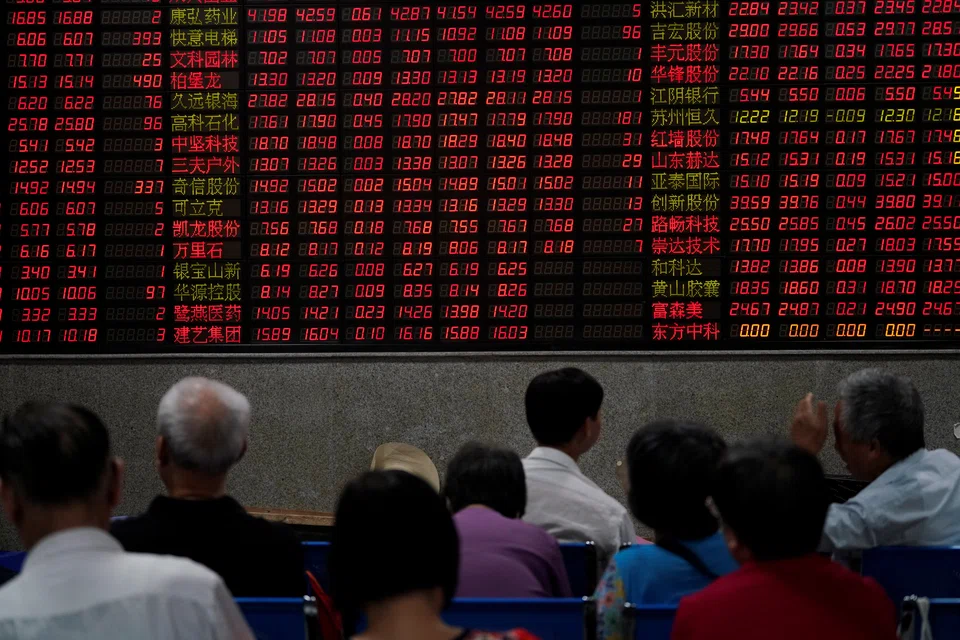
CHINESE stocks halted an epic rally that added US$3.45 trillion to shareholder wealth and witnessed the biggest fund inflows in two decades, as geopolitical concerns gripped emerging markets, overshadowing the euphoria over the stimulus package launched in the world’s second-largest economy.
The Hang Seng China Enterprises Index, the barometer of sentiment this week as mainland markets remain closed, fell for the first time in 14 days.
That sent MSCI’s benchmark for emerging-market equities down by the most in a month on a closing basis. A strong US dollar pushed the Chinese yuan towards the longest streak of losses since March.
The losses came amid a risk-off tilt in global markets as concerns over a wider war in the Middle East persisted. The conflict poses multiple threats to emerging markets – from oil-supply disruptions to elevated political-risk premium and a rush into haven assets such as the US dollar.
All that clouded optimism over China’s bazooka for its economy and markets, with Morgan Stanley and HSBC calling for further equity gains.
“The conflict definitely weighs on sentiment, but may have different fundamental impacts across emerging-market countries,” said Fredrik Bjelland, portfolio manager of the US$1.5 billion Skagen Kon-Tiki emerging-market fund.
“In the short term, I would expect any negative impact to first be geographically linked but on a longer-term horizon to be more fundamentally linked. An elevated risk premium in the oil market could have consequences for import-dependent countries.”
The China enterprises gauge fell 1.6 per cent on Thursday (Oct 3), after a 13-day streak of advances when it added 34 per cent. Alibaba Group and JD.com accounted for more than 40 per cent of the gauge’s losses.
Despite the pullback, money managers signalled that the outlook for China has transformed because of the stimulus measures.
HSBC strategist Alastair Pinder upgraded Chinese stocks to “overweight”, and said it’s “not too late to enter the rally”.
Meanwhile, Morgan Stanley’s Laura Wang noted the country’s equities could gain a further 10 to 15 per cent, as the government may announce fiscal measures to boost the stimulus already announced.
Valuations “attractive”
“The rally has further to run,” Bjelland added. “Chinese valuations are attractive. Moreover, flows have been negative for a number of years, leaving global investors’ positioning light compared with history.”
Overnight data showed US exchange-traded funds (ETFs) that invest in Chinese stocks are winning accelerated inflows.
BlackRock’s iShares China Large-Cap ETF received US$577 million of fresh deposits on Wednesday, bringing this week’s inflows to more than US$1 billion.
That was the biggest for any week since the fund’s inception in 2004, Bloomberg data showed. The KraneShares CSI China Internet Fund got US$700 million of flows on Tuesday, the biggest ever for the fund that started in 2013.
The Chinese yuan drifted lower, heading for a fifth day of losses. The Malaysian ringgit and Thai baht led losses in the emerging-market complex, as the US dollar climbed for a fourth day.
Turkish inflation
The Turkish lira strengthened marginally. Monthly inflation in the country accelerated to 2.97 per cent last month, higher than every forecast in a Bloomberg survey of economists.
The worse-than-expected readings may delay Turkey’s first rate cut since early 2023, strategists said.
Hungary’s forint extended losses after falling to the 400-per-euro mark on Wednesday. The advance came after policymakers sought to soothe investor concerns about economic and policy risks, by reaffirming their “disciplined” policy stance.
Investors holding Ethiopia’s defaulted 2024 bond rejected the government’s call for an 18 per cent haircut, with the ad hoc committee saying the proposal was inconsistent with the nation’s economic fundamentals. The bond fell for a second day. BLOOMBERG
Decoding Asia newsletter: your guide to navigating Asia in a new global order. Sign up here to get Decoding Asia newsletter. Delivered to your inbox. Free.
Share with us your feedback on BT's products and services
TRENDING NOW

Yeoh Pei Xien: YTL’s third-gen scion with a pastor’s heart

Singapore banks’ battle for wealth talent goes beyond private bankers

Car dealer charged in S$1.1 million tax evasion case involving Porsches, Ferraris, Rolls-Royces
A ‘shadow bank’ hiding in Singapore’s Little India casts light on financial services gap

