Samsung, SK Hynix and leveraged ETFs drive 70% of South Korea trading, drawing criticism
Questions are emerging about the chipmaker duo’s heavy AI investment
RETAIL fervour over leveraged ETFs in South Korea has grown so intense that the products, together with the two chipmaker stocks they track, now make up more than 70 per cent of trading value in the US$4.3 trillion market.
The anomaly has sparked criticism of regulators for allowing such risky vehicles, with one opposition lawmaker even calling for their delisting.
Volatility has surged since the exchange-traded funds tracking twice the daily returns of Samsung Electronics and SK Hynix debuted in late May, designed to draw more retail money into the local market.
The products drew immense retail interest as a way to amplify wagers on an epic chip rally, with both stocks more than tripling this year at their peaks.
But those bets are now backfiring as questions around heavy AI investment make those chipmaker shares lurch on every development in the supply chain, spurring even bigger swings in the leveraged products.
Turnover of the two chipmakers made up 31 per cent of the whole Korean market on May 26, the day before the leveraged ETFs were listed, according to data compiled by CLSA Securities Korea.
Combined with the ETFs’ trading value, that ratio reached 84 per cent in late June and stood at 73 per cent on Tuesday, highlighting how concentration has worsened in the world’s top-performing market.
“To provide the return of a leveraged ETF, ultimately, someone needs to buy even more of these stocks when they rally — and sell even more when they decline — to maintain a constant leverage ratio,” said Ian Samson, a portfolio manager at Fidelity International.
“The volatility created by retail investor participation and new leveraged products simply compounds the volatility driven by the real, massive, fundamental uncertainty surrounding the Korean semiconductor industry.”

Even before single stock ETFs were green-lit by authorities, many investors and analysts had already warned that the Korean market’s heavy reliance on the chipmaker duo may backfire should cracks emerge in the AI boom.
Samsung and SK Hynix make up 54 per cent of the benchmark Kospi’s weighting. While the products were intended to divert retail money away from US equities and curb further weakness in the won, the country’s top financial watchdog recently expressed regret citing their negative side effect.
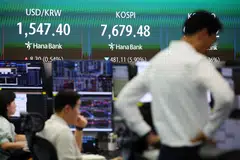
The Kospi Index closed down 5.4 per cent on Wednesday (Jul 8), taking its decline since a June peak to 20 per cent and entering a technical bear market.
Outsized moves exceeding 5 per cent have become increasingly common. Market-wide trading suspension took place for the sixth time this year on Tuesday as equities plunged more than 8 per cent intraday, accounting for half of the circuit breakers since 2000.
The concentration into the two chip stocks and their leveraged products “tends to exacerbate short-term price swings and, in our view, has weighed on broader market breadth and sentiment in recent weeks,” said Jongmin Shim, an analyst at CLSA Securities Korea.
“That said, I would view the current correction within the context of a bull market rather than as the beginning of a systemic downturn.” BLOOMBERG
Decoding Asia newsletter: your guide to navigating Asia in a new global order. Sign up here to get Decoding Asia newsletter. Delivered to your inbox. Free.
Share with us your feedback on BT's products and services